
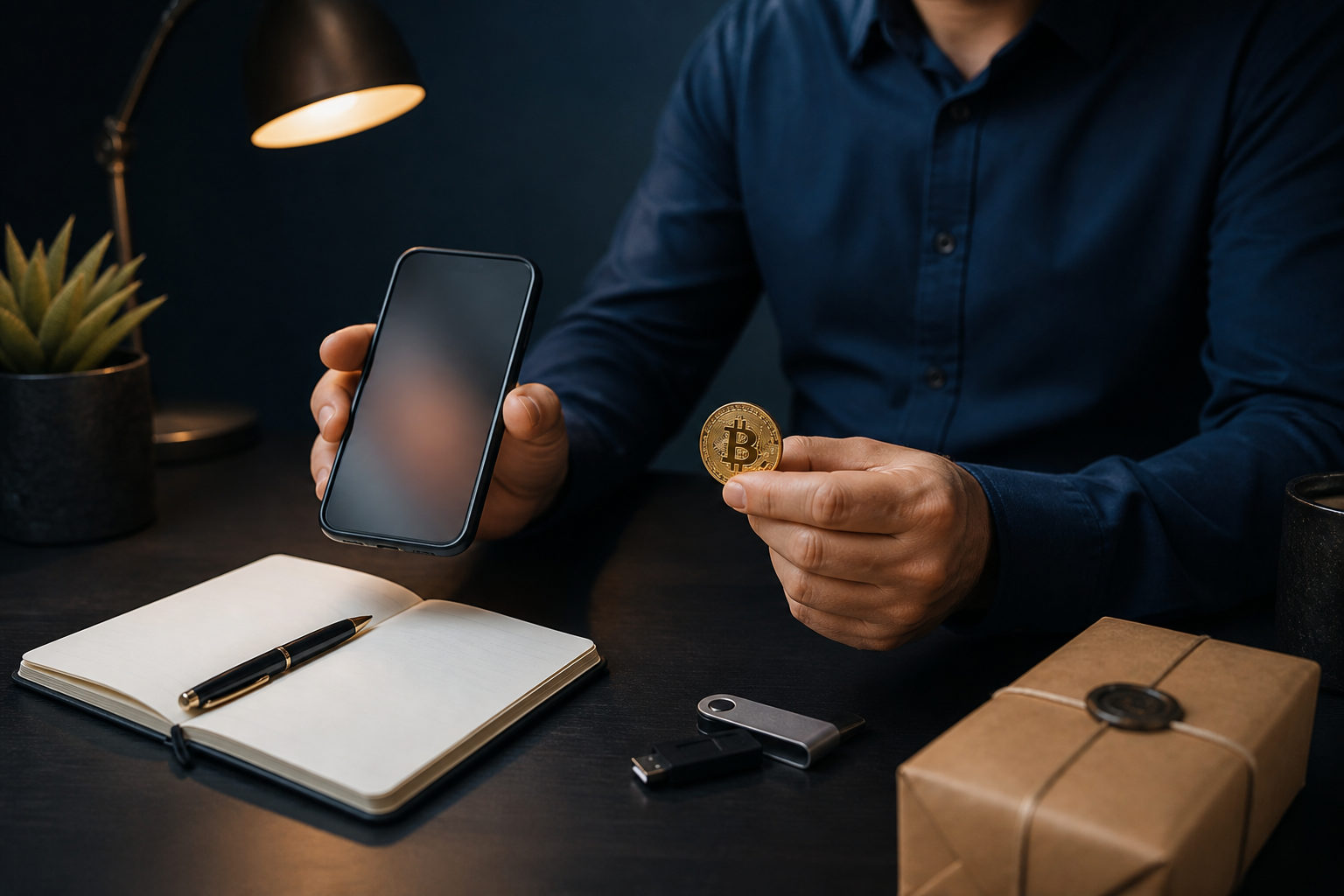
To get paid in bitcoin safely, set the payment rules first, send the correct wallet details, verify receipt in your own wallet, and release goods or services only after that check.
Decide what “getting paid in bitcoin” means in your case
People often use the phrase loosely. A client may say they want to pay in bitcoin when they mean BTC, when they mean another cryptoasset, or when they simply want crypto settlement while you care about a dollar-denominated invoice.
You should clear this up before anything else. If the asset, network, and pricing method are vague at the start, the rest of the transaction becomes harder to control and much easier to dispute later.
| Payment setup | Best fit | What to confirm first | Main risk |
|---|---|---|---|
| Direct BTC payment | Holding BTC, cross-border work, digital goods | Which network is used and who covers network fees | Price swings, wrong network, fake proof of payment |
| Dollar quote with crypto settlement | Freelance work, services, short delivery cycles | When the amount is locked and whether substitute assets are accepted | Unclear verbal terms, receipt mismatch |
| Manual one-to-one collection | Higher-value orders or fewer transactions | Who sends the address and who verifies payment | Social engineering, address tampering |
| Standardized collection process | Repeat orders, team workflows | Recordkeeping rules and delivery trigger | Internal errors, messy reconciliation |
The reason to define this early is simple: payment disputes usually begin with assumptions. One side thinks the network was obvious, the other assumes a different asset is acceptable, and the transaction starts drifting before the money even moves.
Write the terms in plain language. The payer should know what asset you accept, which network to use, what counts as payment completion, and whether delivery begins only after you verify receipt.
Build a receipt process you can repeat
Start with a wallet you control. You need to be able to view receiving addresses, generate payment requests if needed, and confirm incoming funds yourself; if control over the wallet is unclear, receiving payment does not automatically mean you can manage it safely.
Keep your public receiving activity separate from long-term storage. A wallet used for routine collection is exposed to more operational risk, and separating functions makes mistakes easier to contain.
Next, decide what you will send to the client. That can be a receiving address or a payment request, but it should always be paired with the exact asset and network; otherwise the payer may follow old habits and send funds in a way that does not match your setup.
Then use a small test payment when the relationship or setup is new. This matters when it is your first deal with the client, when you changed devices, or when you moved to a different wallet; a small test can reveal a copied address error, a network mismatch, or a misunderstanding before the full amount is sent.
After the test works, move to the full payment. Once the transaction is sent, verify receipt in your own wallet rather than relying on messages, screenshots, or a payment notification from the other party.
| Step | What to do | Why it matters | What people miss |
|---|---|---|---|
| Prepare a wallet | Use a dedicated receiving wallet and know who controls the backup | Control and payment receipt should stay aligned | Shared access on one device |
| Send payment details | State the asset, network, and completion rule | Cuts down transfer mistakes and disputes | Sending an address with no network note |
| Run a small test | Ask for a small payment first | Find setup problems early | Skipping the test to save time |
| Verify receipt | Check your own wallet record | Blocks fake screenshots and false claims | Treating chat proof as final proof |
| Deliver | Release goods or services only after your rule is met | Keeps the trigger for delivery clear | Delivering before internal confirmation |
If you handle repeat orders, document this process and reuse it. Consistency is one of the easiest ways to cut mistakes, especially when more than one person touches payments.
Put fraud prevention inside the workflow
A common threat is address replacement. Malware or a compromised device can swap a copied address for another one, so every time you send payment details, check the beginning and end of the address yourself before sharing it.
Another risk is fake proof of payment. A payer may send a screenshot, a clipped screen recording, or a message claiming the transfer is already on-chain; if you release goods because the story feels convincing, you are treating the other side's evidence as if it were your own.
Your standard should be stricter. Payment is complete when your wallet shows the incoming funds according to the rule you set, not when the customer says the transfer has been made.
There is also pressure-based manipulation. A buyer may ask to switch assets, switch networks, or use a different address at the last minute because it is “faster” or “what they always use”; once the terms change, pause the transaction and confirm everything again from the beginning.
Team workflows create a different class of risk. If support staff sends one set of instructions, finance checks another record, and the person handling delivery uses a third version, you can end up with duplicate delivery, missed funds, or a test payment mistaken for the final one.
| Risk scenario | What it looks like | Safer response | Bad habit to avoid |
|---|---|---|---|
| Address tampering | The pasted address differs from the one you intended | Recheck the address and resend from a clean device if needed | Assuming it looks close enough |
| Fake payment proof | The payer pushes for delivery based on a screenshot | Wait for your own wallet record | Shipping based on chat evidence |
| Last-minute rule changes | The payer wants a different network or asset | Stop and restate the original terms before proceeding | Adjusting terms in the middle of execution |
| Internal confusion | Records, approvals, and delivery triggers do not match | Use one shared template for payment verification | Relying on memory or verbal handoff |
FAQ
What details should I send a client who wants to pay me in BTC?
Send more than a wallet address. Include the asset, the network, and the rule for when you consider the payment complete, so the client is not left to guess how to pay you.
When should I release goods or start work after a bitcoin payment?
Use your own wallet record as the trigger, then follow the delivery rule you set in advance. That matters even more for digital products or services that cannot be taken back once delivered.
If a buyer sends funds on the wrong network, can I always recover them?
No, recovery depends on wallet control and whether your setup supports that asset and network combination. The practical way to reduce this risk is to make network instructions explicit before the payment is sent.
How should I quote a job if the client wants to pay in bitcoin?
State the pricing method clearly. Many sellers prefer to define the invoice in dollars and specify when the payable amount is determined, so both sides know how the final crypto payment will be calculated.
Is the process different for a solo seller and a small team?
The core logic stays the same, but team setups need tighter role separation. One person can send payment details, another can verify receipt, and delivery can follow only after that internal check is complete.
What to do after you receive the payment
Keep a usable record of each transaction: who paid, what asset was received, what order or service it matched, and when your wallet showed the funds. That record helps with disputes, repeat clients, and internal review.
Also review address management and device safety on a regular basis. If you plan to accept bitcoin long term, the strongest protection is not a last-minute burst of caution; it is a repeatable process for verification, recordkeeping, and controlled delivery.
Disclaimer: This article is for informational and educational purposes only and is not investment, financial, or legal advice. Crypto assets are highly volatile and you could lose your entire investment. Do your own research and decide carefully.