
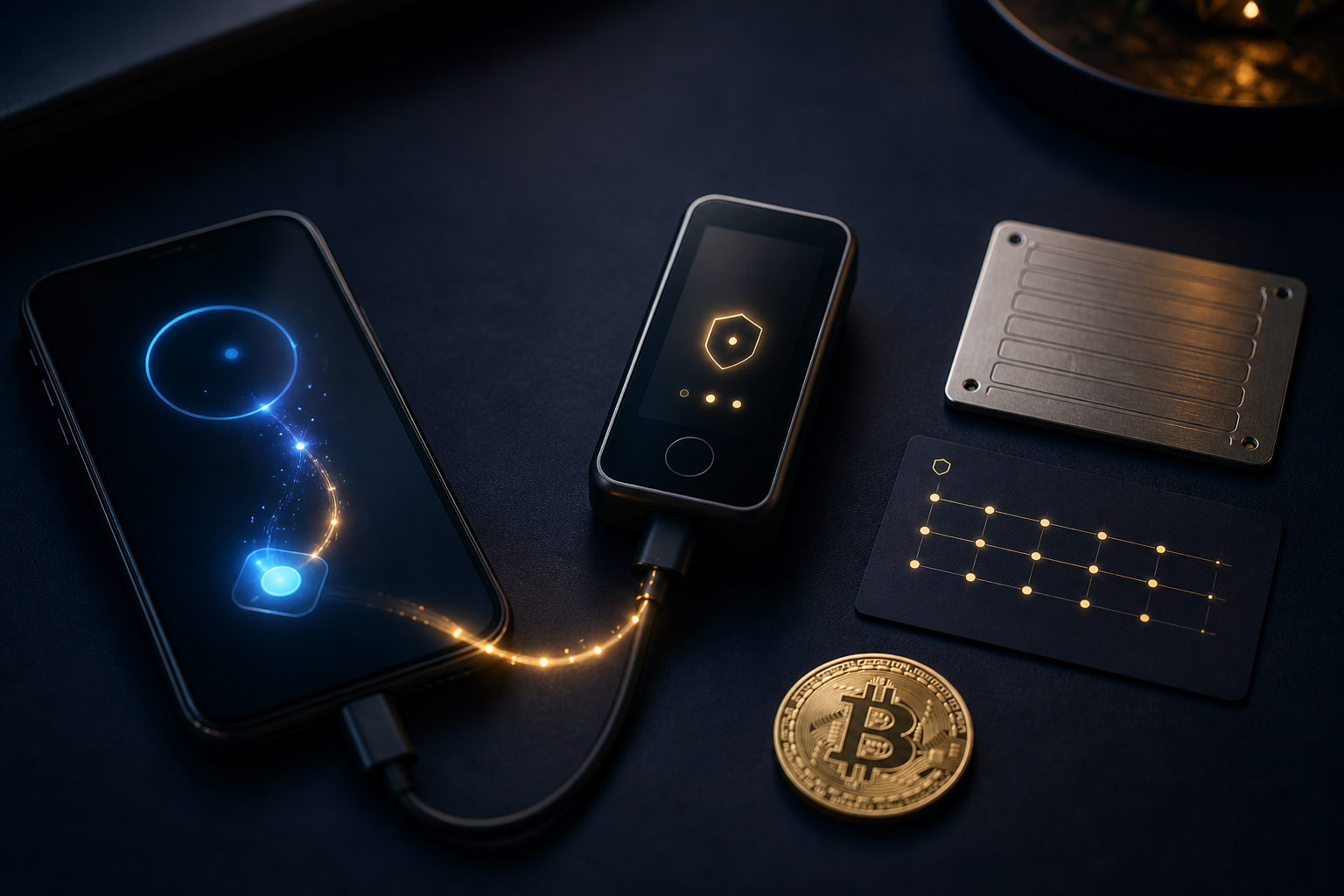
To transfer bitcoin to a cold wallet safely, set up the wallet first, back up the recovery phrase offline, verify the receiving address on the device, send a small test amount, and only then move the rest. The transfer is usually irreversible, so the main job is reducing mistakes before you press send.
What a cold wallet really means before you move bitcoin
People searching for how to transfer bitcoin to cold wallet often think the hard part is the transaction itself. In practice, the bigger issue is knowing what kind of wallet they are using. If your bitcoin is still sitting on an exchange account, or inside a service where the provider controls the keys, you have not moved to cold storage yet.
A cold wallet is about key custody, not marketing language. The core idea is that the private keys are kept offline as much as possible and controlled by you, not by an exchange or another company. Hardware wallets are the most common example, but the real test is simple: do you control the private keys, and are they kept away from normal online exposure?
That shift matters because responsibility changes with it. On an exchange, access problems may be handled through account recovery. In cold storage, recovery materials, device safety, backup quality, and inheritance planning become your problem. If you send bitcoin to the wrong address, there is usually no undo button.
How to transfer bitcoin to a cold wallet step by step
Set up the cold wallet and back up the recovery phrase offline
Before you transfer anything, initialize the cold wallet in a clean environment. During setup, the wallet will usually generate a recovery phrase or other recovery material. Do not take screenshots. Do not save it in cloud notes, email drafts, chat apps, or any online storage. Write it down and store the backup in secure, separate places.
If you are using a hardware wallet, be careful with device source and setup flow. Avoid used devices from unknown sellers. Never import a recovery phrase that someone else created for you. If another person has seen that phrase, then any bitcoin later sent to the wallet may already be at risk.
Generate a receiving address from the cold wallet
Open the wallet software or companion app tied to your device and go to the bitcoin account. Create a receiving address there. This sounds basic, but it is the point where many mistakes start. You need to confirm that the receiving account is for bitcoin and that the address was generated by your own wallet, not copied from a message, a website form, or a third party.
If you hold several digital assets, pay extra attention here. Similar account names or crowded interfaces can lead to confusion. When you transfer bitcoin to a cold wallet, the asset you are sending, the address you are receiving with, and the wallet account you selected all need to match.
Start the withdrawal from the exchange or hot wallet
Go back to the exchange account or hot wallet where your bitcoin is currently held. Choose withdraw, send, or transfer out, then paste the receiving address from the cold wallet. Do not rely on a quick glance at the first and last few characters. Compare carefully, and if you have a hardware wallet, treat the address shown on the device screen as the final check.
This is a practical security step, not ceremony. Clipboard malware can replace a copied address with an attacker address. You think you pasted your own destination, but the funds may be sent somewhere else if you skip the verification step.
Send a small test first
If this is your first time, or if you changed device, exchange, computer, or wallet software, send a small test amount before moving the main balance. Once the cold wallet shows the incoming transaction and you can confirm that everything looks correct, you can proceed with the larger transfer.
A test transaction is one of the simplest ways to cut down risk. It will not solve every possible problem, but it can catch wrong addresses, account mix-ups, and setup errors before they become expensive.
Wait for confirmation and check actual receipt
After you submit the withdrawal, the process is not finished at once. The exchange may still be processing it, and the bitcoin network still needs to confirm the transaction. Check three things separately: whether the platform has broadcast the transaction, whether the transaction appears on-chain, and whether your cold wallet interface recognizes the incoming transfer.
If the exchange shows the withdrawal as complete but the wallet does not update right away, do not rush into sending a second transfer. First confirm that you are viewing the correct bitcoin account and that the wallet software is syncing properly.
The biggest risk is not the button click, it is key responsibility
Most guides on how to transfer bitcoin to a cold wallet make the process look short: copy address, paste address, send. The real issue is that you are moving from custodial storage to self-custody. Once the bitcoin arrives in your cold wallet, you are responsible for the backup, the recovery path, the physical safety of the device, and basic phishing defense.
- Wrong address entry: This can happen through typing mistakes, bad copy and paste habits, or malware changing clipboard content.
- Asset confusion: Users handling several coins can select the wrong account or assume one address works for everything.
- Backing up the device but not the recovery phrase: If the device fails and you do not have the recovery material, access may be lost.
- Saving the recovery phrase online: Photos, cloud drives, email, and chat logs all increase exposure.
- Skipping device-level verification: Trusting only the computer screen can leave room for tampering.
- No test transaction: Sending the full amount on the first try leaves almost no room for error.
Another common misunderstanding is thinking that buying a hardware wallet solves the whole security problem. It does not. A cold wallet is a tool. The real protection comes from setup discipline, offline backups, address verification, and knowing how recovery works before an emergency happens.
What to do after the bitcoin reaches the cold wallet
Once the transfer is complete, there is still follow-up work. If the goal is long-term storage, you need a storage plan that remains usable even if the device is lost, damaged, or unavailable for some other reason.
- Confirm the wallet shows the incoming bitcoin correctly: Make sure the right account is open and the transaction appears as expected.
- Review backup readability: Your written recovery phrase should be clear and stored where you can retrieve it when needed.
- Know the recovery path: If the hardware wallet stops working, you should know what information is needed to restore access.
- Avoid single-point failure: Do not keep the device and the recovery phrase in the same place.
- Separate long-term storage from spending funds: Cold storage works best for holdings you do not need to move often.
If you plan to hold bitcoin for a long time, the useful habit is not checking the balance all the time. It is reviewing your backup setup from time to time, checking that the written recovery materials are still intact, and making sure you still understand the recovery process without exposing private keys online.
Cold storage protects private keys. It does not correct careless behavior.
FAQ
After I move bitcoin off an exchange, do I fully control it?
You usually do if the receiving wallet is one where you control the private keys. The name shown in the app matters less than the custody model behind it.
If the wallet is still operated by a service provider and you do not control the keys, then the storage is still custodial even if it looks like a wallet account.
Why is a small test transfer recommended before the full amount?
Because bitcoin transactions are usually irreversible. A test transfer gives you a way to confirm the address, account selection, and wallet setup before making a larger move.
This is especially helpful when you are using a new device, a new exchange, or a new computer. One clean test is better than trusting memory.
Will my cold wallet use the same receiving address every time?
Not always. Some wallets generate fresh receiving addresses, while others may still show an older one depending on the wallet design and how you use it.
The important point is not whether the address changes. It is whether the address comes from your wallet and is verified before you send bitcoin to it.
Does a cold wallet mean I never connect to the internet?
No. You may still use software connected to the internet to view balances, sync transactions, or broadcast a transaction. The security model is about keeping private keys away from ordinary online exposure.
So online viewing is one thing, private key exposure is another. Those should not be treated as the same risk.
If I lose the hardware wallet, is the bitcoin gone?
Not necessarily. If your recovery phrase or other recovery material is safe and complete, you can usually restore access with a compatible wallet setup.
The dangerous case is losing the device and the backup at the same time, or having the recovery phrase exposed to someone else earlier. The backup is the real control layer.
Before you move any bitcoin, run one final check: wallet set up, recovery phrase backed up offline, receiving address generated by your own cold wallet, address verified carefully, test transaction sent first, and only then the remaining balance moved.