
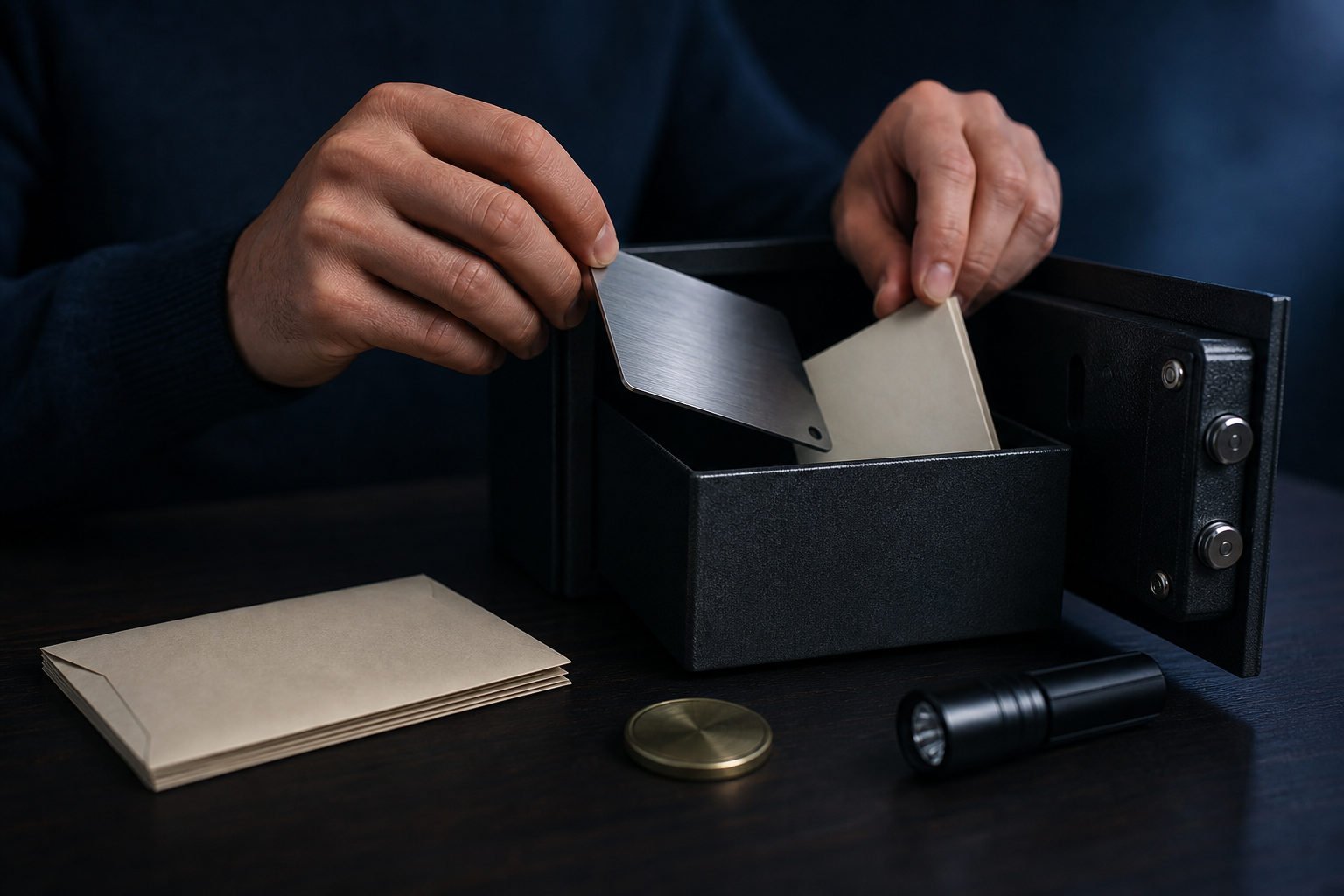
Bitcoin seed phrase backup best practices come down to three requirements: keep the phrase offline, make sure it can actually restore the wallet, and store it in a way you can still access later. If the seed phrase leaks, someone may take control of the bitcoin. If it is lost, recovery may be impossible.
Why a seed phrase needs its own security plan
A seed phrase is usually the human-readable recovery key for a wallet. Anyone who gets those words can often import the wallet into compatible software or hardware and gain control over the funds. That makes a seed phrase very different from an app passcode, a device lock, or a login password.
Many beginners assume the wallet is safe because the app still opens on their phone. That misses the real issue. Phones break, get replaced, or disappear. Apps can be deleted, reset, or moved. The thing that gives you a path back is often the backup, not the original device.
It also helps to separate wallet recovery from day-to-day access. A PIN, fingerprint, or face unlock may protect local access on one device. The seed phrase can restore the whole wallet somewhere else. If you mix those roles together, it becomes easy to underestimate how sensitive the phrase really is.
What to do when you create the backup
The safest time to back up a wallet is when it is first created. The words are on screen, the order is fresh, and you can verify everything before life gets busy and the task is forgotten.
Write it down in a low-exposure setting
Avoid any tool that is built for convenience and syncing. Do not take a screenshot. Do not paste the phrase into notes, email drafts, cloud drives, password managers used for general logins, or chat apps. Those tools create copies, previews, sync records, or recovery paths that are hard to track later.
If you are using a hardware wallet or a wallet that allows offline setup, record the phrase in a place where other devices are not quietly collecting it. Screen recording software, shared displays, cameras in the room, and voice assistants all widen the exposure surface. A leak does not always come from malware; sometimes it comes from ordinary digital clutter.
Copy every word exactly as shown
Order matters. Spelling matters. Handwriting matters as well if you plan to rely on a paper backup years from now. Do not shorten words to initials and do not invent your own shorthand unless you have already tested a clear recovery method that does not depend on memory alone.
After writing the phrase once, compare it word by word against the wallet display. Look for skipped lines, swapped positions, unclear letters, and any place where your own writing could be misread later. A backup can fail even when the words are technically present if the sequence is wrong or the writing is too messy to trust.
Test recovery before you put the backup away
A large share of backup problems come from silent mistakes that no one catches at setup time. A controlled recovery test is often the only way to confirm that the phrase works in practice, not just in theory.
The goal is not to import your real wallet onto many devices. The goal is to verify that the words, order, and readability are correct. Once you finish the test, clean up the temporary environment so the phrase is not left sitting on another device longer than needed.
How to store it for the long term
Creating a backup is one task. Preserving it over time is another. A good storage plan has to deal with two separate risks: unauthorized access and your own failure to retrieve it when needed.
Use more than one offline copy
Keeping a single copy in one drawer creates a fragile setup. Fire, water damage, theft, accidental disposal, or a rushed move can wipe out your only recovery path. Multiple offline copies stored in separate places reduce the chance that one event destroys everything at once.
Separate places should be truly independent, not just two envelopes next to each other. Think about how items get handled in real life. Things stored with old phones, personal documents, or computer accessories may all get moved together. That means one mistake can still affect every copy.
Choose storage material based on time horizon
For short-term handling, a clear handwritten backup may be enough. For long-term bitcoin storage, many people prefer a medium that can better survive moisture, wear, and accidental damage. The point is durability, not complexity.
Whatever medium you choose, ask two practical questions. Will you still be able to read it years later without guessing? Could someone in the household throw it away because it looks unimportant? A backup that is hidden so well that it becomes unrecognizable to you has its own failure mode.
Keep related secrets apart
Some users place the seed phrase, device PIN, wallet passcode, exchange account details, and identity documents in one package for convenience. That turns one discovery into a full compromise. Separation matters because different pieces serve different purposes.
Store the recovery phrase away from device unlock information and away from account credentials. If you leave instructions for a trusted person, the instructions should explain what exists and where to look, without handing over every element of control in one place.
High-risk habits that feel convenient
- Screenshots: images may sync to other devices, enter cloud photo backups, or remain in galleries and caches.
- Cloud storage: services designed for easy access are a poor fit for material that can restore a bitcoin wallet.
- Emailing or messaging yourself: messages can remain on multiple devices and in account histories you do not fully control.
- Saving the phrase in a document app: version history, autosave, and sync can leave traces after deletion.
- Relying on memory only: memory changes over time, especially for exact word order.
- Making one copy only: one point of failure is still a point of failure even if the hiding place feels safe.
Another subtle mistake is creating a personal encoding system that only makes sense today. If recovery depends on remembering a custom rule years later, the weak link may be your future memory rather than an attacker. A backup should still be usable under stress, not only when everything is calm and familiar.
A practical checklist you can actually follow
- Record the seed phrase offline when the wallet is created.
- Check every word against the original display and confirm the order.
- Make more than one offline copy and store them in separate places.
- Keep the phrase separate from device PINs, wallet passwords, and account credentials.
- Run a controlled recovery test before treating the backup as finished.
- Leave simple recovery context for your future self, such as wallet type or where instructions are stored, without placing all sensitive details together.
- Recheck the backup after a move, storage change, or any event that may have exposed or displaced it.
This kind of checklist works because it is realistic. A simple plan that survives over time is better than an elaborate scheme that you stop maintaining.
FAQ
Can I take a photo of the seed phrase and delete it later?
That is a poor tradeoff. The image may already have been synced, cached, or backed up before you delete it, and you may never know where every copy went.
Offline writing or another offline durable method gives you a much smaller exposure surface.
Is a seed phrase the same thing as a private key?
They are not the same format, but both are tied to wallet control. A seed phrase is commonly used to regenerate the wallet's private keys, so it should be protected with the same level of care.
In practical terms, someone who can restore the wallet from the phrase may gain control over the bitcoin in it.
Is splitting the seed phrase into parts a good idea?
It can reduce the risk of a single leak, but it also raises the chance that you create your own recovery problem. If the retrieval method is confusing, incomplete, or dependent on memory, you may fail when you need it most.
If you want a split scheme, test whether you can recover from it under realistic conditions before trusting it with meaningful funds.
How often should I check my backup?
There is no universal schedule that fits everyone. What matters more is checking after changes in storage conditions, such as a move, a cleanup, a new safe location, or other people handling the area.
The purpose of a check is to confirm readability and access, not to create new digital copies or expose the phrase to more devices.
Do I still need the old seed phrase after moving to a new wallet?
First confirm that nothing remains under the old wallet, including any addresses or accounts you still depend on. If the old wallet still controls anything relevant, the old phrase still matters.
Once migration is complete, keep your records clearly separated so an outdated backup is not confused with an active one later.
Review your bitcoin seed phrase backup today against three standards: it stays offline, it has been tested for recovery, and you can still retrieve it when needed. If any one of those is missing, the problem is operational, not theoretical.