
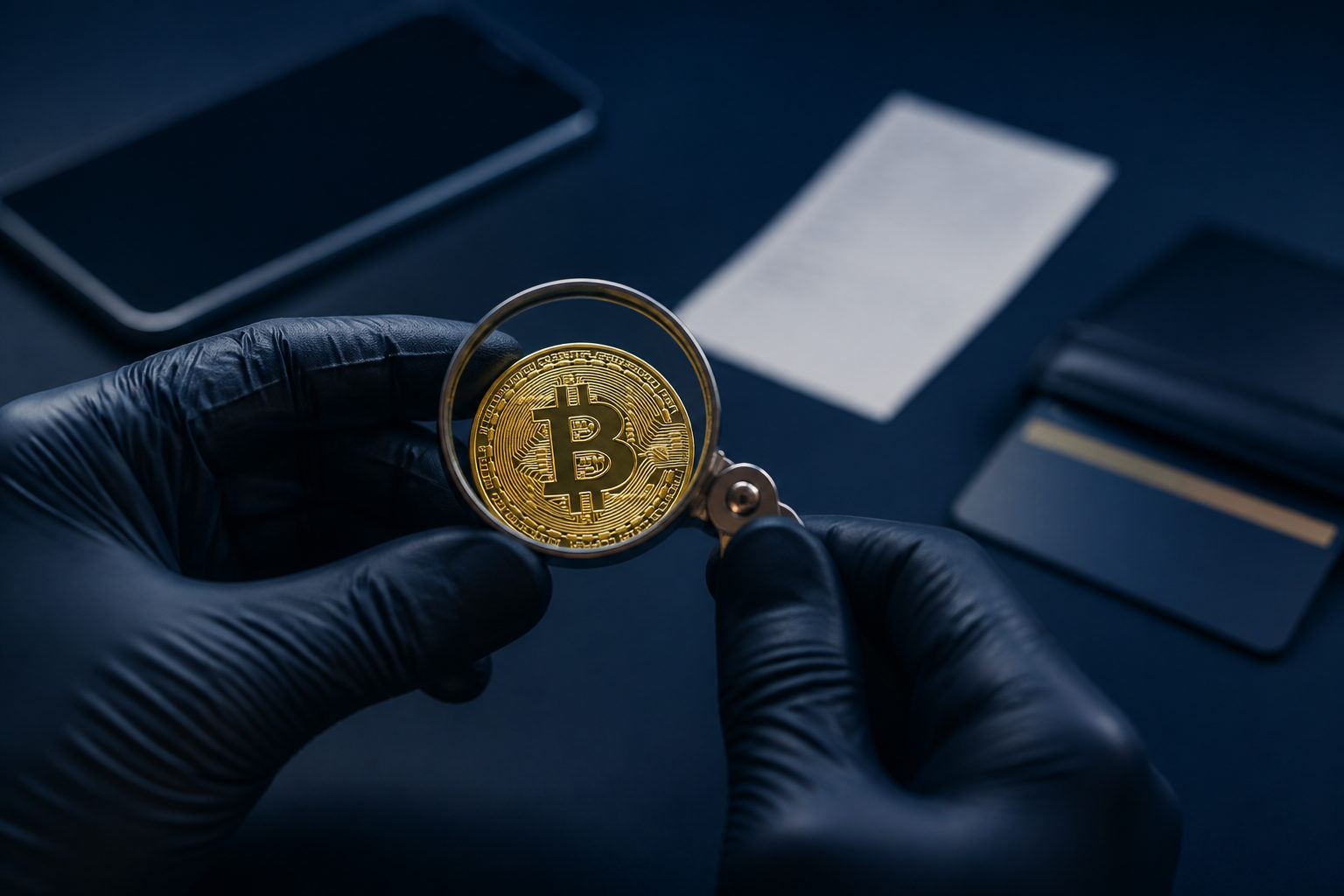
You usually cannot “make fake bitcoins” in the same way someone might counterfeit cash. What people run into far more often is fake proof of payment, fake wallet balances, and fake platforms that pretend BTC has arrived.
Why the usual problem is fake evidence, not fake BTC
Bitcoin transactions are checked by a public network with shared rules. If a payment is real, it can be verified on the blockchain with tools you trust, using an address you control. That makes straight-up counterfeiting very hard in the way most newcomers imagine it.
The practical danger sits somewhere else. A scammer does not need to create a new bitcoin out of thin air if they can convince you that payment already happened. Once you release goods, send money back, unlock an account, or move assets to a new wallet, the damage is done even though no valid BTC payment ever reached you.
Another source of confusion is the difference between a blockchain asset and a number displayed on a screen. An app can show “BTC,” a platform can credit your account with a balance, and a chat message can claim a transfer is complete. None of that matters unless you can independently confirm that the asset exists on-chain and is actually under your control.
The most common “fake bitcoin” scams
| Scam type | How it works | Why people fall for it | First warning sign |
|---|---|---|---|
| Fake payment screenshot | The scammer sends an image showing a completed BTC transfer | The seller is in a rush and relies on the image | You get a picture, not independently verifiable transaction details |
| Fake explorer page | A website is made to look like a blockchain lookup tool and shows a confirmed payment | The page looks technical and convincing | The site is unfamiliar or the details cannot be checked elsewhere |
| Fake wallet balance | You are told to install a wallet app that displays BTC you do not really own | People assume the app display equals real ownership | The balance shows up but cannot be moved normally |
| Fake exchange or OTC desk | You deposit funds, the dashboard shows BTC, but withdrawals never work | Users treat an internal balance as if it were actual custody | Withdrawal attempts trigger new fees or endless reviews |
| Other tokens passed off as BTC | A different asset is labeled in a misleading way | The buyer checks the name, not the asset itself | The sender cannot clearly explain the network or asset type |
| In-person pressure scam | The other party shows “payment sent” and pushes for immediate handover | Time pressure weakens verification | You are being rushed to finish on the spot |
These scams work because they shift your attention from independent verification to staged proof. A polished interface, a fake customer support script, or a confident seller can all create the impression that a transfer exists when it does not.
Be careful when the other side also tells you exactly where to check. If the verification path is controlled by the scammer, the result can be staged from the start.
What to verify before you treat BTC as received
The key question is not whether someone claims to have paid. The key question is whether you can confirm, on your own, that a real bitcoin transaction reached an address you control and that you have the practical ability to use those funds.
| What to check | What a normal situation looks like | Red flag | What you should do |
|---|---|---|---|
| Transaction record | You can verify it independently with trusted tools | Only screenshots or copied text from the sender | Pause the trade and verify on your own |
| Receiving address | The address matches your wallet exactly | The address was pasted from an unknown source or looks altered | Check the address carefully before acting |
| Control of funds | You control the wallet or have clear withdrawal rights | You can see a balance but cannot move it freely | Do not treat that balance as settled payment |
| Platform behavior | Deposits and withdrawals follow a clear, consistent process | New charges appear whenever you try to withdraw | Stop sending funds and save records |
| Counterparty behavior | The other side allows time for checks | They pressure you to release goods immediately | Slow the process down |
Even a real blockchain transaction is not enough if it did not go to your address. People sometimes see a valid transaction, assume it is theirs, and release goods before noticing the payment went somewhere else or referred to a different asset. Ownership matters as much as existence.
Software is another weak point. If you download a wallet, browser extension, or “support tool” from a search result, a chat file, or a random social account, you may hand the verification process to the attacker. Then every balance, alert, and confirmation message you see can be manipulated.
FAQ
Is a payment screenshot enough proof that I got bitcoin?
No. A screenshot only proves that someone sent you an image. It does not prove that a real BTC transaction exists or that the funds reached a wallet you control.
Use your own trusted wallet or verification method, then confirm the address, the asset type, and your ability to move the funds before you release anything.
Why can a wallet show BTC even if the coins are not really mine?
Because an app display is not the same as verifiable ownership. A fake wallet, a tampered app, or a closed platform can show a balance that you cannot actually withdraw or control.
If you cannot move the funds normally, or if you do not control the recovery credentials or withdrawal access, treat the balance as unconfirmed at best.
What should I do during an in-person bitcoin payment?
Do not rely on the other person's phone, and do not use a lookup page they provide. Check your own device, your own wallet, and your own verification flow before you hand over goods or access.
For larger deals, set the verification standard in advance so you are not negotiating under pressure in the moment.
A “support agent” told me to send BTC for verification. Is that normal?
No legitimate check should require you to move bitcoin to a stranger's address as proof of account ownership. Requests for release fees, review fees, or temporary transfer checks are common scam patterns.
Stop the process and inspect your account from the official app or service entry point you already know, not from a message someone sent you.
If I think a platform is fake, what is the first thing to do?
Stop sending more money right away. Save chat logs, deposit records, account notices, and screenshots of the withdrawal errors or fee demands.
Then review the security of every account and device you used with that platform. Changing passwords and removing suspicious access can prevent the problem from spreading.
What to do the moment something feels off
Freeze the transaction. Do not ship the item, release escrow, send a refund, install new software, or share your screen just because the other side sounds urgent or professional.
Go back to the wallet or platform you already use, on a device you trust, and confirm whether the BTC is truly there and under your control. Keep your recovery phrase, private keys, login codes, and text-message codes to yourself under all circumstances.
If you accept bitcoin payments regularly, the best protection is a fixed acceptance rule: you only recognize payment after independent verification, you only install software from official sources, and you only treat BTC as received when it has reached a wallet you control. A written rule removes guesswork, which is exactly what most scams depend on.