
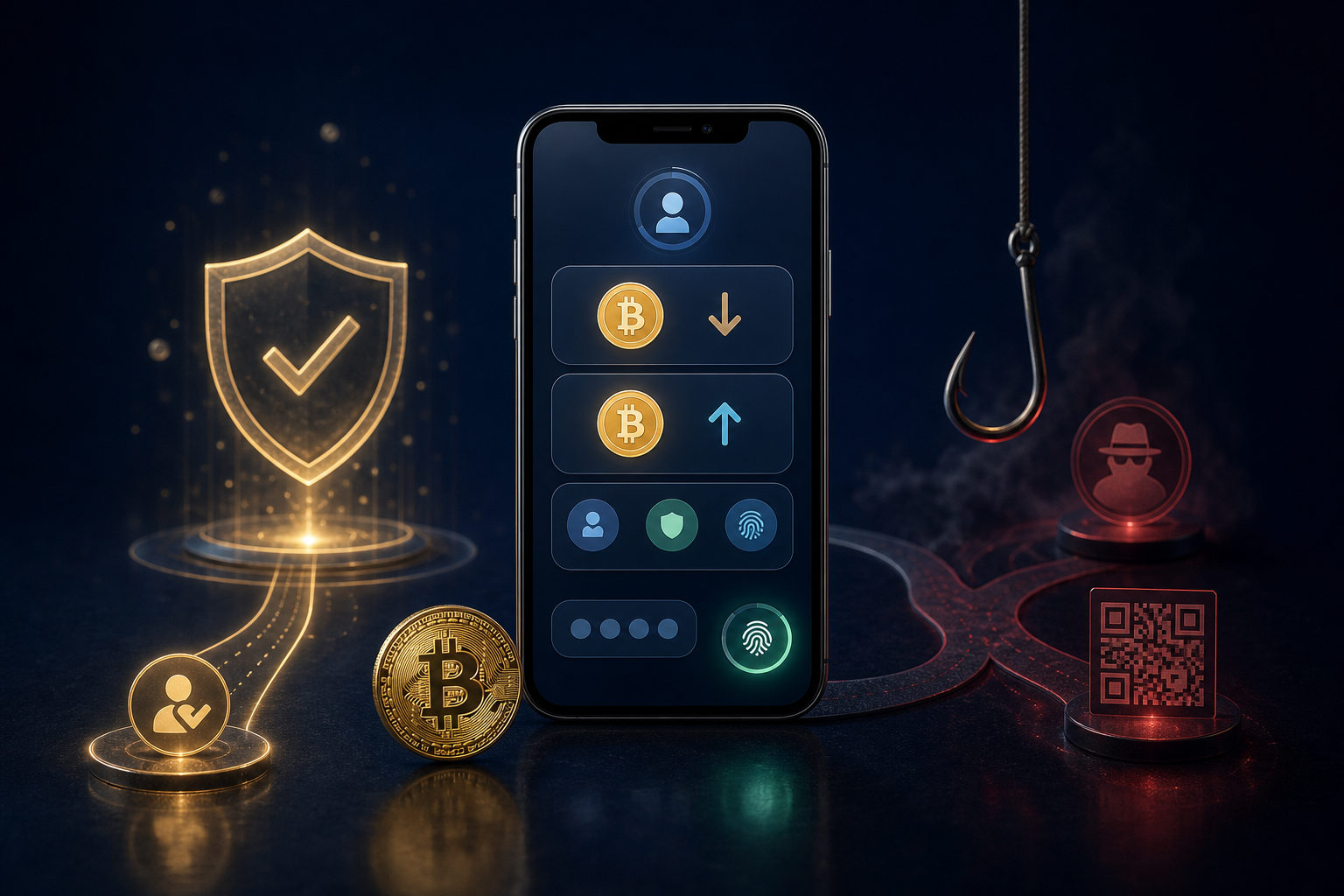
Cash App Bitcoin can be legitimate as a platform feature, but that does not make every Bitcoin-related payment around Cash App safe. The real question is whether you are using the official in-app feature or being pushed into a scam.
When people ask “is cash app bitcoin legit,” they usually mean one of two things. First, is the Bitcoin feature inside the app real and official? Second, can someone get scammed while using Cash App to buy or send Bitcoin? Those are different questions, and mixing them up is where many bad decisions start.
A payment app offering Bitcoin access is not the same as a stranger telling you to buy Bitcoin there and send it to a wallet they control. In practice, most losses happen in the second situation. The scam is often not the app itself. The scam is the story built around the transfer.
Start with the right distinction: official feature vs. external pressure
If you are checking whether Bitcoin on Cash App is legit, begin by asking where the action is happening. Are you inside the official app, using its normal buy, hold, or transfer functions on your own? Or are you following instructions from someone in a text, social post, email, dating app, or phone call?
That distinction matters because the risk profile changes fast once another person starts directing your steps. Buying Bitcoin for yourself is one thing. Buying it because someone claims your account must be verified, your funds are frozen, your payout needs blockchain release, or your investment manager needs a deposit is something else entirely.
Scammers borrow the credibility of familiar brands. They know users feel less suspicious when they hear a known app name. So they frame their demand in a way that sounds routine: account review, identity check, secure transfer, release fee, tax payment, trading setup, or withdrawal confirmation. The wording changes. The mechanics do not. They want you to convert money into Bitcoin and send it out of your control.
Once that happens, the situation stops looking like a standard payment dispute and starts looking like an irreversible crypto transfer problem.
How the scam usually works
Most Cash App Bitcoin scams are not selling fake Bitcoin in a direct way. They are selling a reason. The reason can sound administrative, urgent, emotional, or profitable, but the end goal is usually the same: get the victim to move Bitcoin to an outside address.
Fake support or fake security alerts
One common script starts with a warning that your account has unusual activity or restricted access. The person contacting you may claim to be from support, fraud prevention, or account security. They may ask for login codes, device access, or a Bitcoin transfer to a “safe” wallet for verification.
That is a major red flag. Real account protection does not depend on giving a stranger your code or sending Bitcoin away for safekeeping.
Investment coaching and guaranteed profit claims
Another pattern appears on social platforms, chat apps, and private messages. Someone shows trading screenshots, claims they can manage your position, or says they know a low-risk strategy. Then they tell you to buy Bitcoin on Cash App and move it to a website, a broker account, or a wallet they provide.
If the pitch includes guaranteed returns, no-loss claims, managed trading, or a promise that they will handle everything for you, the risk is high. Bitcoin can be bought through legitimate app features, but no app turns a stranger into a trusted money manager.
Fake payment release, refund, or job setup
Some scams wrap the transfer inside a sale, side gig, freelance offer, or marketplace deal. The scammer says a buyer has paid, but the funds cannot be released until you complete a Bitcoin step. In other cases, they say a refund or salary can only be unlocked after a crypto confirmation.
The language is designed to sound technical enough that a new user hesitates instead of stopping. That hesitation is what the scammer uses.
Romance and personal emergency stories
Not every scam begins with an investment promise. Some begin with trust. A person builds rapport, then asks for help with travel, medical costs, a frozen account, or a short-term emergency. They insist that Bitcoin is the only practical method and direct you to buy it on Cash App.
When someone strongly prefers crypto over ordinary payment methods, especially in a personal story, you should slow down and check the situation from scratch.
Red flags that matter more than the sales pitch
People often focus on the exact story being told. A better approach is to look at the warning signs in the process. The script can change, but the pressure pattern tends to stay the same.
- Urgency: You are told to act right now or lose access, miss a payout, fail verification, or trigger a penalty.
- Off-platform instructions: You are pushed from the app to a private chat, phone number, remote session, or outside website.
- Requests for codes or recovery details: No one should need your login code or wallet recovery information to help you.
- Promises of fixed profit or no risk: Bitcoin prices move. Anyone claiming steady gains without downside is selling a fantasy.
- Pay first to unlock funds later: Release fees, account activation payments, tax prepayments, or blockchain verification deposits are all danger signals.
- Only crypto is accepted: That often means the other side wants a payment method that is harder to reverse and easier to move.
You can also use a simple test. If the person really represents the platform, why can they not solve the issue inside the official app interface? Why do they need you on another channel, another device, or another wallet?
What to do if something feels off
Once you feel doubt, your first move should be to stop the sequence. Many losses grow because the victim becomes suspicious but keeps going anyway after being pushed with more urgency.
- Pause the transaction: If the Bitcoin has not been sent, do not send it just because someone is pressuring you.
- Check status only inside the official app: Ignore screenshots, copied emails, and verbal claims. Look directly at your own account.
- Secure your account: If you shared codes, login details, or device access, change what you can and tighten your security settings right away.
- Save evidence: Keep chats, wallet addresses, usernames, emails, call records, and the order of events.
- Use official support channels only: Do not trust numbers or links sent by the person who contacted you.
- Watch for recovery scams: After a loss, another scam may appear in the form of a recovery agent, tracing expert, or fund retrieval service asking for upfront payment.
If the Bitcoin is already gone, avoid making the situation worse by paying anyone else who promises a guaranteed recovery. Your next step should be documentation and official reporting, not another leap of faith.
How to use Cash App Bitcoin more safely
Most people do not get trapped because they cannot tell a real app from a fake one. They get trapped because they do not know which actions should never be handed over to another person.
Set a few hard boundaries. Do not let someone else choose how much Bitcoin you buy, when you buy it, or where you send it. Do not treat Bitcoin transfers as an account verification tool. Do not buy Bitcoin on behalf of strangers. Do not assume that anything happening inside one app can be reversed in the same way as a card dispute or a standard cash transfer.
That last point is important. There is a big difference between seeing a balance in an app, buying Bitcoin, and sending Bitcoin to an outside wallet. New users often blur those steps together. Scammers count on that confusion. They know a victim may think, “It is all happening in one familiar app, so I can sort it out later.” That assumption can be costly.
| Situation | Main risk | Safer response |
|---|---|---|
| You buy Bitcoin in the official app for yourself | Price volatility and account security | Use only features you understand and keep account protection strong |
| You buy Bitcoin because an online contact told you to | High scam risk | Stop and verify the purpose independently |
| A caller asks for codes or screen sharing | High account takeover risk | End the call and check support options inside the app |
| Someone promises managed profit with no loss | High loss risk | Do not transfer Bitcoin or grant control |
FAQ
Is Bitcoin inside Cash App itself a scam?
Not by default. The safer way to look at it is this: an official in-app Bitcoin feature is different from a stranger using the app as part of a scam script.
Is it normal for someone to ask me to buy Bitcoin on Cash App and send it to them?
That is a high-risk request, especially when the reason involves account recovery, investing, refunds, fees, or verification. If you do not fully understand the purpose and control the decision yourself, do not send it.
How can I tell whether a support message is real?
Step away from the message and check through the official app on your own. A real support process should not depend on you sharing login codes, recovery details, or remote access to your device.
What if I already sent the Bitcoin?
Stop any further payments, save all records, and report the issue through official channels. Be careful with anyone who asks for money first and claims they can recover the funds for you.
Why do scammers prefer Bitcoin over regular payment methods?
Because once Bitcoin is sent to an outside wallet, it is often harder to reverse or dispute than a regular payment. That makes it attractive to scammers, even though the app feature itself may be legitimate.
If you remember one rule, make it this: if someone is guiding you step by step to buy Bitcoin on Cash App and then send it to an address they chose, stop there and verify everything inside the official app before doing anything else.
Disclaimer: This article is for informational and educational purposes only and is not investment, financial, or legal advice. Crypto assets are highly volatile and you could lose your entire investment. Do your own research and decide carefully.