
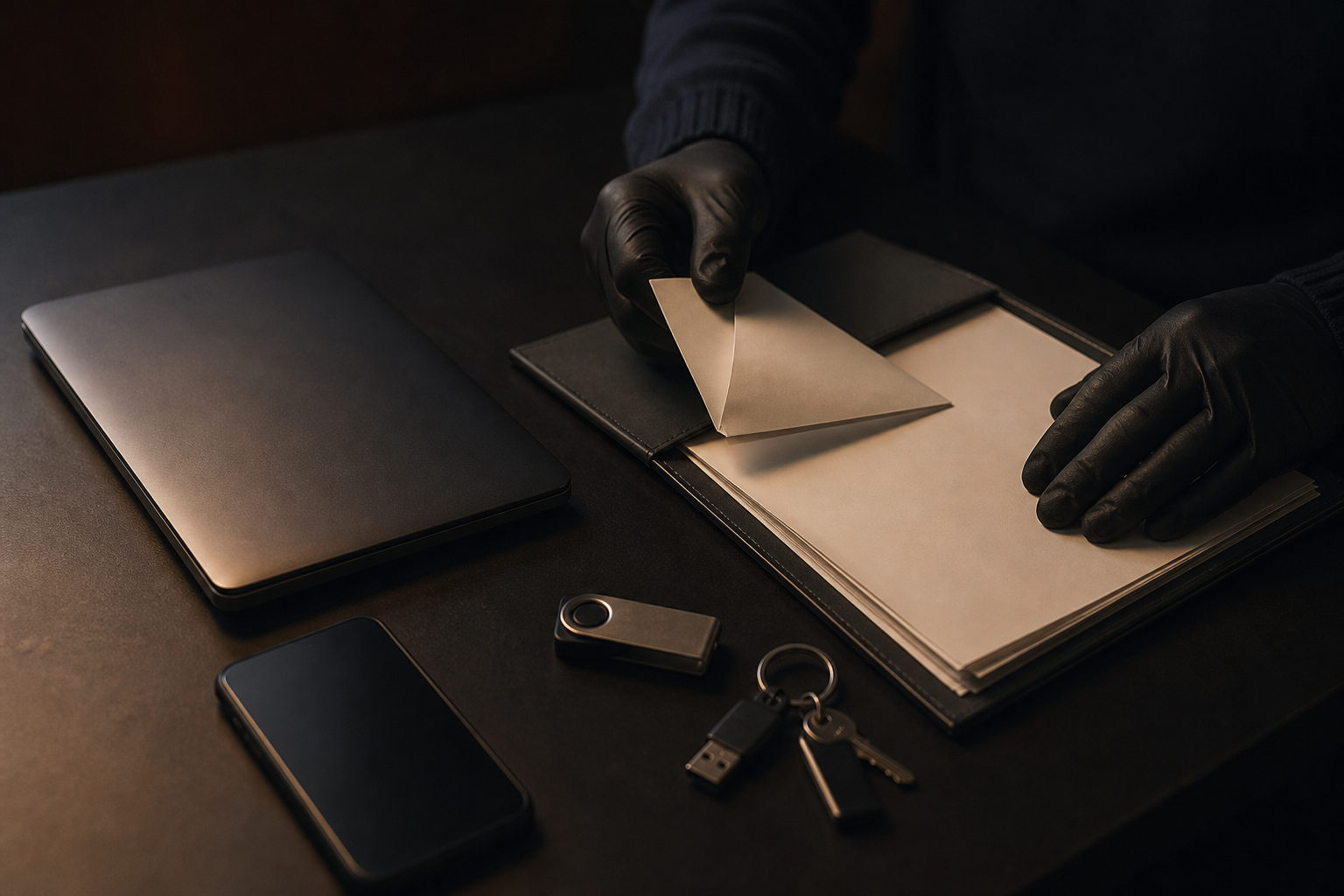
To find out if a deceased person had Bitcoin, start by preserving devices and records, then trace exchange accounts, wallet apps, and backup phrases before anyone changes or wipes anything.
First, separate two questions
Families often combine two different issues: whether the deceased ever held Bitcoin, and whether anyone can legally or technically access it now. Those are linked, but they are not the same task.
If the person used a crypto exchange, the trail may sit in email, text messages, account alerts, and bank records. If the person held Bitcoin in a self-custody wallet, the real evidence may be a wallet app, browser extension, hardware wallet, recovery phrase, or handwritten backup. Your search becomes much clearer once you know which path looks more likely.
| Possible location | Typical clues | What to do next |
|---|---|---|
| Exchange account | Registration emails, login alerts, identity checks, deposit or withdrawal notices | Identify the platform and ask about estate procedures |
| Mobile wallet | Wallet apps, screenshots, notes, cloud backups, authenticator apps | Preserve the phone and record what is installed |
| Desktop wallet | Software, browser extensions, downloaded files, password manager entries | Avoid deleting files or changing the device setup |
| Hardware wallet | A small device, packaging, recovery cards, handwritten PIN hints | Keep the device safe and search for backup material |
| Paper backup | Word lists, QR codes, written addresses, sealed envelopes | Store it offline and limit who sees it |
Where to search: devices, accounts, and physical records
Preserve phones and computers first
If a phone or computer still turns on, do not reset it, clean it up, replace apps, or hand it to a repair shop before you understand what is on it. A wallet trail can live in screenshots, downloads, browser extensions, saved passwords, or two-factor authentication tools.
The first goal is not moving funds. It is mapping the digital environment the person used. Write down what devices exist, whether they are locked, which finance or wallet apps appear on them, and whether cloud sync seems active.
Search email and text messages carefully
For many users, Bitcoin activity starts on an exchange. Email can show registration confirmations, security alerts, withdrawal notices, identity verification requests, and account updates. Text messages may contain one-time codes, sign-in warnings, or device approval prompts.
Search beyond the obvious terms. Use keywords tied to wallet recovery, deposits, withdrawals, trading, verification, and account security. A single message may not prove current holdings, but it can prove the person used a platform, and that gives you a concrete direction.
Check paper files, safes, and storage spots
Important wallet recovery data is often kept away from the screen. Look through drawers, document folders, lockboxes, notebooks, desk organizers, and any place where the person stored sensitive records. You may find a list of English words, a card marked as backup, a QR code, or packaging for a hardware wallet.
If you find a phrase that looks like wallet recovery data, do not type it into a random website to “test” it. If it is genuine, that phrase may control the assets directly. Treat it like a master key.
Review bank and card records for platform traces
If you are allowed to review estate records, check statements for names of exchanges or payment processors tied to crypto purchases. Some entries may not mention Bitcoin directly, so context matters. Match financial records against emails, devices, and saved account data.
A payment record alone does not prove the person still owned Bitcoin. It does show that the person interacted with a service, and that narrows the field.
What different findings actually mean
Finding evidence of past use is only the beginning. You need to understand whether a clue points to a possible account, probable holdings, or direct control credentials.
| What you found | What it suggests | Main next step |
|---|---|---|
| Exchange emails | The person likely opened an account | Prepare identity and estate documents, then contact the platform |
| Wallet app with no access | Self-custody may be involved | Look for the password, recovery phrase, and linked backup records |
| Hardware wallet device | The person may have stored crypto directly | Keep the device unchanged and search for PIN hints or recovery cards |
| Recovery phrase or private key | You may be close to actual control | Protect it offline and restrict access immediately |
| Transfer or purchase records only | There was crypto-related activity at some point | Trace the platform, email account, and device history |
If the trail points to a centralized exchange, estate handling usually depends on that company’s internal process. Family members are often asked for proof of identity, proof of death, and documents showing authority to act for the estate.
If the trail points to self-custody, the key issue is different. A wallet provider generally cannot reset a recovery phrase or recreate a private key for you. Access depends on whether the deceased left workable recovery information behind.
Common mistakes that destroy evidence
In many cases, the problem is not the absence of clues. It is accidental damage during the search. People delete unfamiliar apps, factory reset a phone, upload sensitive word lists to cloud storage, or ask an unverified technician to “recover” a wallet.
| Risky action | Why it is a problem | Safer approach |
|---|---|---|
| Resetting or wiping a device | It may erase wallet files, screenshots, or authentication data | Preserve the device and document its current state first |
| Sharing a recovery phrase in chat | Anyone who gets it may gain control of the funds | Keep it offline and limit access |
| Using random wallet recovery tools | They may contain malware or phishing traps | Identify the wallet type before using outside help |
| Letting strangers operate devices remotely | They may extract credentials or move assets | Set strict boundaries and never reveal core secrets casually |
| Assuming an address proves active holdings | An address can exist without current funds or usable access | Judge it together with device and account evidence |
Another frequent mistake is assuming any list of English words must be a Bitcoin wallet seed phrase. It may be, but accuracy matters. Word order, spelling, and original format are important. Do not rewrite it from memory or mix it with other notes.
A practical search order for family members
Make an inventory first. List the deceased person’s phones, computers, tablets, external storage devices, common email accounts, paper files, lockboxes, and anything that may hold passwords or backups.
Then begin with the places most likely to leave traces: email inboxes, text messages, password managers, app lists, download folders, and physical document storage. Once you identify a platform name, wallet app, authenticator app, hardware wallet, or possible recovery phrase, stop guessing and build a chain of evidence around that clue.
Record where each item was found and who had access to it. That matters if there is later disagreement within the family, or if an exchange asks for clearer proof of account ownership and estate authority.
It also helps to separate investigation from transfer. Confirming whether Bitcoin existed is one phase. Attempting to access or move it is another. Keeping those steps distinct reduces confusion and lowers the chance of a damaging mistake.
FAQ
Can we tell whether the deceased had Bitcoin if nobody knows the password?
Yes, in many cases you can still find strong signs of Bitcoin use without logging in. Email notices, text codes, bank records, wallet app names, and paper backups can all show that the person used a platform or wallet.
Access is a separate issue. Exchange accounts may involve estate documentation, while self-custody wallets depend much more on recovery data left behind.
If I find a list of English words, does that confirm a Bitcoin wallet?
Not by itself. It may be wallet recovery data, but it could also relate to another crypto wallet or another security method.
Keep the list in its original form, store it safely, and avoid typing it into unfamiliar tools. The context around where it was found matters a lot.
Will an exchange tell family members whether the deceased had an account?
Usually not based on a simple request alone. Most platforms will want documents showing identity, death, and authority to act for the estate before discussing account matters.
That means your preparation matters as much as the clue itself. A platform name without supporting documents may not get you very far.
What if we only found payment or transfer records?
Those records are still useful because they point to a service the person used. Match the names and dates in those records with email alerts, devices, and stored credentials.
They do not prove current Bitcoin ownership, but they can turn a vague suspicion into a targeted search.
Should we hire a technician to inspect the devices?
Sometimes that makes sense, especially if the devices are locked or the environment is hard to interpret. Still, the limits should be clear before any work begins.
A technician can help identify wallet software, backup locations, or device condition. They should not receive recovery phrases, private keys, or open-ended authority to move assets.
If you need a starting point today, do three things first: preserve every device, isolate any suspected recovery material, and make a list of exchange or wallet names found in email and billing records. Protecting the clues comes before everything else.