
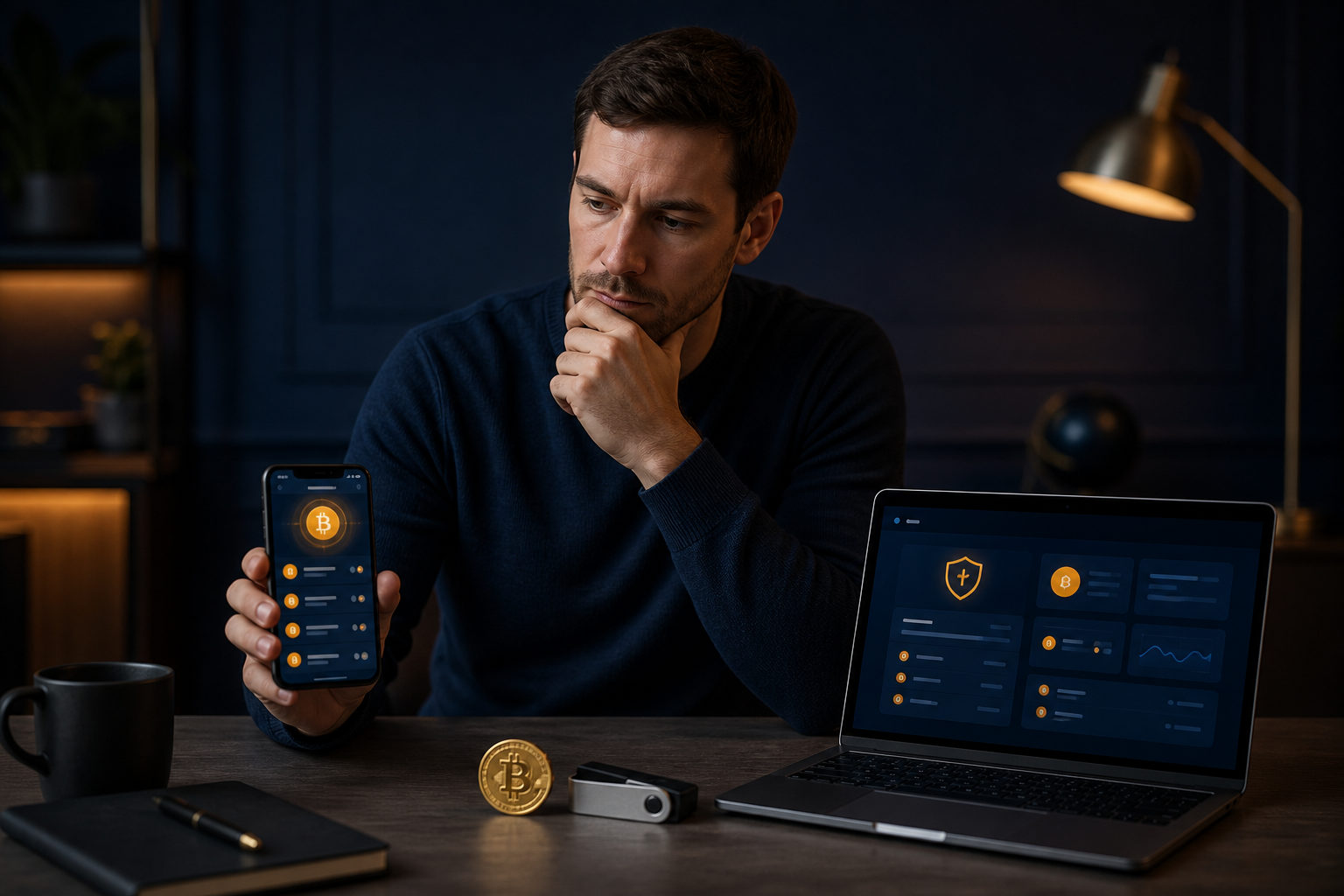
To know if you have bitcoins, check two things first: whether you ever bought or received BTC, and whether you still control the exchange account or wallet tied to it.
Start with the right idea: Bitcoin is not stored inside an app
People often begin by looking at an old phone and asking whether a wallet app is still installed. That is only a clue, not proof. Bitcoin exists as records on the blockchain, while wallet apps, exchange accounts, seed phrases, and private keys are just the tools used to view or control it.
That difference matters. You can have an old wallet app on a device and still own no bitcoin at all. On the other hand, you may have deleted the app years ago and still have access to your BTC if you kept the recovery phrase, private key, or the exchange login tied to past purchases.
So the real question is not whether you once touched Bitcoin-related software. It is whether you ever acquired bitcoin and whether you can still prove control over the place where it was held.
The main places to check
Exchange accounts
If you first got involved through a crypto exchange, this is usually the easiest place to start. Think back to which platforms you may have used, then search old email accounts, text messages, password managers, and browser logins for account registrations, security alerts, deposit confirmations, or trade receipts.
After you regain access, do not stop at the dashboard. Many exchanges separate balances into different sections such as spot, funding, or other internal account views. You should also review order history, deposit and withdrawal records, and asset history to confirm whether you ever held BTC there.
If you cannot log in right away, that still does not tell you whether you have bitcoins. The issue may be account access rather than the absence of funds. Lost email access, changed phone numbers, and old two-factor authentication setups are common problems, and each exchange has its own recovery process.
Self-custody wallets
If you used a non-custodial wallet, the app name matters less than the recovery material you saved. The key question is whether you still have a seed phrase, private key, wallet backup file, or some other verified method of restoring access.
Check old computers, phones, notebooks, external drives, cloud storage, password managers, and photo folders. People often save recovery information in ways they later forget: a screenshot, a handwritten note, a text file with a vague name, or an entry in a secure notes app.
Be careful here. Never send a seed phrase or private key to anyone claiming to help. Do not paste it into a random website that says it can recover old wallets. If that information is exposed, someone else can move the bitcoin without your approval.
Past payments or transfers from other people
Some people never bought bitcoin but still received it. That can happen through a payment from a friend, freelance work, a direct trade, or an old online transaction. In that case, search your emails, chat logs, screenshots, and archived files for wallet addresses, QR codes, or mentions of BTC transfers.
If you find what looks like a Bitcoin address, you can inspect its history with a blockchain explorer. This can show whether the address had incoming or outgoing transactions. It cannot, by itself, prove that you still control the coins connected to that address. Ownership in practice depends on whether you control the keys.
Cases where you likely never had bitcoin
There is another common outcome: you signed up for an exchange, watched Bitcoin prices, completed identity checks, or used a platform that talked about BTC, but you never actually bought or received any. Some people also confuse internal reward points, paper trading balances, or price-tracking products with real bitcoin holdings.
That is why memory alone is not enough. The strongest signs are verifiable records: a balance on an exchange, a completed purchase, an on-chain receipt, or a wallet that you can successfully restore.
A practical way to confirm it
If you want the fastest path, use a simple order of operations instead of jumping around.
- Search old email and text records: look for exchange names, BTC, wallet, buy, deposit, withdraw, login alerts, and registration confirmations.
- Check old devices and backups: review laptops, phones, cloud folders, photo libraries, USB drives, password managers, and note apps for wallet traces.
- Inspect any wallet addresses you find: use a blockchain explorer only after you have identified a likely Bitcoin address.
This order helps because it starts with evidence of activity, then moves to evidence of holdings, and only after that to proof of control. Many people do the reverse and put themselves at risk by entering recovery information before they know what they are dealing with.
Seeing bitcoin is not the same as controlling bitcoin
This is where many searches go wrong. You may find an old screenshot showing BTC, or you may discover that a certain address once received bitcoin. That does not automatically mean the coins are still yours to spend.
To say with confidence that you have bitcoins, at least one of these should be true:
- You can log in to an exchange account and see a BTC balance or clear account history.
- You can restore a wallet using the correct seed phrase, private key, or wallet backup.
- You can show that a Bitcoin address is under your control and that you still hold the credentials needed to use it.
If all you have is a memory, a screenshot, a chat message, or a claim that someone once sent you bitcoin, you have not confirmed ownership yet. You have only found a lead.
You should also separate real BTC from products that only reference Bitcoin. Some services display Bitcoin exposure in ways that are not the same as holding withdrawable bitcoin. What matters is whether the asset can actually be transferred or withdrawn as BTC, not just shown on a screen.
Common mistakes that lead people astray
Giving recovery words to support or strangers
No legitimate support agent needs your seed phrase or private key. If anyone asks for it, stop there. Account recovery for an exchange may require identity documents or email verification, but wallet recovery never requires sharing the keys with another person.
Using search results as recovery tools
Fake wallet pages and fake exchange login screens are everywhere. If you type your recovery phrase into one of them, your bitcoin can be taken right away. Use only software you have verified as official, and if possible, restore old wallets in a controlled environment.
Confusing another crypto address with a Bitcoin address
People often find an old string of characters and assume it belongs to Bitcoin. That can send the whole search in the wrong direction. Before drawing any conclusion, confirm what wallet or service you used and whether the address format matches Bitcoin in the first place.
Assuming past ownership means present ownership
Finding proof that you once bought bitcoin is useful, but it does not prove you still have it. The coins may have been sold, withdrawn, spent, or moved to another wallet. The current answer depends on the latest records you can verify and whether you still control the destination where the BTC ended up.
FAQ
How can I check whether I ever bought bitcoin before?
Start with old emails, text messages, and saved logins for exchanges you may have used. Purchase confirmations, deposit notices, and trade history are stronger evidence than memory.
If I forgot the wallet name, can I still find out whether I have BTC?
Yes, sometimes you can. Focus on recovery material such as a seed phrase, backup file, private key, screenshots, or installation traces on old devices rather than the wallet brand alone.
If I find a Bitcoin address with transactions, does that mean the bitcoin is mine?
No. It shows activity at that address, not confirmed control by you. You still need the wallet credentials tied to that address to prove practical ownership.
I cannot access my old exchange account. Does that mean I do not have any bitcoins?
Not necessarily. It may only mean your login method changed or your old verification setup is blocking access. Work through the exchange's official recovery process before assuming the account is empty.
I only have screenshots or chat messages. Is there still a chance?
There may be a chance if the bitcoin was on an exchange, because those clues can help identify the platform and account. For a self-custody wallet, no seed phrase, private key, or backup usually means no reliable way to regain control.
If you are starting the search today, make a list of every exchange you may have used, every old email account you still control, every device you have kept, and every place where a backup might exist. Check each one carefully, and do not enter any seed phrase anywhere until you are sure the environment is safe.
Disclaimer: This article is for informational and educational purposes only and is not investment, financial, or legal advice. Crypto assets are highly volatile and you could lose your entire investment. Do your own research and decide carefully.