
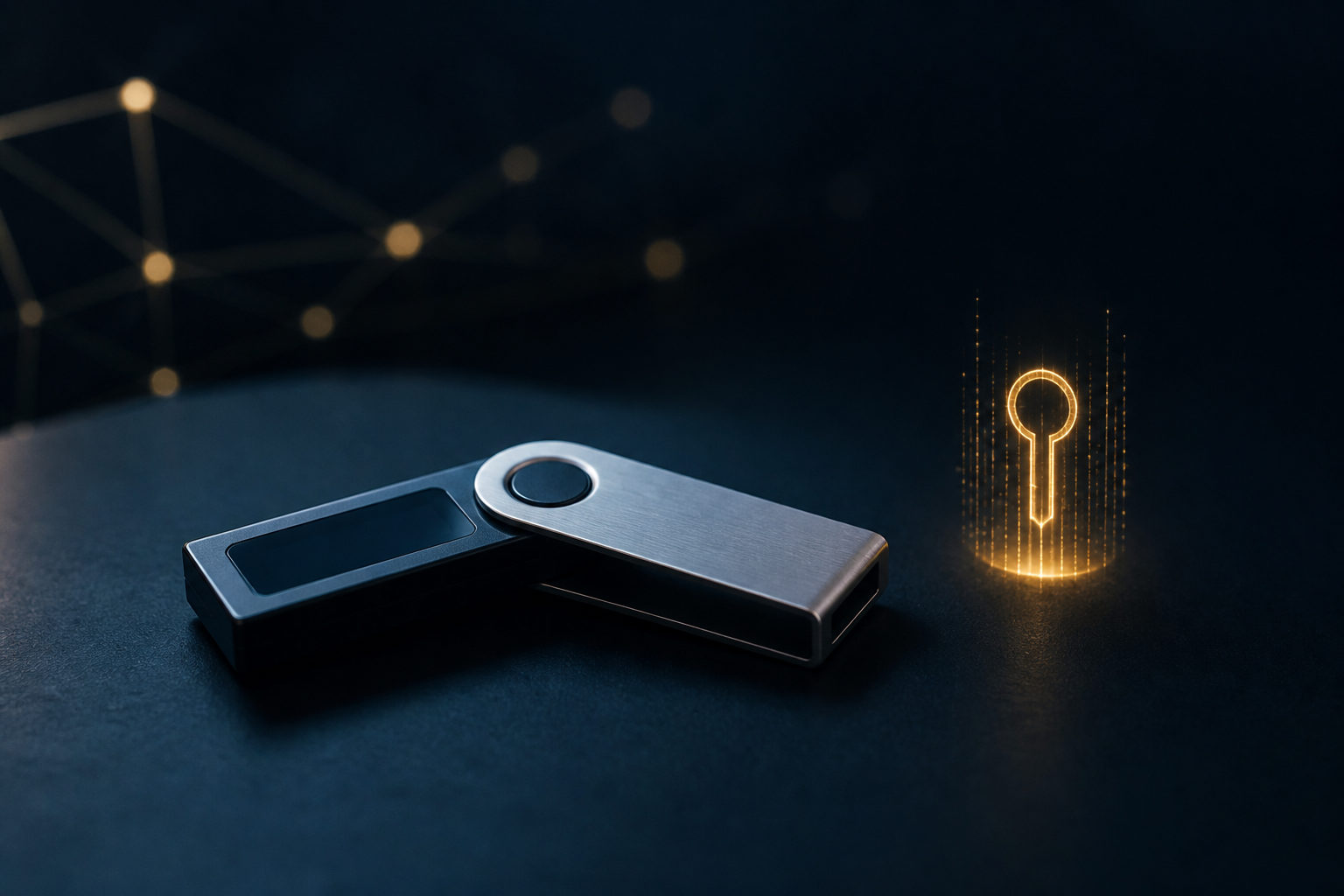
Ledger Nano X does not store bitcoins themselves. It stores the private keys that control them. So the real answer to “how many bitcoins can Ledger Nano X hold” is: there is no fixed coin count limit to think about in the usual sense; the important part is how you manage keys, recovery words, and accounts.
What the device actually stores
A hardware wallet works differently from an exchange account. Your bitcoins stay on the blockchain. The device holds the private keys needed to sign transactions and prove control.
That distinction matters. If the key is safe, the assets remain controllable. If the key is lost, recovery becomes difficult fast. So the question is less about storage capacity and more about responsibility.
| Item | What it means | How to think about it |
|---|---|---|
| Bitcoin | On-chain asset | It is not placed inside the device like a file |
| Private key | Signing credential | This is what must be protected |
| Recovery phrase | Backup path for the key | Keep it offline and separate from the device |
| Accounts and addresses | Multiple receiving points can be managed | More addresses do not mean more safety |
Where people usually run into trouble
Most problems are not about capacity. They come from process mistakes: a copied address is wrong, the recovery phrase is stored badly, or a phone change happens without checking whether the wallet can be restored.
Another common mistake is treating the device itself as the backup. It is not. If the device is lost, the recovery phrase is what matters. If the recovery phrase is exposed, the risk is immediate. Keep those two things separate.
A practical checklist
- Set up the wallet in a private, trusted environment.
- Write the recovery phrase down by hand.
- Do not take screenshots or save it in cloud notes.
- Send a small test amount first and verify the receive address.
- Check the address on the device screen before every transfer.
The irreversible step you should treat with care
Once a Bitcoin transfer is broadcast, it is usually not reversible. That is why the final confirmation must happen on the device screen, not on the computer or phone interface. Software screens can be altered; the hardware confirmation is the last checkpoint.
A better order is simple: learn backup first, then sending, then long-term storage habits. Reversing that order creates avoidable mistakes. This is especially true if you move larger balances later and suddenly need a recovery process you never practiced.
When you should review your setup again
If you change phones, switch computers, reinstall wallet software, or plan to hand the device to someone else, review the recovery process again. Ledger Nano X will not compensate for a weak backup. Your written recovery phrase does that job.
As your Bitcoin holdings grow, the better upgrade is not “a bigger device.” It is a cleaner responsibility split: one setup for everyday small transfers, another for long-term cold storage. That keeps the process easier to maintain and easier to audit.
FAQ
So how many bitcoins can Ledger Nano X hold?
It is not meaningful to count it that way. The device stores keys and account access, while the bitcoins remain on the blockchain.
What happens if the device breaks?
If your recovery phrase is still safe, you can usually restore access. The real danger is losing or exposing that phrase.
Can one Ledger Nano X manage multiple Bitcoin addresses?
Yes. Just keep track of what each address is for and maintain the same backup discipline. More addresses do not equal better security.
What should I check before sending BTC?
Verify the receive address on the device screen, then confirm the amount and the network. One wrong step can make the transfer final and unrecoverable.
If your recovery phrase is not organized yet, stop and fix that first. If you already hold multiple balances, review receiving, backup, and recovery as separate tasks before your next transfer.