
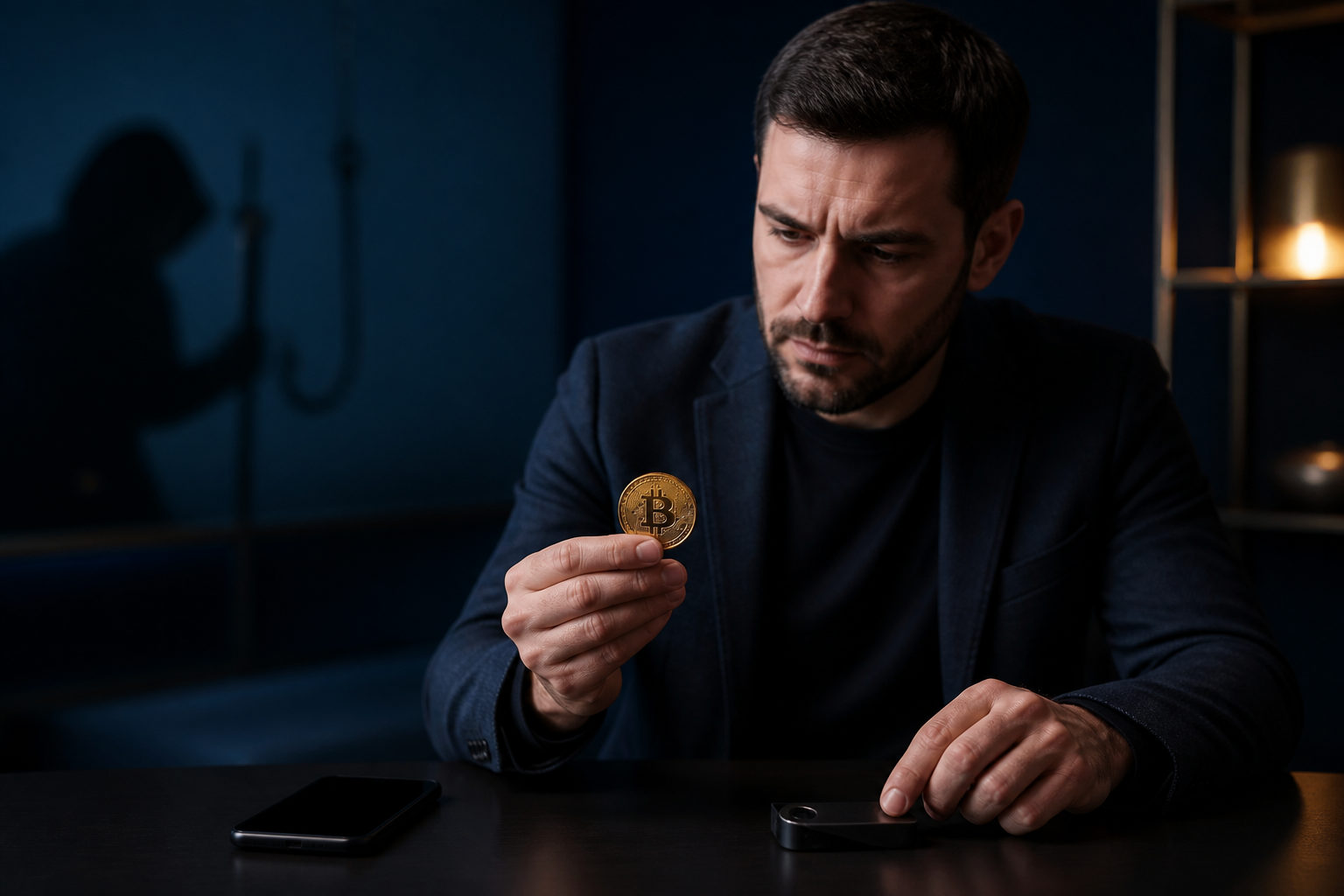
How safe is it to invest in bitcoin? It can be a valid investment for some people, but it is never automatically safe. Your risk depends heavily on how you buy, how you store it, how much you put in, and how well you avoid scams.
Start by separating the risks
Many beginners treat bitcoin risk as a price question only. That misses the bigger picture. Real losses often come from poor custody, fake support messages, rushed transfers, giving someone else control of your funds, or taking on more exposure than your finances can handle.
Bitcoin has operated since the genesis block in January 2009, and its supply cap is 21 million coins. Those facts matter, but they do not make any individual purchase safe. Network design, market behavior, and user behavior are three different things, and investors often confuse them.
| Risk source | What it looks like | Why it hurts investors | Main defense |
|---|---|---|---|
| Price risk | Sharp swings in market value | People panic or chase momentum | Set size and time horizon first |
| Custody risk | Account compromise or leaked recovery data | The user carries much of the responsibility | Use strong security and backups |
| Operational risk | Wrong address, wrong network, bad approvals | On-chain transfers are usually hard to reverse | Test with a small amount first |
| Scam risk | Fake experts, fake support, guaranteed returns | Fraud preys on urgency and trust | Reject promises of fixed profits |
| Strategy risk | Borrowing to buy or using heavy leverage | Volatility becomes much harder to manage | Use only money you can afford to lose |
Step 1: Check whether bitcoin fits your risk tolerance
The first action is simple: isolate the amount you plan to invest and ask what happens if it drops hard or stays under water for a long time. If that outcome would affect rent, bills, tuition, or emergency savings, you are already taking too much risk.
This matters because bitcoin trades in an open market and sentiment can move fast. Even though the issuance schedule is known and the system is built around a fixed cap, market prices still react to fear, optimism, liquidity, and positioning. If your personal finances are fragile, market volatility turns into life stress very quickly.
The main caution here is psychological honesty. Plenty of people say they are long-term investors, then abandon the plan during a rough move. A long-term view only helps if your budget and temperament can support it.
| Pre-investment check | Healthier sign | Warning sign |
|---|---|---|
| Source of funds | Disposable capital | Borrowed money or emergency cash |
| Time horizon | Comfort with volatility | Need for quick gains |
| Decision style | Rules-based | Driven by chat groups or social pressure |
| Emotional response | Can stay disciplined during drops | Impulse buying and panic selling |
Step 2: Choose a buying method you can verify yourself
When people ask how safe bitcoin investing is, they often focus on the asset and ignore the entry point. That is a mistake. A transparent buying process matters more than flashy claims from a stranger who says they can get you in faster or cheaper.
The practical move is to use a route where you can review each step yourself, understand where your money goes, and confirm records in your own account. Avoid sending funds to a person who claims they will buy bitcoin for you. Avoid anyone promising protected returns. Avoid private groups built around signals, insider tips, or account managers.
The reason is straightforward: once your money is under someone else’s control, your safety depends on their honesty and competence. If they delay withdrawals, ask for extra deposits, or vanish, you may have very little room to recover.
Pay attention to whether the service makes account actions visible. Login alerts, withdrawal checks, device management, and transaction records all help you verify that your account is still under your control. You do not need every advanced feature. You do need clarity.
| Buying setup | Relative risk | Main problem | Who it suits |
|---|---|---|---|
| Transparent process you control directly | Lower | User error is still possible | People willing to learn the basics |
| Third party buys and holds for you | High | You lose direct control | Generally a poor choice |
| Guaranteed-return scheme | Very high | Common fraud pattern | Avoid |
| Signal group or copy-trading room | Very high | Pressure, fake screenshots, overtrading | Avoid |
Step 3: After buying, custody becomes the core safety issue
Once you own bitcoin, the question changes. It is no longer just about whether you bought at a good time. It becomes a custody question: who controls the keys or the equivalent permissions, and how easily could that control be lost, stolen, or handed away by mistake.
Your action plan should match your purpose. A trading account may be convenient for active use, while longer-term holdings call for stronger storage discipline. Before deciding where to keep funds, think through backups, device hygiene, recovery steps, and how much value you want exposed in one place.
Why is this so important? Bitcoin transactions generally cannot be reversed in the way people expect from bank errors or card disputes. If you approve the wrong request, reveal sensitive recovery information, or send to the wrong destination, the damage may be permanent.
The caution points are practical, not technical. Do not store sensitive recovery details inside everyday messaging apps. Do not reuse passwords across services. Do not assume a support message is real just because it looks polished. No legitimate helper needs your recovery phrase or private key.
| Storage approach | Convenience | Main risk | What to think about first |
|---|---|---|---|
| Leave assets in a trading account | High | Exposure to account compromise and service dependence | Useful for active trading, weaker for long-term storage |
| Self-custody wallet | Medium | Backup loss or user mistakes | Best for people ready to handle responsibility |
| Split storage across more than one place | Medium | More moving parts to manage | Needs good records and discipline |
Step 4: Scam prevention needs a checklist, not a gut feeling
Fraud around bitcoin usually follows familiar scripts. The names change, the pressure tactics do not. Someone claims they can multiply returns, recover losses, give early access, or fix a frozen account. Then they push you to move fast and stop thinking.
A useful action step is to screen every offer with a few questions. Does it promise profit with little or no downside? Does it push you to transfer money immediately? Does it discourage independent verification? Does it ask for login codes, wallet approvals, or recovery details? One strong red flag is enough to stop.
People fall for these setups because the pitch blends urgency with apparent expertise. The scammer may use technical language, edited screenshots, fake testimonials, or a hijacked friend account. The goal is always the same: take control of your money or your credentials before you slow down.
The caution point is that verification must be self-directed. Search for the app yourself. Type the address yourself. Read support notices in the official interface you already know. If someone sends you an install file, a private login link, or offers to remote-control your device, walk away.
| Common scam line | What it is trying to do | How to respond |
|---|---|---|
| Guaranteed profit or capital protection | Get you to transfer funds first | Reject fixed-return promises |
| Fake support for account recovery | Steal codes or push a payment | Never share security codes |
| Expert-led trading room | Trigger repeated trades and deposits | Ignore profit screenshots |
| Reward or airdrop that needs approval | Gain wallet permissions | Do not approve what you do not understand |
| Friend invites you to an easy-profit group | Exploit trust | Confirm the account is genuine first |
Step 5: Control your position with rules before emotions take over
Write your plan before you buy. Decide how much you may invest in total, whether you will spread entries over time, what would make you pause, and what would make you cut exposure. Keep the rules simple enough to follow during stressful market moves.
This helps because bitcoin can pull your attention toward every short-term move. The more often you react to noise, the easier it is to confuse activity with skill. A written process reduces random decisions, limits revenge trading behavior, and stops you from changing strategy every time sentiment flips.
One caution deserves extra weight: avoid stacking high-risk behavior on top of a volatile asset. Borrowing to buy bitcoin, concentrating too much in one position, or using leverage without a clear risk framework can turn a manageable investment into a serious financial problem.
| Position habit | Risk profile | Better alternative |
|---|---|---|
| Large one-time entry | Sensitive to one purchase point | Build over time with a plan |
| Buying with borrowed funds | Cash flow pressure rises fast | Use only risk capital |
| Chasing every market story | Too much noise in decisions | Reduce trade frequency |
| No exit or pause rules | Emotion takes control during swings | Define conditions in advance |
FAQ
Is bitcoin itself unsafe, or is the bigger problem user behavior?
Both matter, but user behavior causes many avoidable losses. Bitcoin runs on a public set of rules, and its smallest unit is 1 satoshi, which equals one hundred millionth of a BTC. Even so, bad custody, poor planning, and scams can damage investors faster than price moves alone.
If I only buy a small amount, is it safe enough for a beginner?
A small amount limits the size of a possible loss, which helps. It does not remove risk from fake services, bad transfers, or handing control to the wrong person.
Is long-term holding safer than short-term trading?
Long-term holding often reduces the number of decisions you must make, and that can lower behavioral mistakes. At the same time, it raises the importance of secure storage, backups, and a clear recovery process.
Is a wallet always safer than leaving bitcoin in an account?
Not always. Self-custody reduces reliance on a third party, but it also puts responsibility on you. If you mishandle backups or approve something malicious, the added control will not protect you.
How should I check the live price without getting fooled by fake pages?
Use a well-known market data page or the public interface of a service you already trust. Do not rely on screenshots from chat groups, and always check the asset code, trading pair, and page identity before acting.
If you want a practical answer to how safe it is to invest in bitcoin, use this order: decide whether the money is truly risk capital, choose a buying path you can verify yourself, set up custody before the amount grows, and test every transfer with a small amount first. That will not remove risk, but it can cut a large share of the avoidable mistakes.
Disclaimer: This article is for informational and educational purposes only and is not investment, financial, or legal advice. Crypto assets are highly volatile and you could lose your entire investment. Do your own research and decide carefully.