
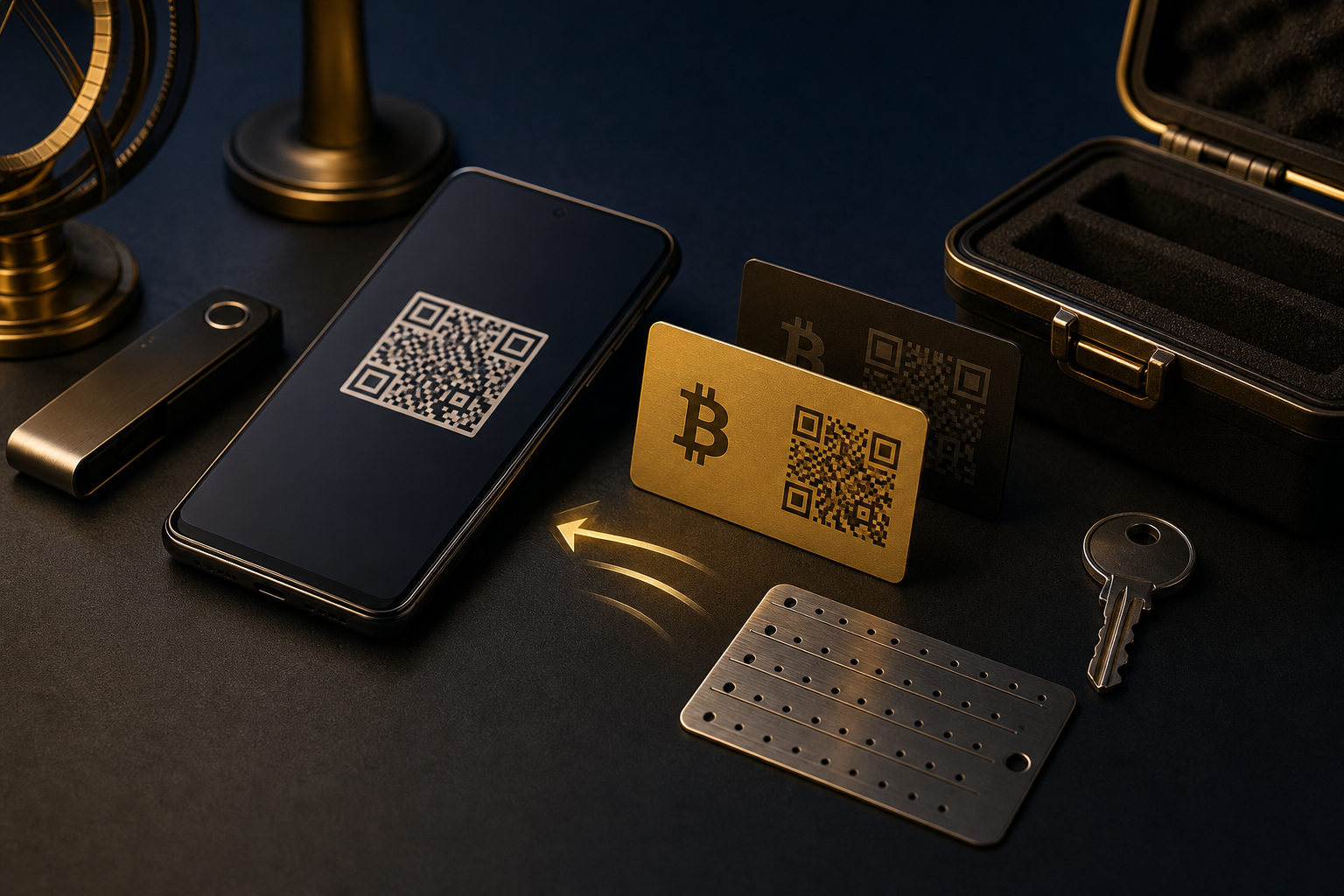
You usually cannot edit a Bitcoin address directly. In practice, changing a Bitcoin address means generating a new Bitcoin address, then using that one for future payments or moving funds only after you confirm backup and private key control.
What “changing a Bitcoin address” really means
Most people asking how to change bitcoin address are trying to solve one of three different problems. They may want a fresh receiving address for privacy, they may want to move coins from an old wallet to a new one, or they may be confused by a custodial platform showing a different deposit address.
Those are not the same task. A Bitcoin address on the blockchain is not like a profile setting that you edit and save. Once an address exists, you do not rewrite it into a different string. What you can do is generate a new receiving address, stop sharing the old one, or migrate your funds into a wallet controlled by a new set of credentials.
Irreversible action warning: if you send bitcoin to a new address, that transfer normally cannot be reversed. A pasted address error, a bad backup, or lost recovery words can turn a routine move into permanent loss.
When it makes sense to use a new Bitcoin address
A new address is often used for privacy. Reusing the same receiving address can make it easier for outside observers to connect incoming and outgoing activity. That is why many wallets automatically present a fresh address when you tap receive again.
Security is another reason. If your old wallet lives on a device you no longer trust, or if your recovery phrase was stored in a weak way, continuing with the same setup may be the bigger risk. In that case, creating a new wallet under cleaner conditions may be the safer move.
Some users also want separation. One wallet or group of addresses may be for long-term holdings, while another may be for regular payments. Others want a clean break between public-facing receipts and private storage. In all of these cases, the old address does not need to vanish. You simply stop relying on it for future use.
If you use an exchange or another custodial service, the situation changes. The platform may display a different deposit address based on its own system rules. That does not mean you edited the blockchain address yourself. It means the service is assigning or presenting the currently valid address inside its custody model.
How to change to a new address in a self-custody wallet
In self-custody, the real job is not renaming an old address. The job is creating a new address you control and making sure you can still recover the wallet later. Interface labels differ from wallet to wallet, but the logic stays mostly the same.
If you only want a fresh receiving address
Open the receive screen in your wallet and check whether it provides a newly generated Bitcoin address. Many wallets do this automatically. Copy the new address and share that with the sender for future payments.
In this case, you may not need to move coins out of the old address right away. If the old address is still part of the wallet you control, the coins connected to it are still within your control model. The bigger questions are whether your backup is complete and whether the device itself is trustworthy.
If you want to move funds from an old wallet to a new wallet
The safest order matters. First, create the new wallet on a device and in an environment you trust. Write down the recovery phrase or other recovery material carefully and store it offline in a way that only you can access. Then verify that what you wrote is complete and readable.
After that, generate a fresh receiving address in the new wallet. Go back to the old wallet and prepare a transfer to that new address. Before sending, work through a short checklist:
- Confirm the destination address comes from your own wallet, not from a message or unknown source
- Paste the address, then compare it again instead of assuming the clipboard is safe
- Make sure your new wallet backup is complete before moving funds
- Use a trusted device and avoid rushed actions
- If your wallet supports labels, note what the address is for
If the amount matters to you, a small test transaction can reduce human error. Once the test arrives where expected, you can decide whether to move the rest. The point is not that the Bitcoin network is randomly unreliable. The point is that people make mistakes when they are distracted, hurried, or using unsafe devices.
If you are moving from an exchange to self-custody
This is often described as changing a Bitcoin address, but the more accurate description is changing who controls the coins. Generate a receiving address in your self-custody wallet, then paste that address into the exchange withdrawal screen and verify it carefully. After the transfer, future receipts can go to addresses you control directly.
The difference is simple. A custodial account gives you access through a service. A self-custody wallet gives you direct responsibility for the keys. More control comes with more personal risk if you lose the recovery material.
Private key, recovery phrase, and address: the relationship that matters
A Bitcoin address is public-facing. You can share it to receive funds. A private key is the secret that allows spending and signing. A recovery phrase usually gives you a way to restore control over the wallet that manages those keys. New users often focus on the address because it is visible, but ownership depends on key control, not on knowing the address string.
That is why two important facts can exist at the same time. First, someone seeing your address does not automatically give them the ability to spend your bitcoin. Second, if someone gets your private key or recovery phrase, the risk is much more serious even if they never asked for your address directly.
It also explains why a wallet can show more than one address without creating separate ownership systems each time. Many wallets derive multiple receiving addresses from the same recovery material. So when you decide to change your Bitcoin address, you should first ask what kind of change you want. Are you only changing the address you share with others, or are you moving assets into a different control setup?
Common mistakes and how to avoid them
The first mistake is mixing up a wallet, an account, and an address. A platform account is a service relationship. A wallet is the tool or system that manages control. An address is a destination used for receiving funds on-chain. Confusing those layers leads to bad decisions at the exact moment accuracy matters most.
The second mistake is weak backup practice. A screenshot stored on an internet-connected device may feel convenient, but convenience can expand your exposure. Recovery material should be kept in a form and place that you can still access without casually leaving it available to other apps, cloud services, or anyone near your device.
The third mistake is trusting copy and paste without checking. Clipboard replacement malware is a known risk. Even without malware, simple human slips happen. Compare the destination after pasting. Do not skip that step because the transaction feels routine.
The fourth mistake is assuming that generating a new address automatically moves old funds. It does not. Address rotation and fund transfer are separate actions. If you have not actually sent a transaction, coins connected to the old address do not silently relocate.
The fifth mistake is failing to separate purpose. If one address is used for public receipts and another is for your own internal transfers, label and track them clearly. Better organization reduces future confusion and lowers the chance of sending funds in the wrong context.
Action checklist before you change anything
- Identify whether you are using self-custody or a custodial platform
- If moving to a new wallet, create it first and finish the backup before any transfer
- Generate a new Bitcoin receiving address in the destination wallet
- Verify the pasted address carefully on a trusted device
- Use a small test transaction if the transfer is important
- After the test succeeds, move the remaining funds or update your payment instructions
- Label old and new addresses by purpose so you do not mix them up later
- Review where and how your recovery material is stored
The list is short, but the order matters. Backup first. Verify second. Send last.
FAQ
Can I directly edit my Bitcoin address into a new one?
Usually no. In normal use, you generate a new address and start using it for future receipts. You do not rewrite an existing on-chain address into a different string.
Do I need to move all coins from the old address if I get a new one?
Not always. If your goal is only to stop reusing the same public receiving address, using a fresh one may be enough. Moving old funds is a separate decision tied to your security setup and wallet management.
If my wallet shows a new receive address, is the old one invalid now?
Not necessarily. In many wallets, older addresses may still be part of the same wallet control structure. What matters is whether you still control the private keys or recovery material behind that wallet.
Why does an exchange show a different Bitcoin deposit address?
That usually reflects the exchange's internal custody system rather than a change you made on the blockchain. When using a platform, rely on the current deposit or withdrawal page shown by that service.
I know the old address but lost the private key. Can I change the address and recover the bitcoin?
No. Knowing the address alone is not enough to regain control. If the private key or valid recovery material is gone, the issue is not changing the address. The issue is lost control.
If you plan to change your Bitcoin address today, start by confirming three things before touching any funds: who controls the keys, whether the recovery material is complete, and whether the destination address belongs to you. Only after those checks should you send anything.