
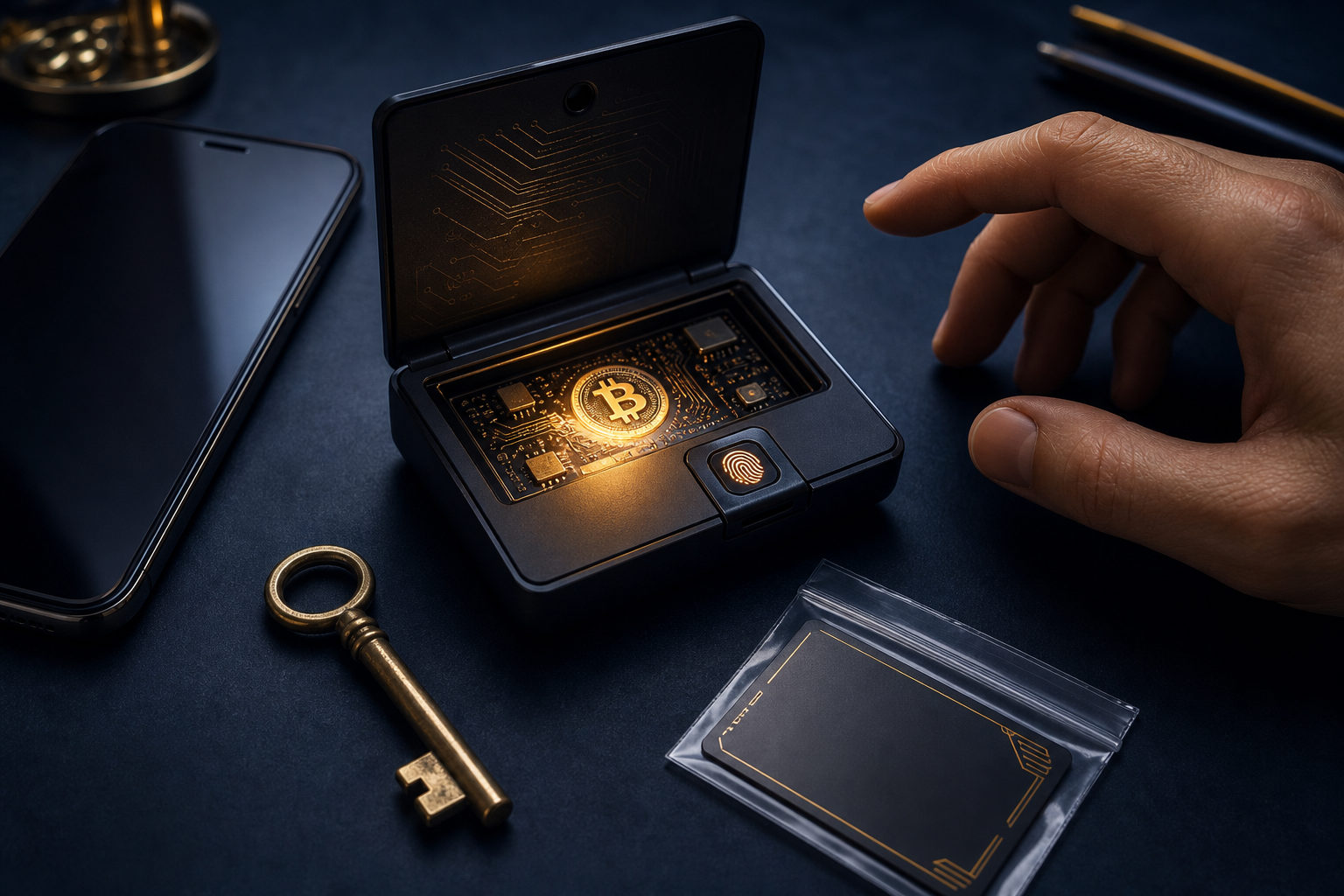
To develop a bitcoin wallet, start with private key custody, signing flow, backup recovery, and clear warnings for irreversible actions. The app matters, but the real product is the security model behind it.
Choose the wallet model before writing features
Your first decision is whether the product is custodial or non-custodial. That choice affects architecture, user expectations, support scope, and who carries the final responsibility when funds move.
If you want to develop a bitcoin wallet app, write that boundary down early. Decide whether private keys stay only on the user device, whether recovery is handled with a seed phrase, and what the team can and cannot do if a phone is lost or a backup is missing.
Feature scope should also be set early. A simple send-and-receive wallet is very different from a product that also includes fee controls, address management, hardware wallet support, or cold storage workflows. Scope drift tends to weaken security reviews.
The core modules every wallet needs
Key generation and local protection
A wallet is not just an account screen. At the core, it is a system for secure randomness, private key creation, public key derivation, address generation, and encrypted local storage.
In a non-custodial design, private keys should stay inside an environment controlled by the user whenever possible. A safer pattern is local signing, with the server limited to blockchain data, transaction broadcast, and status updates.
Blockchain data sync
A working bitcoin wallet must detect incoming funds, outgoing transactions, confirmation state, and balance changes. That means connecting to node infrastructure or a blockchain data provider, then building solid caching, retry logic, and failure handling on top.
Speed is not enough here. If sync breaks, users may think funds are gone even when the issue is only delayed state. The interface should clearly separate unsynced data, pending transactions, broadcast status, and confirmed activity.
Transaction building and signing
Sending bitcoin is more than entering an address and an amount. The app has to assemble inputs, create change outputs, apply a fee policy, build the raw transaction, verify the signature, and then broadcast it.
This is where quiet failures are dangerous. A replaced destination address, broken change handling, or a misleading confirmation screen can send funds to the wrong place, and blockchain transfers are usually not reversible once confirmed by the network.
Put irreversible-action warnings in plain sight
When teams ask how to develop bitcoin wallet app features, they often focus on screens first. That misses the main risk. Warnings should appear during wallet creation, seed phrase display, backup export, transaction send, and local data deletion.
- If a seed phrase is exposed, funds may be stolen.
- If local wallet data is deleted before backup, recovery may fail.
- If the destination address is wrong, the transfer usually cannot be canceled.
- If the device is compromised, transaction details may be altered before signing.
Text alone is not enough. Better safeguards include repeated confirmation for high-risk actions, partial address verification, suspicious amount warnings, backup walkthroughs, and a recovery test before users rely on the wallet for real funds.
A practical development checklist
- Define custody: Decide whether the wallet is custodial or non-custodial.
- Map threats: Include lost devices, clipboard attacks, fake addresses, screen capture leaks, and bad sync sources.
- Pick the platform: Mobile, desktop, and web each have different local security limits.
- Build the wallet core: Key creation, address derivation, encrypted storage, backup, and recovery come first.
- Add chain access: Support balance reads, transaction history, broadcast, and state sync.
- Design the send review screen: Show destination, fee, final deduction, and irreversible risk clearly.
- Add defensive controls: Password checks, biometric confirmation, session timeout, and re-auth for sensitive actions.
- Test failure cases: Cover offline behavior, duplicate broadcast, broken recovery, old backup import, and interrupted sync.
- Prepare degraded mode: If backend services fail, users still need a readable state and clear next steps.
If you are planning how to develop a bitcoin wallet, this checklist is more important than visual polish. Wallet products lose trust through one preventable mistake, not through one plain-looking screen.
FAQ
What should I decide first when building a bitcoin wallet app?
Start with the custody model and the private key boundary. If that part is vague, backup design, recovery flow, and support policy will keep changing during development.
Should a non-custodial wallet store private keys on a server?
In most cases, no. A safer design keeps key generation, encryption, and signing on the user device, while servers handle public blockchain data and transaction relay.
Where do wallet apps fail most often?
Common failures happen in backup recovery, address verification, change output handling, and send confirmation. The problem is often weak product flow, not broken cryptography.
Do I need to run my own node?
Not always, but you do need a reliable source of blockchain data. Running your own node gives more control, while third-party infrastructure can speed up delivery if validation and fallback logic are handled well.
How can I reduce user mistakes and seed phrase loss?
Use guided backup steps, recovery rehearsal, address checks, deletion blocks, and clear warnings before high-risk actions. Users should not have to guess which step can permanently affect funds.
What to verify before launch
Before release, check three things again: whether private keys stay inside the intended boundary, whether recovery works in real conditions, and whether the send flow explains irreversible outcomes without ambiguity. Users may forgive a rough interface, but they rarely forgive a transfer mistake that cannot be undone.
Disclaimer: This article is for informational and educational purposes only and is not investment, financial, or legal advice. Crypto assets are highly volatile and you could lose your entire investment. Do your own research and decide carefully.