
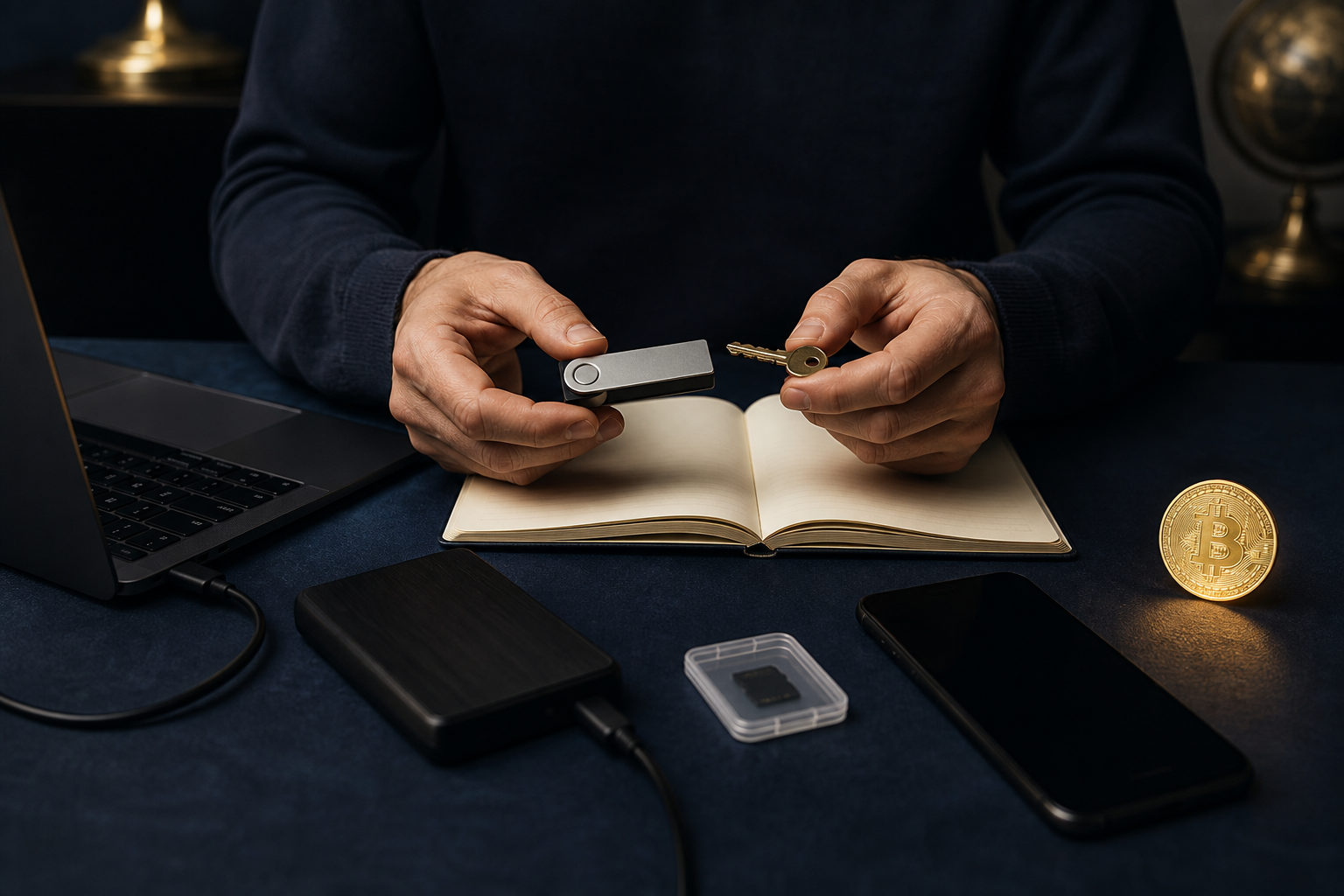
How to find lost bitcoin depends on what was actually lost: exchange access, a wallet backup, a seed phrase, a private key, or control of the destination address. The fastest way forward is to classify the problem first and then check each lead in order.
Start by identifying what is missing
People often say their bitcoin is lost when the coins are still recorded on the blockchain, but they no longer have the information needed to access them. That distinction matters because recovery options change a lot from one case to another.
If you only lost an exchange login, changed phones, or stopped using an old email address, there may still be a clear recovery path. If every backup is gone and the wallet was self-custodied, the situation is much harder.
Common forms of bitcoin loss
- Exchange account access is gone: old email disabled, phone number inactive, or two-factor authentication tied to a lost device.
- Wallet files are missing: the data may still exist on an old laptop, external drive, USB device, or cloud storage folder.
- The seed phrase or private key was misplaced: it may be hidden in paper notes, screenshots, password managers, or archived documents.
- A transfer looked like a loss: sometimes the issue is a wrong wallet app, a different address path, or a wallet that was never imported properly.
- Fake recovery help made things worse: many supposed recovery services are just scams targeting stressed holders.
A step-by-step checklist to trace lost bitcoin
Before trying random tools or recovery apps, pause and gather evidence. Rushing is where many people expose a seed phrase to the wrong person or overwrite the device that may still contain useful wallet data.
- List every place you may have bought bitcoin: exchanges, mobile wallets, desktop wallets, browser extensions, or hardware wallets.
- Write down old identity clues: email addresses, usernames, phone numbers, backup emails, and any account names you used at the time.
- Check old devices: laptops, retired phones, USB drives, external disks, and old download folders often hold the best clues.
- Search by wallet-related terms: look for names such as wallet, bitcoin, btc, seed, mnemonic, backup, and keystore.
- Review your inbox history: registration emails, withdrawal notices, login alerts, and identity verification messages can point to the service you used.
- Open your password manager: some users stored exchange credentials, backup codes, or partial recovery notes there.
- Think about hardware wallet ownership: the box, setup notes, and companion app may reveal which device you used.
The goal here is not instant recovery. It is to rebuild the story of where your access lived and which piece of information controlled it.
What to do in each recovery scenario
You lost access to an exchange account
If your bitcoin was held on a centralized exchange, use the platform's official account recovery process first. In most cases, the issue is account access, not missing on-chain coins.
You may need to prove ownership through your registration email, identity records, prior login details, or archived account notices. Stay away from search results, direct messages, or social posts that claim to be support unless you have independently verified the official channel.
You lost a software wallet or desktop wallet
If you used a self-custody wallet, try to remember whether you wrote down a seed phrase or exported a backup file. Some older wallets rely heavily on local device data, so a computer change can make it look as if the bitcoin disappeared when the wallet was simply never restored.
Focus on the original device, its data folders, and any official backup method offered by the wallet you used. Do not upload wallet files to unknown websites just to see what they contain.
You found an address but not the wallet
A bitcoin address can help confirm that coins were received or later moved, but it does not replace a private key. It also does not prove that you still control the funds.
What helps is combining that address with old email records, app install history, labels, and transfer notes. You are not trying to find a string of characters. You are trying to recover control.
You lost the seed phrase or private key
This is the most sensitive situation. If you think you ever wrote the seed phrase down, search paper notebooks, safes, envelopes, printed records, and any place where you kept long-term credentials.
If you find a few suspicious words, do not start typing them into random connected devices. Organize what you found offline first, decide whether it is really wallet recovery information, and only then choose the next step.
Cases that are often not recoverable
Not every loss can be reversed. Bitcoin has no central support desk that can reset a private key for you.
- All copies of the seed phrase, private key, and wallet backup are gone, with no other recovery path left.
- The coins were sent to the wrong address, and that address is outside your control.
- You gave recovery data to a scammer, and the funds were already moved away.
- You imported a wallet into a phishing app, giving away control information.
If any of these happened, your best move is damage control. Secure every other exchange account and wallet you still control, change passwords, refresh two-factor authentication, and move remaining assets to a wallet you trust.
How to avoid fake bitcoin recovery services
Many people searching for how to find lost bitcoin are targeted a second time by fake helpers. The pattern is simple: they promise recovery, ask for your seed phrase or private key, and then drain anything still left.
A legitimate support flow may ask you to prove account ownership. It should never ask for the secret information that controls your coins. Be highly skeptical of anyone claiming they can reverse an on-chain transfer or guarantee recovery.
FAQ
Where should I start if I do not remember which wallet held my bitcoin?
Start with the oldest email accounts, phones, and computers you used when you first bought or received bitcoin. Inbox records, app download history, and password managers often point to the wallet faster than a broad file search.
Can I recover lost bitcoins if I only found the address?
An address may confirm past activity, but it does not give you spending control. To recover access, you still need the matching private key, seed phrase, or a valid restoration method from the original wallet.
Can customer support restore a lost bitcoin account?
If you mean an exchange account, official support may help you recover access after ownership checks. If you mean a self-custody wallet, no support team can reset your private key for you.
What should I do if an old hard drive may contain wallet data?
Preserve the drive and avoid unnecessary writes or risky software experiments. Make an offline copy if possible, then inspect the data carefully using guidance from the official wallet source you believe you used.
Are paid bitcoin recovery services worth trying?
In most situations, caution is the right default. If a service asks for your seed phrase, wants remote access to your computer, or promises a high success rate, the risk is already too high.
If you think you may still have lost bitcoin somewhere, take three practical actions now: map your old accounts and devices, protect everything else you still control, and use only verified official recovery channels.