
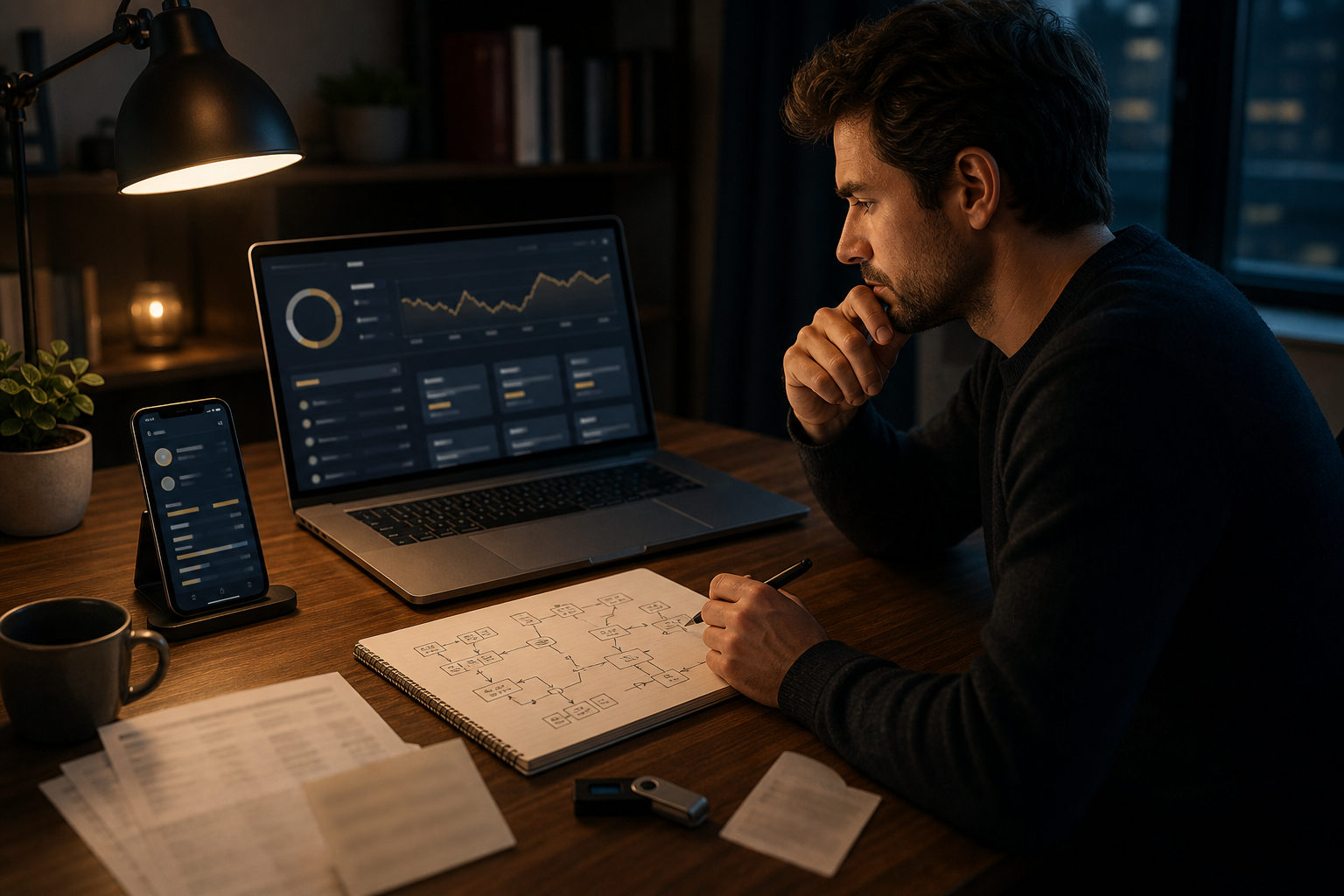
To find out if you own bitcoins, start with old exchange accounts, wallet backups, seed phrases, devices, and transfer records, then confirm whether you still control the funds.
Start with the way you may have used Bitcoin
Most people who ask this are not completely starting from zero. They usually remember one piece of the story: maybe they bought Bitcoin on a trading platform years ago, maybe someone sent them BTC, or maybe they installed a wallet on an old computer and never looked at it again.
That first distinction matters. If you used an exchange, your search should focus on email accounts, phone numbers, login methods, account recovery details, and transaction history. If you used a self-custody wallet, the important items are your seed phrase, private keys, backup files, old phones, old laptops, and any paper notes you may have saved.
Check exchange accounts first
For many users, the simplest path is to search old exchange accounts. Go through the email addresses you have used over the years and search for account registration messages, verification codes, buy confirmations, withdrawal notices, deposit records, identity checks, and security alerts. Terms like BTC, Bitcoin, wallet, withdrawal, deposit, and the names of platforms you remember can help surface old records.
Do not limit the search to your current email address. A lot of old accounts were opened with school email accounts, work addresses, backup inboxes, or phone numbers that are no longer active. If you use a password manager, check that too. It may contain saved logins, recovery codes, or notes tied to an exchange account.
Once you regain access to an exchange, review more than the main balance page. Look at:
- asset overview or wallet pages
- spot account and any separate funding section
- buy and sell history
- deposit and withdrawal history
- security settings and linked verification methods
If the balance is now zero, that does not mean you never owned bitcoins. It may mean you bought BTC and later sold it, withdrew it to a personal wallet, or converted it into another asset. In many cases, the transaction history tells you more than the balance does.
If you used a wallet, focus on control, not memory
With self-custody, ownership is really about control. If you still have the private key, the seed phrase, or a wallet file that you can open, and the related Bitcoin addresses still hold funds, then you may still own those bitcoins. If you only remember using a wallet but no longer have any way to restore it, your search becomes much harder.
Look for these types of clues:
- a 12-word or 24-word seed phrase
- files or folders labeled wallet, backup, seed, keystore, or mnemonic
- old screenshots of QR codes or addresses
- notes saved in apps, cloud storage, or encrypted drives
- old devices that may still have a wallet app installed
- software used to manage a hardware wallet
It helps to separate three things people often mix up: an address, a private key, and a seed phrase. A Bitcoin address lets you inspect activity tied to that address. It does not let you spend the coins. A private key, or a seed phrase that can regenerate the wallet, is what may give you actual access.
If you do find a seed phrase, do not paste it into a random website just to see whether it works. That is one of the easiest ways to lose funds. Use a trusted wallet application or hardware wallet process, and do the recovery on a clean device with care. Anyone who gets the seed phrase can potentially move the bitcoin.
Old devices and old records often matter more than you think
People often assume that if they cannot remember clearly, there is no trail left. That is usually wrong. Clues tend to survive in places you are not thinking about right away: app download history, browser bookmarks, cloud backups, text files, screenshots, USB drives, chat messages, and old email folders.
A structured search is better than guessing. Check these in order:
- old phones for wallet apps, app store history, and authentication messages
- old computers for installed programs, desktop shortcuts, downloaded wallet software, and saved files
- email inboxes for registration and transaction records
- cloud storage, external drives, and USB devices for backup material
- chat apps for pasted addresses, transfer discussions, or saved instructions
- password managers for exchange logins, backup codes, or wallet-related entries
If you changed phone numbers or email providers, that does not mean the account is gone. It only means the recovery path may take more work. Start by restoring access to the old email account if possible. Then move on to the exchange or wallet service itself.
If all you have is a Bitcoin address
Sometimes people find only a BTC address in an old screenshot, note, or email. That is useful, but limited. An address can help you check whether bitcoin was ever received there and whether any funds remain at that address. What it cannot do, by itself, is prove that you still control it.
Bitcoin addresses are public identifiers, not proof of ownership. The address may have belonged to your own wallet, to an exchange deposit page, to a custodial service, or to a wallet whose key material you no longer have. So the right question is not just whether the address has activity. The real question is whether you can connect that address to a wallet or account that you still control.
A stronger chain of evidence looks like this: you find an address, you can tie it to your exchange history or wallet records, and you also have the private key, seed phrase, or a working wallet environment that controls it. That combination is far more meaningful than finding an address alone.
Owning bitcoin is not the same as having bought bitcoin in the past
This is where many searches go wrong. A person may remember buying Bitcoin once and conclude they must still own some. That does not follow. You may have bought it and later sold it. You may have withdrawn it and then lost access. You may have received BTC into a wallet that you no longer control.
A practical way to evaluate your situation is to move through these questions in order:
- Did you ever buy or receive BTC?
- Did you later sell, transfer, or swap it?
- If you transferred it out, where did it go?
- Do you still control the destination wallet or account?
- Can you still complete login or wallet recovery without exposing sensitive data?
Only after answering those questions can you say with confidence whether you still own bitcoins. Old activity is a clue. Present control is the deciding factor.
Common mistakes that make the search harder
The first mistake is sharing sensitive information with strangers. If you post online asking for help, you may quickly hear from people claiming they can verify a wallet, recover a balance, or inspect your seed phrase. That is a major red flag. No legitimate helper needs your seed phrase to tell you whether a wallet exists.
The second mistake is mixing up exchanges, wallets, and blockchain records. A custodial platform account is not the same thing as a self-custody wallet. A transaction record is not the same thing as current access. A visible address is not the same thing as a spendable balance under your control.
The third mistake is trying too many recovery steps at once. A better method is to make a checklist. Write down each old email address, device, exchange, wallet app, and backup source. Mark what you have checked, what you can still access, and where you found evidence of BTC activity. That reduces confusion and lowers the chance of overlooking the one detail that matters.
FAQ
How can I tell whether I ever bought Bitcoin before?
Start with old exchange accounts and old email inboxes. Registration messages, trade confirmations, deposit notices, and withdrawal records can usually tell you whether you bought BTC and what happened afterward.
Can a seed phrase show whether I still have bitcoins?
Yes, but only if you restore it carefully with a trusted wallet setup. The point is not just to import it, but to verify whether the recovered Bitcoin wallet still shows addresses and funds connected to your past activity.
If I found only a Bitcoin address, does that mean the bitcoin is mine?
No. An address can confirm on-chain activity, but it does not prove present control. You still need evidence that the address belongs to a wallet or account you can access with valid key material.
What if I forgot my exchange account details?
You may still be able to recover access through your old email address, phone number, or identity verification path. Use only the platform's official recovery process and avoid anyone asking for wallet secrets.
Does an old wallet app on my computer mean I still own BTC?
Not by itself. It only shows that you used or tested wallet software at some point. You still need to confirm whether that wallet ever received BTC and whether you can still unlock or restore it safely.
If you want to do this properly, make a single search list before taking action: old emails, old phone numbers, exchange accounts, wallet apps, seed phrase backups, external drives, and chat history. Confirm control first, attempt recovery second, and never hand your seed phrase to anyone while checking whether you own bitcoins.