
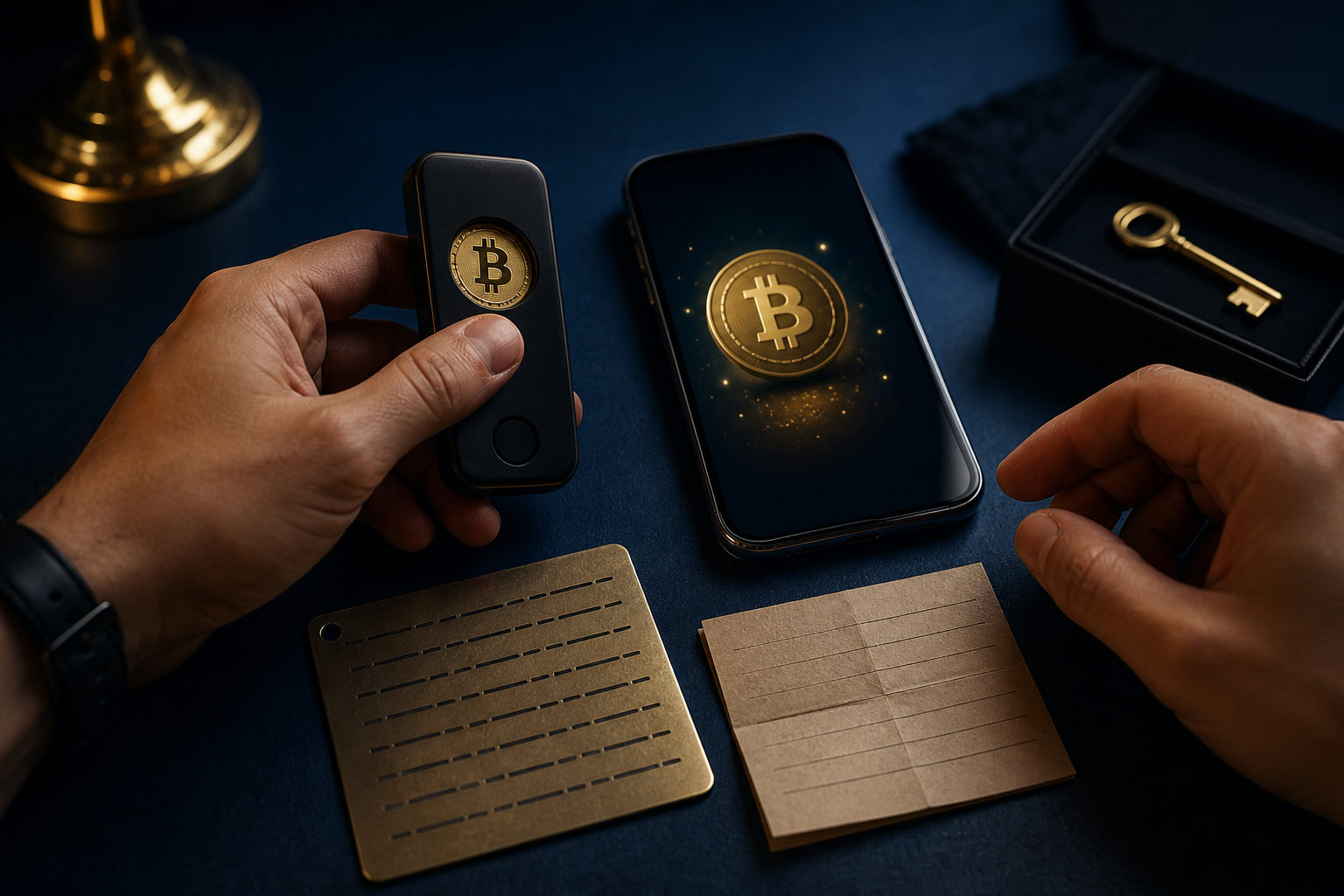
To make a bitcoin address, you usually create a wallet first and let the wallet generate the address for you. The real job is not tapping a button. It is choosing the right wallet, backing up the recovery phrase correctly, and understanding that bitcoin transfers are usually hard to reverse once sent.
What a bitcoin address is
A bitcoin address is a public receiving identifier. You can share it with someone who wants to send you BTC. It is not the same thing as a private key, a seed phrase, a password, or a general account name.
This distinction matters because people often treat all wallet terms as if they mean the same thing. They do not. The address is meant to be seen by others for receiving funds, while the private key and seed phrase are sensitive secrets tied to control of the wallet.
That is why the answer to “how to make a bitcoin address” is not simply “open an app and copy the string.” A safe setup starts with knowing what should stay public and what must stay private.
Decide first: custodial or self-custodial
Before you create anything, decide who will control the keys. This one choice affects convenience, recovery options, and your risk.
Custodial option
With a custodial service such as an exchange, the platform may show you a bitcoin deposit address inside your account. This is easy for beginners because there is less setup work on your side. The tradeoff is simple: the platform plays a central role in access, withdrawals, account restrictions, and operational risk.
For someone who only wants to test receiving bitcoin, a custodial address may feel easier. Even so, you should not confuse a platform deposit address with full personal control over coins.
Self-custodial option
With a self-custodial wallet, the wallet software or hardware device generates your bitcoin address and you are responsible for the recovery material. This is closer to the original design of Bitcoin because control stays with the holder of the keys. It also means mistakes are harder to fix.
If your seed phrase is exposed, another person may gain access. If the phrase is lost and the device fails, recovery may become impossible. If you send bitcoin to the wrong address, there is usually no support desk that can cancel the transfer for you.
So if your goal is to learn how to make a bitcoin address for actual long-term use, self-custody is the version worth understanding well, even if you begin with small amounts.
Step-by-step: how to make a bitcoin address
The exact labels vary by wallet, but the process is broadly similar. A careful setup looks like this.
- Choose a wallet type. Common choices include mobile wallets, desktop wallets, and hardware wallets. Mobile options are often convenient for everyday use, while hardware wallets are often preferred for stronger separation from internet-connected devices.
- Get the wallet from an official source. Do not install software from random search results, chat attachments, or copied files from strangers. A fake wallet can compromise your setup before you even receive funds.
- Create a new wallet. Open the app or device and select the option to create a new wallet, not to import an old one. During this step, the wallet will usually generate a seed phrase.
- Write down the seed phrase offline. Store it on a medium that is not connected to the internet and does not sync automatically. Do not keep it in screenshots, cloud notes, email drafts, or messaging apps.
- Set local access protection. Use a strong device passcode, wallet password, or biometric lock where available. This helps if someone gets physical access to your phone or computer, but it does not replace the seed phrase backup.
- Open the receive screen. The wallet will usually show a bitcoin receiving address and often a QR code. This is the address you can share with a sender.
- Test with a small amount first. Before using the wallet more broadly, test the receive and send process with an amount you can afford to risk. That confirms you copied the address correctly and understand the workflow.
One point surprises many beginners: a wallet may generate more than one receiving address over time. That is normal in many modern wallets. It does not mean your wallet is broken or that you created several unrelated wallets by accident.
Address, private key, and seed phrase: different roles
Confusion here causes a large share of beginner mistakes. Keep the roles separate in your mind.
- Bitcoin address: public identifier used for receiving BTC.
- Private key: secret cryptographic control over funds tied to an address.
- Seed phrase: recovery phrase that many wallets use to restore the wallet and its keys.
Put plainly, making a bitcoin address is really part of setting up a control system for digital money. The address can be shared. The private key and seed phrase should be treated like high-sensitivity secrets.
Another common misunderstanding is the wallet password. A wallet password often protects the app on a specific device. It is useful, but it is not the same as the seed phrase. If the device is lost, broken, or reset, the seed phrase is often what allows recovery.
High-risk mistakes to avoid
You do not need advanced technical knowledge to use bitcoin more safely, but you do need to avoid a few damaging habits.
- Do not let someone else set up the wallet for you. If they see your seed phrase, they may keep a copy.
- Do not store the seed phrase in online documents. Cloud storage, synced notes, chat apps, and email drafts all widen your exposure.
- Do not rely on a single backup copy. One damaged or lost copy can leave you with no recovery path.
- Do not send funds without checking the address carefully. Verify the beginning and ending characters and make sure the destination is actually for bitcoin.
- Do not assume an exchange deposit address works like a personal self-custody setup. Platform rules can differ, and access depends on the provider.
- Do not ignore device security. If your phone or computer is infected with malicious software, the problem starts before the wallet is even created.
In practice, many losses come from weak operational habits rather than a failure of Bitcoin itself. Bad downloads, poor backups, and careless copying are enough to create serious problems.
Which option fits your situation
The best way to make a bitcoin address depends on how you plan to use it. There is no single perfect setup for everyone.
If you only want to receive a small amount
A reputable wallet app may be enough to learn the basics. What matters most is not a huge feature list. It is your ability to complete the full cycle of setup, backup, receive, and recovery practice without confusion.
If you plan to hold bitcoin for a longer time
A hardware wallet may be a better fit because it separates important signing actions from the general online environment. Even then, the backup remains central. A hardware device is not a substitute for storing the seed phrase safely.
If several people need access
This requires extra care. Do not casually share a seed phrase among family members or colleagues without a clear plan. Access rules, backup locations, and emergency recovery steps should be defined in advance.
FAQ
Do I need an exchange account to create a bitcoin address?
No. You can create a bitcoin address directly through a self-custodial wallet without opening an exchange account first. An exchange is more relevant if you want to buy, sell, or convert with fiat.
Can one wallet have more than one bitcoin address?
Yes, many wallets can generate multiple receiving addresses under the same wallet. This is normal behavior in many setups and does not mean the old wallet disappeared.
Is it safe to share my bitcoin address?
Sharing the address by itself is usually fine because it is designed to receive funds. What must stay private is your private key and seed phrase.
If I lose my phone, do I lose my bitcoin address?
The main issue is not the phone. The main issue is whether you still have the correct recovery material. If your seed phrase is safe, you can often restore the wallet in compatible software or hardware.
Why does my wallet keep showing new receiving addresses?
That is normal in many wallets. It can help with organization and privacy. What you really need to protect is the wallet recovery information, not just one visible address.
Practical checklist before you begin
Before you make a bitcoin address, confirm the basics. Know whether you are using custody or self-custody. Use an official wallet source. Prepare an offline backup method. Understand that the address can be shared but the seed phrase cannot. Plan a small test first. Most of all, do not treat a bitcoin transfer like an online form you can edit later. Once you send funds, reversal is usually not available, so careful setup comes before convenience.