
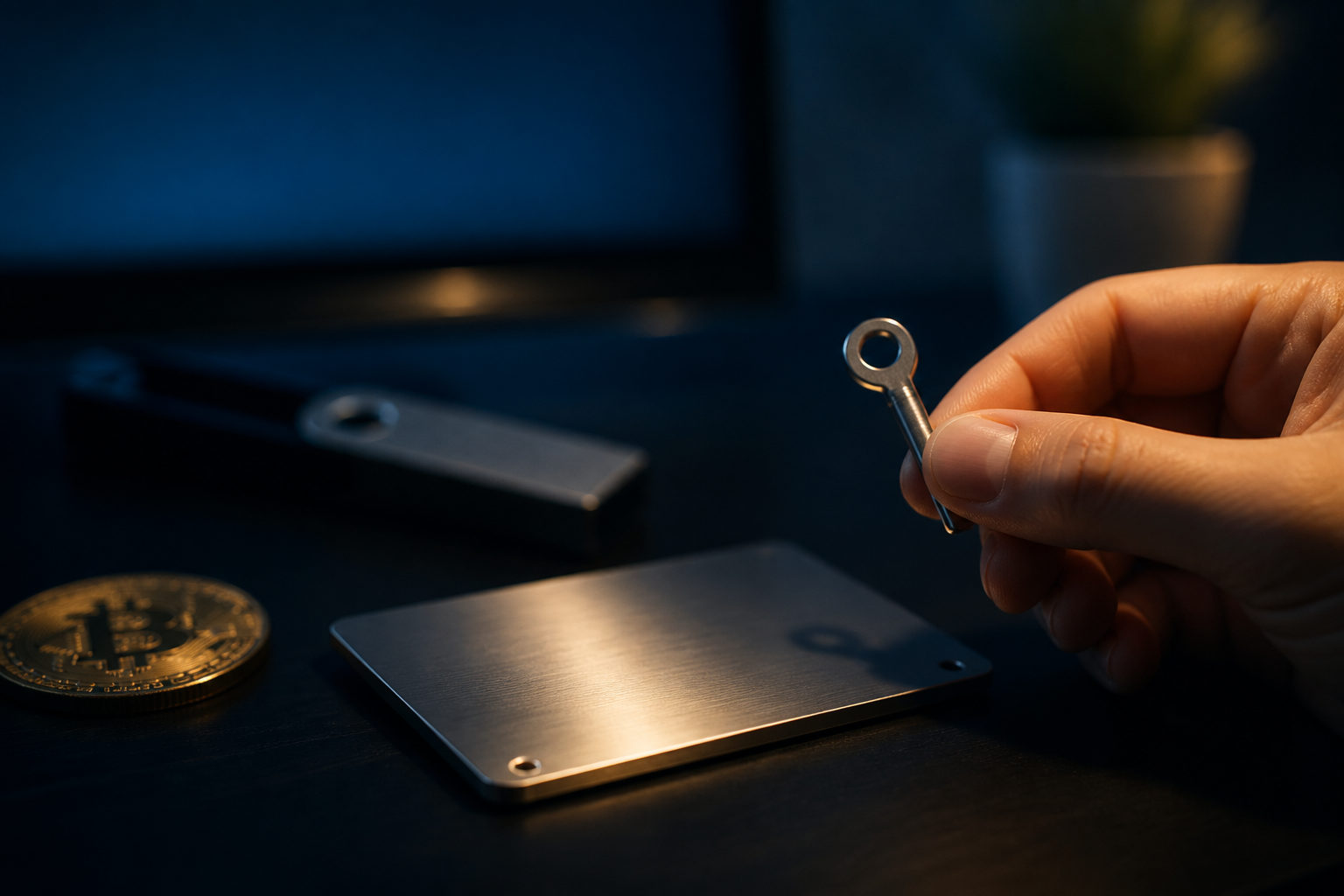
How to recover lost bitcoin comes down to a simple rule: if you still have the private key, seed phrase, or a usable wallet backup, recovery may be possible; if all of that is gone, the bitcoin itself usually cannot be restored.
First, identify what was actually lost
People often say they lost bitcoin when the real problem is different. In many cases, the coins are still on-chain, but the user lost access to a device, forgot a wallet password, or can no longer sign in to an exchange account.
That distinction matters because Bitcoin ownership is tied to cryptographic control, not to a name, email address, or a support ticket. The network recognizes valid signatures from a private key. It does not offer account resets for self-custodied funds.
- Potentially recoverable: you still have a seed phrase, private key, wallet backup file, old device data, or access to an exchange recovery process.
- Usually not recoverable: the seed phrase and private key are both gone, there is no backup, and no old device contains usable wallet data.
- Often misunderstood: the idea of recovering bitcoin directly from the blockchain. The blockchain records balances and transfers; it does not provide a reversal tool.
What to do before trying any recovery method
If you are searching for how to recover bitcoins, do not start by installing random apps or paying recovery agents. Your first job is to preserve evidence and old data. An old phone, laptop, hard drive, paper note, password manager, or cloud backup may hold the only useful clue.
Stop actions that could overwrite data. Reinstalling operating systems, factory-resetting devices, or saving large files to an old drive can destroy wallet traces that might still be accessible.
Search for original control material
Look for the seed phrase, private key, encrypted wallet file, and any written notes created when the wallet was first set up. Check paper backups, locked notes, USB drives, archived emails, cloud storage, and old screenshots. Many people forget they saved the recovery phrase in more than one place.
If you used a hardware wallet, the recovery sheet matters more than the device itself. A lost or broken device does not automatically mean the bitcoin is gone, as long as the recovery phrase was written down correctly and stored safely.
Work out which type of wallet or service you used
Recovery paths vary a lot between self-custody wallets and custodial services. A self-custody wallet usually depends on the seed phrase or private key. A custodial exchange may let you regain account access through identity checks, though that does not mean it can reverse completed Bitcoin transactions.
If you remember the wallet name, the device it was on, whether a seed phrase was shown, and whether you set a local password, those details can narrow the process fast. Guessing with the wrong tool can create confusion and expose sensitive data.
Use a clean environment
When you do attempt recovery, use a device you trust. Keep your operating system updated, avoid suspicious browser extensions, and do not type a seed phrase into websites that promise instant results. Legitimate recovery does not require sharing your phrase with support staff.
If your situation involves an encrypted wallet file and a forgotten local password, focus on your own password habits first. In some cases, the wallet data is intact and the real issue is a password the owner once used regularly but no longer remembers.
Check whether the issue is visibility, not loss
Some wallets show a zero balance because the wrong address type was imported, the derivation path does not match, or the wallet software failed to sync properly. That can look like a permanent loss even when the coins are still controlled by the same seed phrase.
This is why asking “how to recover bitcoin from blockchain” can point people in the wrong direction. The practical question is not how to pull coins out of the blockchain, but how to restore the correct signing credentials in compatible wallet software.
Cases that are usually beyond recovery
There is no point softening this part. Bitcoin gives users direct control, and the trade-off is that lost keys are not reissued by any central authority.
If the seed phrase is gone, the private key is gone, no wallet backup exists, and no old device contains usable data, there is usually no technical path to regain control. Knowing the wallet address, transaction ID, or past balance does not help you spend the coins. Those details prove history, not ownership.
The same hard limit applies when coins were sent to the wrong address and the receiver cannot be reached, or when a scam convinced the owner to transfer funds willingly. Bitcoin transactions do not have a built-in chargeback process.
How to avoid losing even more during recovery
Anyone looking up how to recover lost bitcoins is a prime target for scammers. Fake recovery firms, self-described hackers, and impersonated support agents often ask for a seed phrase, remote access to a device, or an upfront fee.
- Never share a seed phrase: anyone who has it may be able to move the funds.
- Avoid unknown software: “wallet scanner” tools can contain malware or keyloggers.
- Do not rush to reset old devices: preserved data may be more valuable than a fresh install.
- Do not confuse blockchain tracking with recovery: tracing coins is not the same as regaining control.
If the issue is an exchange account you can no longer access, use the platform's official recovery process. That may restore account access. It does not rewrite the Bitcoin ledger, and it cannot bring back coins already sent out from a self-custody wallet without your keys.
FAQ
Can I recover lost bitcoins if I still have the seed phrase?
In many cases, yes. If the seed phrase is correct and complete, you can often restore the wallet in compatible software or on a replacement hardware wallet.
Is it possible to recover lost bitcoins without the private key?
Only in limited situations. If you lack the private key but still have the seed phrase, a wallet backup, or access to a custodial platform's verification flow, recovery may still be possible.
Can you recover lost bitcoins from the blockchain itself?
No. The blockchain stores transaction records and current ownership states, but it does not provide a function to return coins because someone lost access.
What if I forgot my exchange login details?
That is often an account access problem, not a blockchain recovery problem. If the exchange is operating and you can complete identity checks, official support may help you get back into the account.
Are bitcoin recovery services ever legitimate?
A few may assist with narrow cases such as local password recovery when you already possess the wallet file. Any service asking for your seed phrase or demanding a large fee before doing anything should be treated as high risk.
Use this order of checks
List every wallet you used, every old device that may contain wallet data, every place where you may have stored a seed phrase, and every exchange account tied to your email history. If you still have the seed phrase or private key, focus on safe restoration in trusted software; if you do not, spend your effort on old-device data and official account recovery, not on promises that someone can pull bitcoin back from the blockchain.
Disclaimer: This article is for informational purposes only and does not constitute investment advice. Cryptocurrency prices are highly volatile. Always do your own research.