
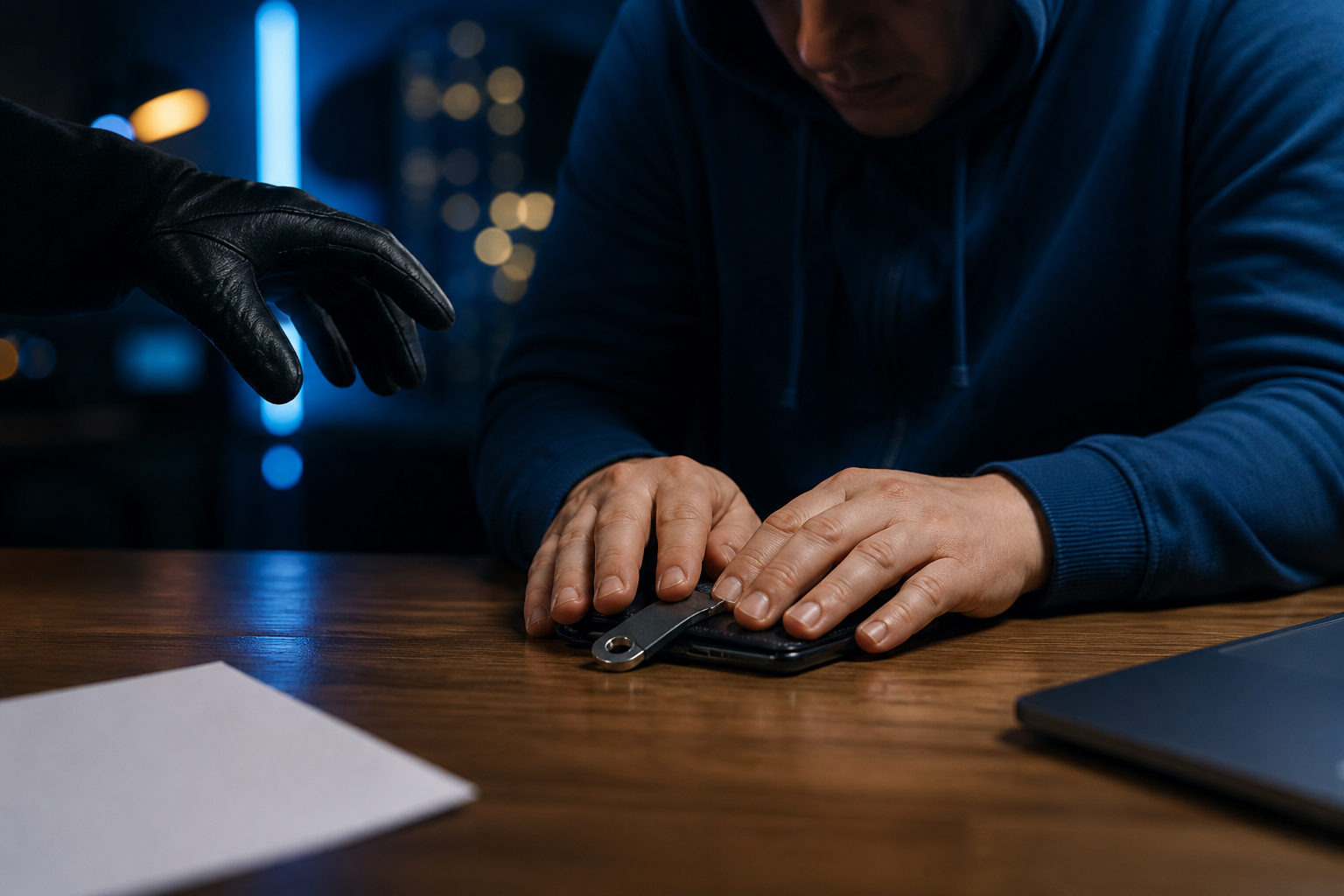
How to steal bitcoin is the wrong question for a user to follow. The practical answer is this: bitcoin is usually stolen when an attacker gets control of a seed phrase, private key, device, email, or exchange account rather than breaking the Bitcoin network itself.
What is actually being stolen
When people say their bitcoin was stolen, they often imagine someone hacked the blockchain and erased their balance. That is usually not what happened. In most cases, the attacker obtained the ability to authorize a transfer, either directly through wallet credentials or indirectly through account recovery and login channels.
For a self-custody wallet, the highest-value target is the seed phrase or private key. If someone gets that information, they may be able to restore the wallet elsewhere and move the coins. For bitcoin held on an exchange, the target may be your email account, password, two-factor flow, withdrawal settings, or support process.
That difference matters because the defenses are different. One person loses coins after typing a seed phrase into a fake recovery page. Another loses access after a scammer poses as support and walks them through a withdrawal. Both losses get described as bitcoin theft, but the path is not the same.
Common ways attackers steal bitcoin
Seed phrase and private key phishing
This is one of the simplest and most destructive methods. A fake page claims your wallet needs verification, migration, synchronization, recovery, or a security check. It asks for your seed phrase or private key, often in a polished interface that looks real enough to lower your guard.
Once the phrase is entered, the attacker may not need anything else. For that reason, a basic rule stays useful: if a web page asks for your full seed phrase outside a deliberate wallet recovery you initiated on trusted software, treat it as hostile.
Fake websites, fake apps, and lookalike search results
Some bitcoin theft starts with a typo, a sponsored search result, or a direct message on social media. Attackers clone exchange login pages, wallet extensions, desktop apps, and account portals. The page design may look convincing, while the domain, publisher, or download source is wrong.
That is why visual familiarity is not enough. A page can look identical and still be malicious. A wallet app can use a similar name and icon while sending credentials to someone else or exposing your device to more malware.
Malware, clipboard hijacking, and remote access tools
When a device is compromised, risk expands beyond one password. Malware may read saved browser credentials, log keystrokes, capture the screen, watch clipboard contents, or replace a copied bitcoin address with one controlled by the attacker. Remote access tools can make things even worse if a scammer persuades you to install them during a fake support session.
This method is dangerous because it can stay invisible until the moment you send funds. You copy the intended address, paste it, and assume the transfer is fine. If you do not verify the full destination carefully, the coins may go elsewhere.
Social engineering and fake support
People searching for “how do you steal bitcoins” often picture pure technical intrusion. In practice, many thefts begin with manipulation. An attacker may pose as customer support, a wallet administrator, a moderator in a community chat, or a security team member. The script is familiar: your account is at risk, action is required now, and they can help if you follow instructions.
The instructions are the trap. You may be asked to share your screen, install a tool, reveal a code, connect a wallet, or perform a small test transfer. Each step feels temporary. The end result is loss of control.
Malicious signing requests and unsafe wallet connections
Not every attack asks for the seed phrase outright. Some pages ask you to connect a wallet or sign a message. Users sometimes assume this is just a login step. In reality, an unclear request can still expose them to harmful actions, especially when combined with fake interfaces and pressure.
If you do not understand what you are approving, stopping is the safe move. A main wallet holding long-term bitcoin should not be the place where you experiment with unknown sites and unexplained requests.
Red flags that often show up before the theft
Useful security advice is not just “be careful.” You need warning signs that help you stop before a mistake becomes final.
- Urgency: The other side says your funds will be frozen, lost, or blocked unless you act right away.
- Requests for your seed phrase or private key: That should trigger immediate suspicion.
- Pressure to install software: This is especially risky if the tool allows remote control or screen sharing.
- A site or app that looks right but has a slightly wrong domain or publisher: Small differences matter.
- A pasted bitcoin address changes on its own: That points to a compromised environment.
- Unexpected security changes: New login alerts, changed withdrawal settings, or modified recovery methods need immediate attention.
- Support contacts you first in unofficial channels: Private messages and chat invitations are common bait.
There is also a psychological signal: when you catch yourself thinking, “I will just do it quickly and verify later,” your decision process is already under pressure. That is exactly when many users hand over access.
What to do if you think your bitcoin is being stolen
Speed matters, but order matters too. Do not keep interacting with the suspicious page or person. Do not keep entering data to see whether the issue clears up.
- Stop the live interaction: Close the page, disconnect the wallet session, end screen sharing, and stop replying to the account that contacted you.
- Switch to a device you trust: If your computer or phone may be infected, do not change passwords there.
- Secure your email first: Exchange accounts and password resets often depend on email. Change that password from a clean device and review recovery options and login activity.
- Review exchange security settings: Check withdrawal controls, approved devices, and any signs of unauthorized changes.
- Create a new wallet if wallet credentials may be exposed: If a seed phrase or private key may have been revealed, treat the old wallet as compromised and move any remaining bitcoin to a newly created wallet in a clean environment.
- Preserve evidence: Save screenshots of chats, domains, wallet addresses, prompts, and alerts. This may help with platform reports and internal reviews.
There is an uncomfortable reality here: once a bitcoin transaction is broadcast and confirmed, there usually is no simple reversal process like a card chargeback. That is why containment comes before hope of recovery.
If the incident involves an exchange, contact support only through the official app or the official website you already know. Do not search for a support number or chat link in a panic. That is how many people get trapped a second time.
How to reduce the chance of bitcoin theft
Good security is layered. The goal is not perfect safety. The goal is to prevent one mistake from exposing everything.
Separate long-term storage from daily use
A wallet used for regular browsing, experiments, and small transfers should not be the same place where you keep your primary bitcoin holdings. Separation limits blast radius when something goes wrong.
Keep seed phrases offline
Do not store a seed phrase in cloud notes, email drafts, chat apps, or photo galleries. Convenience creates extra exposure. Offline storage is less comfortable, but it removes many common theft paths.
Verify addresses carefully and test first
For meaningful transfers, a small test can catch an address error or a clipboard hijack before the main transaction is sent. Slow is better than wrong.
Harden your exchange account
Use a strong password, protect the email linked to the account, review device activity, and enable the security controls the platform provides. Exchange risk is account risk as much as market risk.
Do not make security decisions under pressure
Deadlines, urgent warnings, account freeze claims, and reward-expiry messages are common manipulation tools. If the request is real, it will still make sense after you verify it through a trusted path.
FAQ
How do hackers steal bitcoins from ordinary users?
The most common routes are phishing pages for seed phrases, fake wallet or exchange apps, malware that alters copied addresses, and social engineering through fake support. In many cases, the attacker does not break Bitcoin. They exploit user access and trust.
Can someone steal my bitcoin just from my wallet address?
Usually no. A bitcoin address can be shared to receive funds, and that alone is not enough to spend them. The sensitive items are your private key, seed phrase, and any account recovery or authentication channel linked to your holdings.
Is it safe to keep a seed phrase in phone photos or cloud storage?
It is risky. Photos may sync to cloud services, backups may duplicate the file, and malware may scan local storage. A seed phrase is safer when it stays offline and out of connected devices.
Is self-custody safer than leaving bitcoin on an exchange?
They come with different failure points. Self-custody puts more responsibility on you to protect wallet credentials. Exchange custody shifts more risk toward account security, email control, login protection, and withdrawal defenses.
What should I do if I already entered my seed phrase on a suspicious page?
Assume the wallet is compromised. On a clean device, create a new wallet, move any remaining bitcoin if you still control it, and then review your email, exchange accounts, and device security for related exposure.
The most useful next step is operational, not theoretical: download wallet software only from trusted sources, never share a seed phrase, verify addresses before every transfer, and keep your main bitcoin holdings away from unknown sites and rushed decisions.