
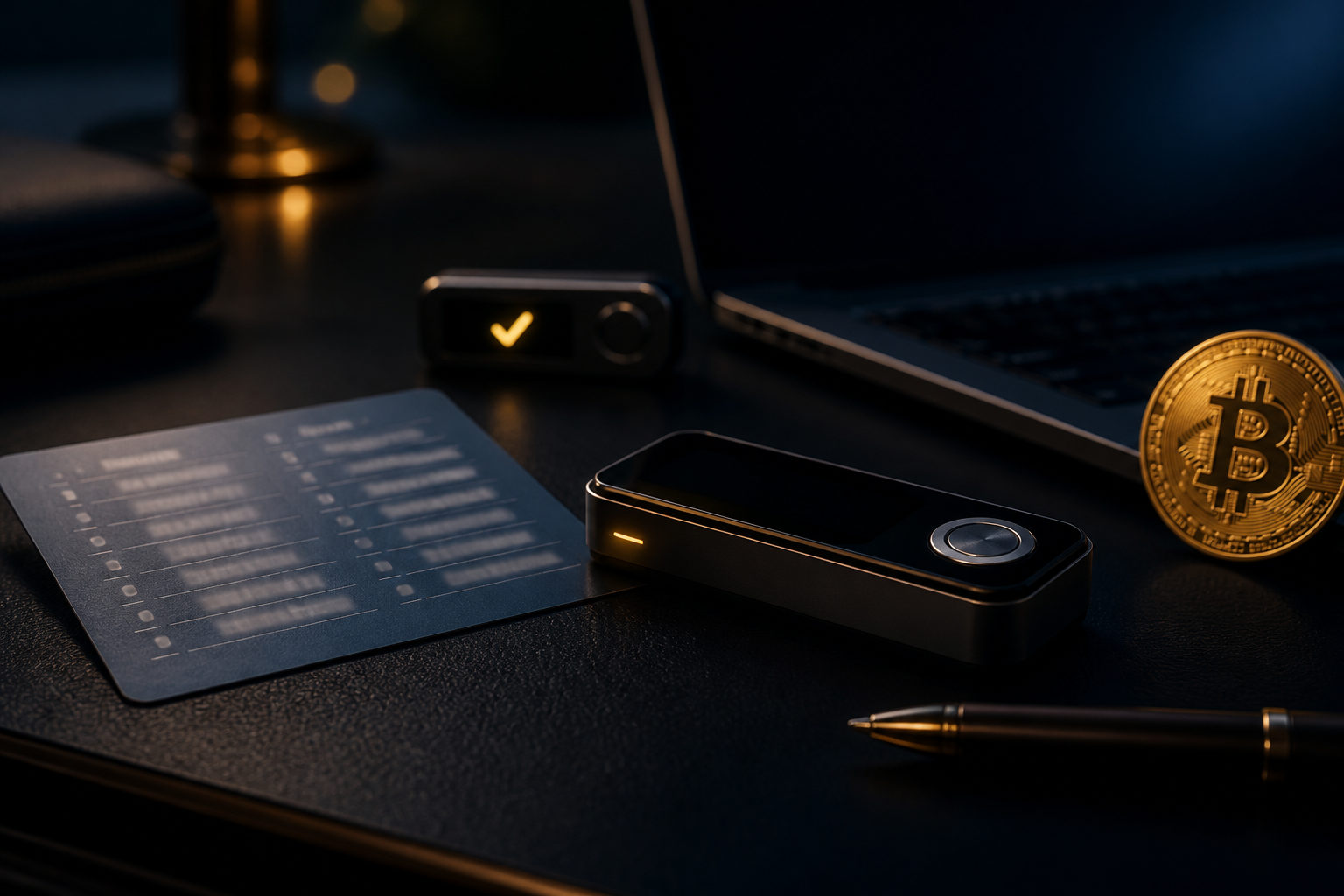
To store bitcoin on a cold wallet safely, start with key control, not the transfer itself: create the wallet in a trusted setup, back up the recovery phrase correctly, verify the BTC receive address, and send a small test transaction before moving a larger balance.
What you are really storing in a cold wallet
A cold wallet does not “hold” bitcoin in the same way a flash drive holds files. Your bitcoin stays on the blockchain. What the wallet protects is the private key, or the material used to derive control over the coins assigned to your addresses.
That is why “how to store bitcoin on cold wallet” is really a question about custody. You are not moving coins into a device; you are setting up a way to control them while keeping the signing credentials away from everyday internet exposure. The device matters, but the recovery phrase, address checks, and your own process matter more.
Step-by-step: how to store bitcoin on a cold wallet
1. Start with a trusted cold wallet setup
You can use a hardware wallet or another method that lets you create wallet credentials offline. The exact product is less important than the basic rule: initialize the wallet in a clean environment, on devices you trust, without random downloads, unknown pop-ups, or anyone else handling the setup for you.
If you are using a new hardware wallet, avoid anything that looks preconfigured. A wallet should not arrive with a recovery phrase already written down for you. If someone else generated that phrase, you cannot assume exclusive control of the wallet.
2. Generate the wallet and write down the recovery phrase by hand
During setup, the wallet will usually display a recovery phrase. This is the most sensitive part of the process. In many wallet designs, anyone with that phrase can restore the wallet and spend the bitcoin, even without the original device.
Write the phrase down carefully on a physical backup. Check each word and the order. Do not take a photo. Do not save it in cloud notes. Do not email it to yourself. Do not paste it into a chat app. Digital convenience creates extra paths for theft, and recovery phrases should stay out of those paths.
3. Set a device PIN or password, but do not confuse it with backup
Most cold wallets also ask you to create a PIN or local password. That helps if someone gets physical access to the device, but it does not replace the recovery phrase. If the wallet is lost, damaged, or stops working, the phrase is usually what lets you restore access.
Think of the local code as daily access protection and the recovery phrase as the real disaster recovery tool. Both matter, but they solve different problems.
4. Generate a bitcoin receive address and verify it on the device
Once the wallet is ready, it will show a bitcoin receive address. This is the address you will use when withdrawing BTC from an exchange or sending from another wallet. This step looks simple, but it is where costly mistakes happen.
Do not rely only on the address shown on your computer or phone. Malware can alter copied addresses. A fake app can display the wrong destination. If your cold wallet has its own screen, compare the receive address on the device with the one shown in the app before you send anything. Use the device display as the final check.
5. Send a small test transaction first
If this is your first transfer to the wallet, avoid sending your full balance right away. Send a small amount first, wait until you can confirm that the bitcoin arrived at the correct wallet, and only then move a larger amount.
This one habit prevents a lot of painful errors. It is especially useful when you are using a new wallet, a new exchange withdrawal flow, or a new computer or phone.
6. After receipt, make sure you understand recovery
Receiving bitcoin is not the end of the job. You should also know what you would do if the device stopped working tomorrow. That does not mean typing the phrase into random software just to test it. It means understanding the recovery path in advance and knowing what information you would need to restore the wallet in a compatible setup.
Many people discover backup problems only when they urgently need the phrase. A missing word, the wrong order, or an unreadable handwritten note can turn a careful storage plan into a failure. It is better to catch those weaknesses before an emergency.
Main risks when storing bitcoin in a cold wallet
- Photographing the recovery phrase: phone galleries and cloud sync services create extra exposure.
- Typing the phrase into a website: a page that asks for your phrase to “verify” or “sync” the wallet should be treated as suspicious.
- Keeping only one backup: fire, water damage, moving, or simple misplacement can leave you with no recovery path.
- Skipping address verification: if you do not confirm the receive address on the wallet device, you leave room for clipboard tampering and fake interfaces.
- Confusing exchange records with self-custody: a withdrawal history is not a wallet backup and does not give you key control.
- Assuming the device alone guarantees safety: if the recovery phrase has leaked, the fact that you still hold the hardware wallet does not fully protect the bitcoin.
A common misunderstanding is that “cold” means “automatically safe.” It does not. A cold wallet reduces one category of risk by keeping signing credentials away from normal online activity. It does not fix careless downloads, phishing, bad backups, or rushed transfers. In practice, many losses come from user error during setup, recovery, or address confirmation.
A practical checklist you can follow
- Get a cold wallet or offline-capable wallet setup from a source you trust.
- Initialize it yourself in a clean environment.
- Write down the recovery phrase by hand and verify every word.
- Store backups in separate physical locations you can actually access over time.
- Create a device PIN or password and keep it separate from the phrase.
- Generate a BTC receive address and verify it on the wallet screen.
- When withdrawing, make sure you are sending bitcoin to a bitcoin address.
- Send a small test transaction first.
- Confirm receipt, then move more only if everything checks out.
- Know the recovery path before you ever need it.
If your goal is long-term storage, consistency matters more than complicated tricks. Good cold wallet use is mostly about reducing unnecessary chances to make a mistake. Fewer transfers usually mean fewer chances to send to the wrong address, trust the wrong interface, or expose sensitive wallet data.
FAQ
Is bitcoin in a cold wallet completely theft-proof?
No. A cold wallet can reduce the chance that your private keys are exposed online, but it does not remove every risk. If someone gets your recovery phrase, if you use fake software, or if you send to the wrong address, you can still lose funds.
Is a cold wallet better than leaving bitcoin on an exchange?
It depends on what you want. A cold wallet is usually the better fit for long-term self-custody because you control the wallet credentials. An exchange account is easier to use, but you rely on the platform's account system and withdrawal rules.
Do I really need a small test transaction first?
Yes, especially if this is your first time using that wallet or sending from that platform. A test transfer helps confirm that the address, the withdrawal flow, and your own checks are all correct before more bitcoin is involved.
Is the recovery phrase the same as the private key?
Not exactly. They are related, but they are not the same thing in the way most wallets present them. For many users, protecting the recovery phrase is the practical way to protect access to the wallet's private keys.
What happens if I lose the cold wallet device?
Losing the device does not always mean losing the bitcoin. If your recovery phrase backup is accurate and complete, you can usually restore the wallet in a compatible setup. The real danger is losing the phrase as well, or finding out too late that the backup was written down incorrectly.
What to prioritize before your next transfer
Back up the recovery phrase before you move any BTC. Verify the receive address on the device before you confirm a withdrawal. Use a small test transaction before sending a larger amount. Any step involving a recovery phrase, wallet restore, or destination address should be treated as hard to reverse once done.