
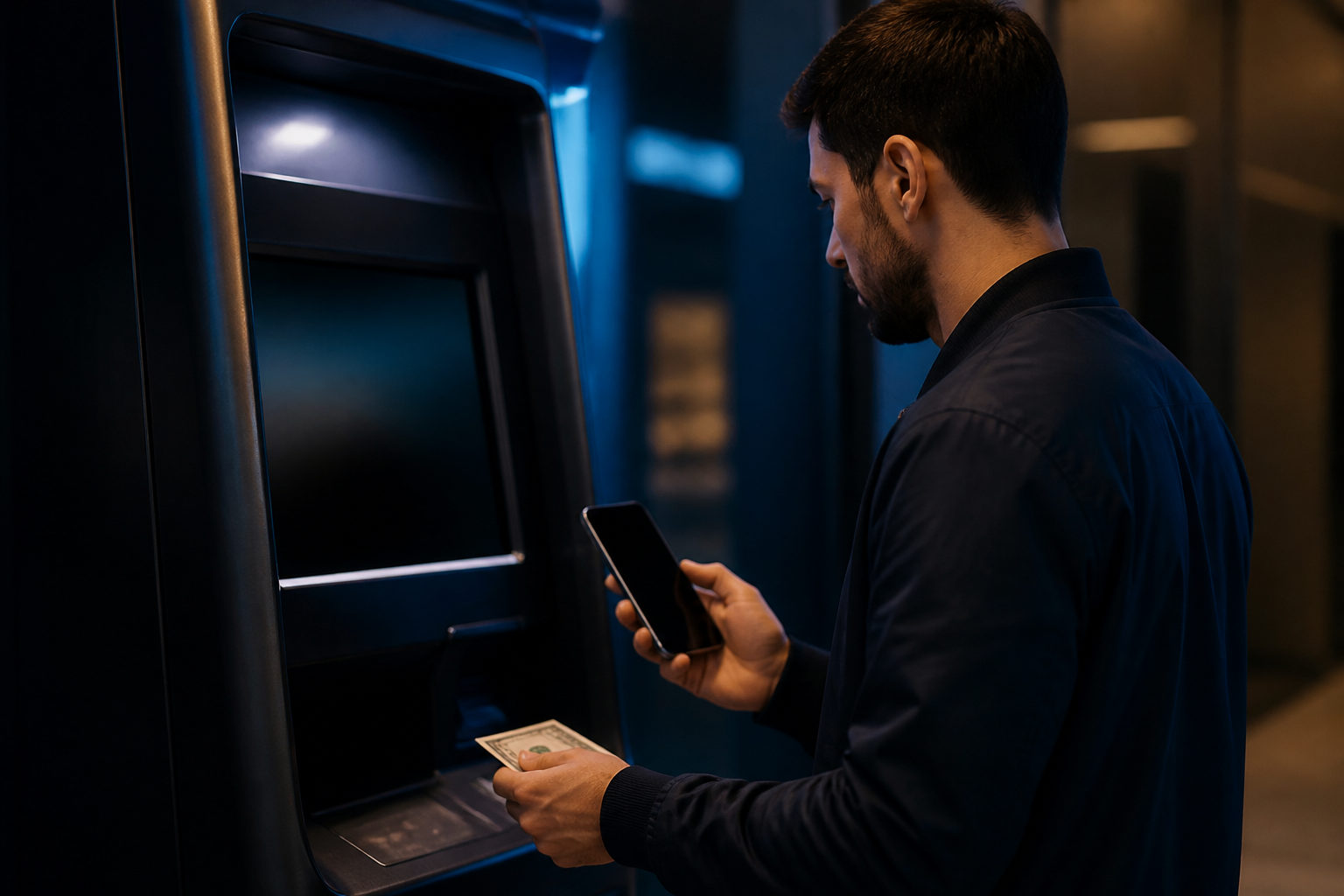
If you are using a Bitcoin ATM for the first time, the safest approach is simple: bring your own wallet, confirm fees and identity checks on the screen, scan your own BTC address, and start with a small test transaction.
Know what kind of Bitcoin ATM you are standing in front of
People often assume every Bitcoin ATM works the same way. That is the first mistake. Some machines only let you insert cash and receive bitcoin in your wallet, while others also let you sell bitcoin and collect cash after sending BTC to the machine’s listed address or process.
This difference matters because the flow, the prompts, and the verification steps may change. Before you touch anything, check whether the machine clearly states that it supports Bitcoin, whether it is for buying, selling, or both, and what kind of identity check it may request. If the screen does not explain fees, transaction conditions, or what counts as completion, that machine is a poor choice for a first attempt.
What to prepare before you leave home
The first item is your own Bitcoin wallet. That means a wallet where you control the receiving address and can open the BTC receive screen yourself. If you have not backed up the wallet yet, or you do not know how to find the receive QR code without rushing, fix that before going anywhere near an ATM.
The second item is readiness for verification. One machine may ask only for a phone number and a text code. Another may request a photo ID or a live photo. Since requirements vary, give yourself enough time and do not plan to learn the whole process while standing in a busy shop with people behind you.
The third item is your phone setup. Battery level, mobile data, and screen brightness all affect whether you can display your wallet QR code, receive messages, and review the transaction record without stress. If your phone dies halfway through, you may end up making bad decisions just to finish quickly.
You should also know how to recognize your own Bitcoin receive screen. For a first-time user, the main safety issue is not button order. It is whether the coins are being sent to an address you control.
Step-by-step: how to use a Bitcoin ATM the first time
Start by checking the machine and the area around it
Do not begin the transaction the moment you arrive. Look at the machine placement and the setting around it. A machine in a normal retail location with no suspicious attachments, no paper notices covering instructions, and no stranger hovering nearby is a better starting point than one in a chaotic or isolated setup.
Pay attention to people as much as the hardware. If someone approaches you with advice, tells you which buttons to press, or says they can help you send bitcoin faster, leave. First-time users are often targeted outside the screen flow, not inside it.
Pick the correct transaction type
The home screen usually asks whether you want to buy or sell. Slow down here. Many mistakes happen because a new user clicks through too fast and enters a process they do not understand. Make sure the screen is offering to send bitcoin to your wallet rather than asking you to deliver bitcoin first.
Choosing the wrong path can also make you miss later prompts about fees, limits, or ID checks. A careful pause at the start often prevents a messy transaction later.
Read the fee display and completion terms before moving on
A Bitcoin ATM may show a quoted exchange rate, a service fee, network conditions, or a statement about when the transfer is considered submitted. Do not focus only on how much cash you are feeding into the machine. What matters is how much bitcoin you are expected to receive and under what conditions the machine treats the transaction as sent.
If the screen emphasizes convenience but does not plainly show cost and delivery terms, walk away. Once a blockchain transaction is sent, reversing it is usually not a practical option, so the review stage matters far more than any complaint after the fact.
Scan the receiving QR code from your own wallet
When the machine asks where to send the bitcoin, open the BTC receive screen in your own wallet and let the ATM scan that QR code. Avoid typing a long address by hand. A single error can send funds elsewhere, and asking someone else to inspect a screenshot adds a privacy risk you do not need.
After scanning, check that the ATM recognized a Bitcoin address and that you are on the BTC receive page in your wallet. This is especially important if your wallet supports multiple assets and shows several different receive tabs.
Make a small test transaction first
For a first use, a small test is one of the best habits you can build. It lets you confirm that the ATM sends to the right place, that your wallet displays the incoming transfer properly, and that you understand what waiting for confirmation looks like in practice.
Only after that test should you decide whether to continue with a larger amount. If you still do not know how your wallet shows a pending bitcoin transaction, learn that part before you feed more cash into the machine.
Insert cash or follow the payment prompt carefully
Machines vary in how they accept payment, but the rule is the same every time the screen asks you to continue: stop and read. Confirm the amount being processed, the expected bitcoin output, and any fee disclosure shown at that stage. If the display changes in a way you did not expect, do not keep going just because you already started.
Do not let another person press confirm for you. Do not rush because someone is waiting behind you. A slow minute at the machine is much cheaper than a permanent error on-chain.
Keep the receipt or reference details and check your wallet before leaving
Many Bitcoin ATMs print a receipt or show a transaction reference on screen. Keep that information. Before you walk away, open your wallet and see whether it shows an incoming or pending transaction, or at least make sure you have enough information to look it up later if needed.
If the machine says the transfer has been submitted but your wallet does not update right away, that does not always mean something is wrong. Wallet refresh timing and network confirmation are separate issues. The problem starts when you leave without any record of what the ATM claimed to send.
Scams and pressure tactics first-time users should watch for
The most common Bitcoin ATM scam starts before you even reach the machine. Someone calls, messages, or texts you and says you must go to a specific ATM right away to pay a fee, unlock an account, collect a refund, cover a deposit, or help a relative in an emergency. The details change, but the goal stays the same: get you to convert your money into bitcoin and send it to a stranger’s address.
If anyone tells you to stay on the phone while you use the ATM, keep the transaction secret, or scan a QR code they sent you, stop immediately. Legitimate refunds are not handled by asking you to buy bitcoin and send it away first. Promises that the transfer can be recovered later should not reassure you.
Another danger is the “helpful bystander.” A stranger may offer to choose the right machine, explain the screen, hold your phone, or scan the code for you. That person may replace your intended receiving address, capture your receipt, or push you into sending funds somewhere else. Your phone, wallet QR code, text verification codes, and transaction details should remain in your control at all times.
Buying bitcoin for someone else is also risky for a first try. You may think you are only making a payment on their behalf, but in reality you are sending an irreversible asset to a person whose identity you cannot confirm. For a first transaction, the receiving wallet should be yours.
How to think about fees, timing, and privacy
Many beginners ask whether a Bitcoin ATM is easy to use. A better question is whether the machine is transparent enough to use safely. Convenience often comes with higher cost, more identity checks, or both, so you need to understand the tradeoff before you approve the transaction.
Timing is another area where confusion causes panic. The machine accepting your request, the bitcoin transaction being broadcast, your wallet showing it as pending, and the funds becoming fully spendable are different stages. If the screen says “sent,” that usually means the machine has initiated its side of the process; it does not always mean you can move the bitcoin again right away.
Privacy deserves the same attention. Some machines ask for very little. Others collect a phone number, ID image, or a live photo. You need to decide in advance whether that level of data collection is acceptable to you. If the answer is no, do not continue just because you are already standing there.
FAQ
Do I need an account before using a Bitcoin ATM for the first time?
Not always. Some machines let you begin right away, while others ask for a phone number, a text code, or identity details during the process. Read those requirements before you insert money so you do not get stuck halfway through.
Can I use a Bitcoin ATM without having my own wallet yet?
That is a bad idea for a first transaction. It is much safer to set up your own wallet first, learn where the BTC receive screen is, and understand how to view incoming activity before using the machine.
Why does the ATM say the transaction is complete but my wallet shows nothing yet?
Your wallet may need time to refresh, or the transaction may still be waiting for network confirmation. This is why keeping the receipt or transaction reference matters: it gives you something concrete to check instead of guessing.
Should I buy a larger amount right away or split it up?
For a first use, a small test transaction is the safer route. It confirms that the address, the wallet, and the ATM flow all match your expectations before you commit more funds.
Someone sent me a QR code and asked me to buy bitcoin for them at an ATM. Is that safe?
No, especially not as a first attempt. You do not know who controls that address, and once the bitcoin is sent, getting it back is usually very difficult.
Before leaving the machine, make sure of three things: the bitcoin is being sent to your own wallet, you kept the receipt or reference details, and you know how to check the transaction status in your wallet. If any of those pieces are missing, do not increase the amount next time.