
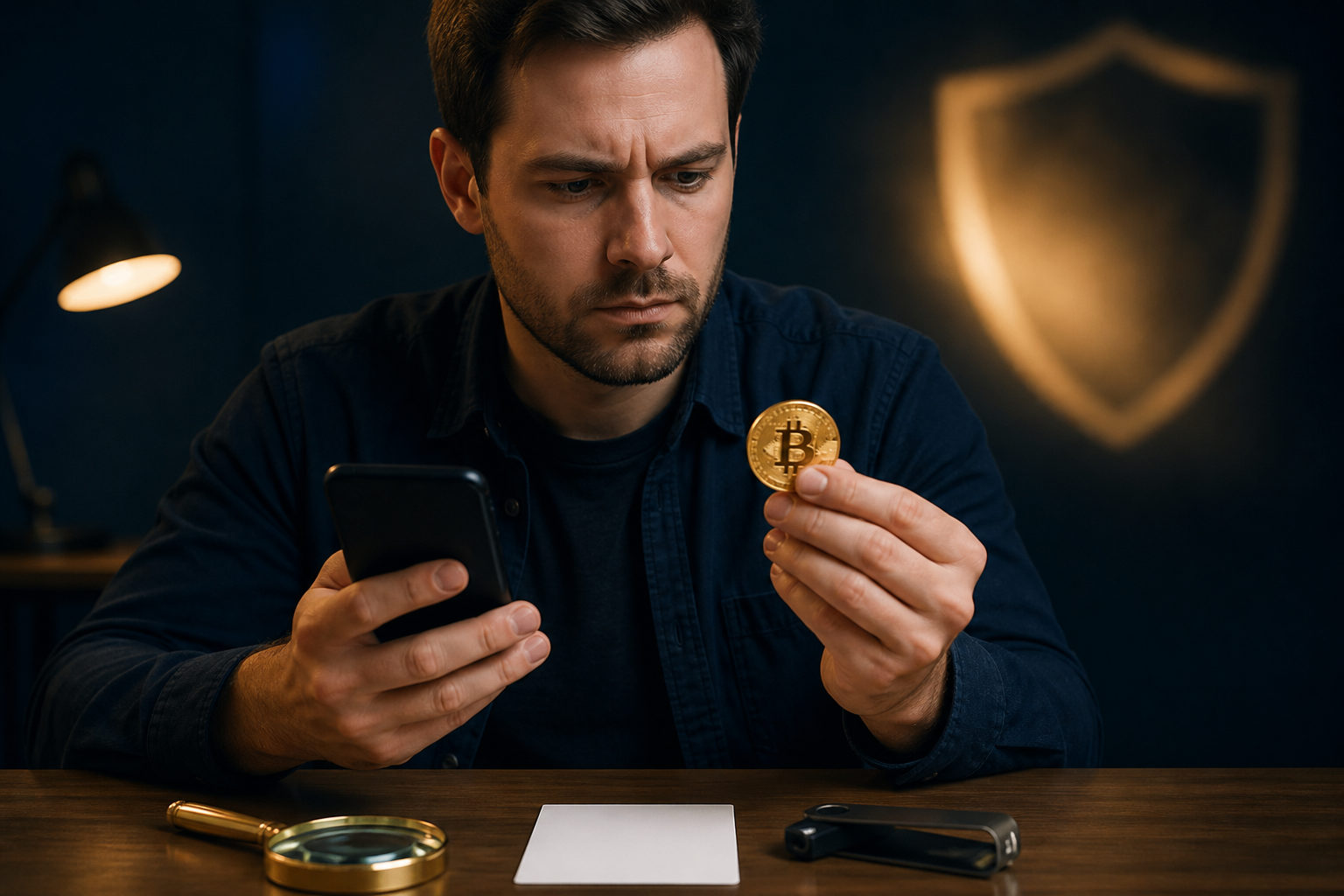
Is free bitcoin safe? Often no, at least not by default. The biggest danger usually is not Bitcoin itself but the claim process around it: wallet approvals, fake support messages, hidden withdrawal rules, shady apps, and any request to pay first.
Start by defining what “free bitcoin” actually means
People use the phrase “free bitcoin” for very different offers. It can mean a signup reward, a task-based payout for watching content or trying an app, an airdrop that asks you to connect a wallet, a referral bonus, or a direct message claiming you were selected for a giveaway.
That distinction matters because the risk is different in each case. Your real question is not whether the word free is trustworthy. The real question is what you must hand over in exchange: personal data, device permissions, wallet access, time, or even an upfront payment disguised as a fee.
| Offer type | What you are asked to do | Main risk | What to inspect first |
|---|---|---|---|
| Signup reward | Create an account with email or phone | Data collection, spam, payout restrictions | Check for hidden verification or deposit steps |
| Task reward | Install software, watch content, complete actions | Malware, excessive permissions, weak payout terms | Review app permissions and withdrawal rules |
| Airdrop claim | Connect wallet, sign messages, approve tokens | Asset drain through approvals | Read every wallet prompt carefully |
| Support-assisted claim | Chat with an agent, send screenshots, share codes | Social engineering, account takeover | Treat any code request as a red flag |
| Pay-first reward | Send a fee or deposit before release | Direct payment scam | Leave immediately |
A step-by-step way to judge safety
Step one: map the full claim flow before clicking through
Write down the exact actions the offer requires: register, download, connect a wallet, sign, approve, deposit, invite friends, or message support. Do this before you start completing anything.
The reason is simple. Risky offers often hide the most dangerous action behind a harmless-looking first screen, then push users forward with urgency. If a page keeps saying that spots are limited or that your reward expires soon, slow down instead of speeding up.
One caution here: do not review and click at the same time. A rushed decision is exactly what scam flows are designed to trigger.
Step two: separate your test setup from your main accounts
If you still want to try a free bitcoin offer, do not use the wallet that holds your main assets. Use a separate email address and a separate wallet for testing so that any fallout stays contained.
This matters because not every problem appears on the first day. Some offers collect contact details for later phishing attempts, password stuffing, fake account alerts, or repeat promotions that push you toward riskier actions.
The key caution is to keep the test wallet empty except when needed and avoid reusing passwords from important accounts. Isolation is useful only when it is real.
Step three: inspect wallet prompts and software permissions line by line
Many users think “connect wallet” is either always safe or always dangerous. Neither is accurate. What matters is the exact request inside the wallet prompt: a basic sign-in message, a token approval, or a contract interaction that could give spending rights.
This step is where many losses begin. People recognize a familiar wallet interface, assume it is routine, and confirm a request they did not read. A clean-looking interface does not make the request harmless.
Your caution point is straightforward: if you cannot explain what a signature or approval does, do not approve it. Confusion is a valid reason to stop.
Step four: read the payout rules before spending time
One of the most common traps in free bitcoin offers is not theft at the start but friction at the end. The reward balance may appear on screen, but the withdrawal process may require more tasks, more identity details, a minimum threshold, a long review, or a deposit to “activate” the release.
That is why payout rules belong near the beginning of your review, not the end. Once people have spent time on a task, they become more willing to tolerate extra conditions because they do not want their effort to feel wasted.
The caution is blunt: if a “free” reward turns into a request for a processing fee, activation charge, deposit, or advance payment of any kind, stop there. A small test payment is still a payment.
Step five: judge whether the communication channel is normal
A claim process that depends on private chat, group admins, or direct messages from strangers deserves extra suspicion. A standard reward flow should happen through a clear interface, not through a person asking you to send screenshots, verification codes, or recovery details.
This matters because social engineering works best in conversation. A fake agent can invent urgency, pretend to verify your status, or ask for one more step that gives them control over an account.
Your caution point should be absolute here: never share seed phrases, private keys, SMS codes, or email verification codes to “confirm” a reward.
Step six: compare the reward with the exposure
Before you continue, ask what you are giving up to pursue the offer. Time, privacy, app access, wallet approvals, and future phishing exposure all have a cost, even if no money leaves your account on day one.
This helps you avoid a narrow view of safety. Some offers do not steal funds right away, yet still create ongoing risk by collecting data, opening a path for later scams, or normalizing dangerous habits such as blind signing and trusting private messages.
The caution is not to assume that “free” means low stakes. In many cases, the real asset being taken is control.
Red flags that justify leaving immediately
Some signs are strong enough that you do not need further research. When they appear, exiting is the safest move.
| Red flag | Why it is dangerous | Best response |
|---|---|---|
| Request for seed phrase or private key | Hands over wallet control | Close the page at once |
| Pay first to receive a larger reward | Classic payment scam structure | Do not “test” with a small amount |
| Deposit required before withdrawal | Turns a reward into a trap | Stop engaging |
| Unknown app download | May include malware or tracking tools | Do not install it |
| Support asks for a verification code | Can lead to account takeover | End the chat and secure the account |
| Constant urgency or countdown pressure | Reduces careful review | Leave and verify independently |
| Rules keep changing | Common in delayed or blocked payouts | Do not invest more time |
If you still want to try, keep risk as low as possible
Some readers are not convinced by the marketing but still want to examine the process. In that case, your goal should be containment, not maximizing a tiny reward.
| Protective move | Why it helps | Caution |
|---|---|---|
| Use a separate email | Keeps spam and phishing away from primary accounts | Do not reuse important passwords |
| Use a separate test wallet | Limits the blast radius of risky approvals | Do not store long-term funds there |
| Review app permissions after install | Reduces unnecessary data access | Disable anything not required |
| Save screenshots of the reward terms | Lets you compare later changes | Avoid capturing sensitive information |
| Refuse advance payments | Prevents a free claim from turning into a paid funnel | This includes activation and release fees |
| Revoke permissions you no longer need | Lowers long-term exposure | Remove stale connections after testing |
There is another point many users miss. An offer does not need to steal from you immediately to be harmful. It may simply place you into a pipeline of follow-up messages, fake upgrade notices, or new “bonus” tasks that become more invasive over time.
After you finish testing, clean up. Remove unneeded app permissions, turn off unnecessary notifications, and disconnect services you no longer plan to use.
FAQ
Can free bitcoin rewards actually be withdrawn?
Sometimes yes, but the key issue is whether the payout rules are reasonable and visible from the start. Check for hidden minimums, extra tasks, review delays, and any demand for a deposit before release.
Is connecting a wallet to claim rewards always unsafe?
No. The danger depends on what happens after the connection, especially what you sign or approve. A simple sign-in request is different from granting spending permission, so every wallet prompt needs its own review.
Are watch-and-earn or task-for-bitcoin offers legitimate?
Some may be real, but legitimacy alone does not make them safe or worthwhile. The main issues are weak payout terms, privacy trade-offs, aggressive permissions, and the chance that the offer becomes more demanding later.
Why do scams ask for small upfront fees?
A small payment can feel harmless, which makes people less defensive. It also creates commitment, and once you have paid once, you may be easier to push toward a second payment or more account access.
What should I do if someone messages me saying I won free bitcoin?
Treat it as high risk and avoid following the sender’s steps. If the conversation moves toward codes, screen sharing, wallet recovery details, or urgent deadlines, cut contact instead of trying to prove whether it is real.
If you are checking whether free bitcoin is safe, focus on three things before anything else: the exact steps, the permissions requested, and the withdrawal rules. The moment an offer asks for payment, secret recovery information, or control over your wallet, there is no practical reason to continue.
Disclaimer: This article is for informational and educational purposes only and is not investment, financial, or legal advice. Crypto assets are highly volatile and you could lose your entire investment. Do your own research and decide carefully.