
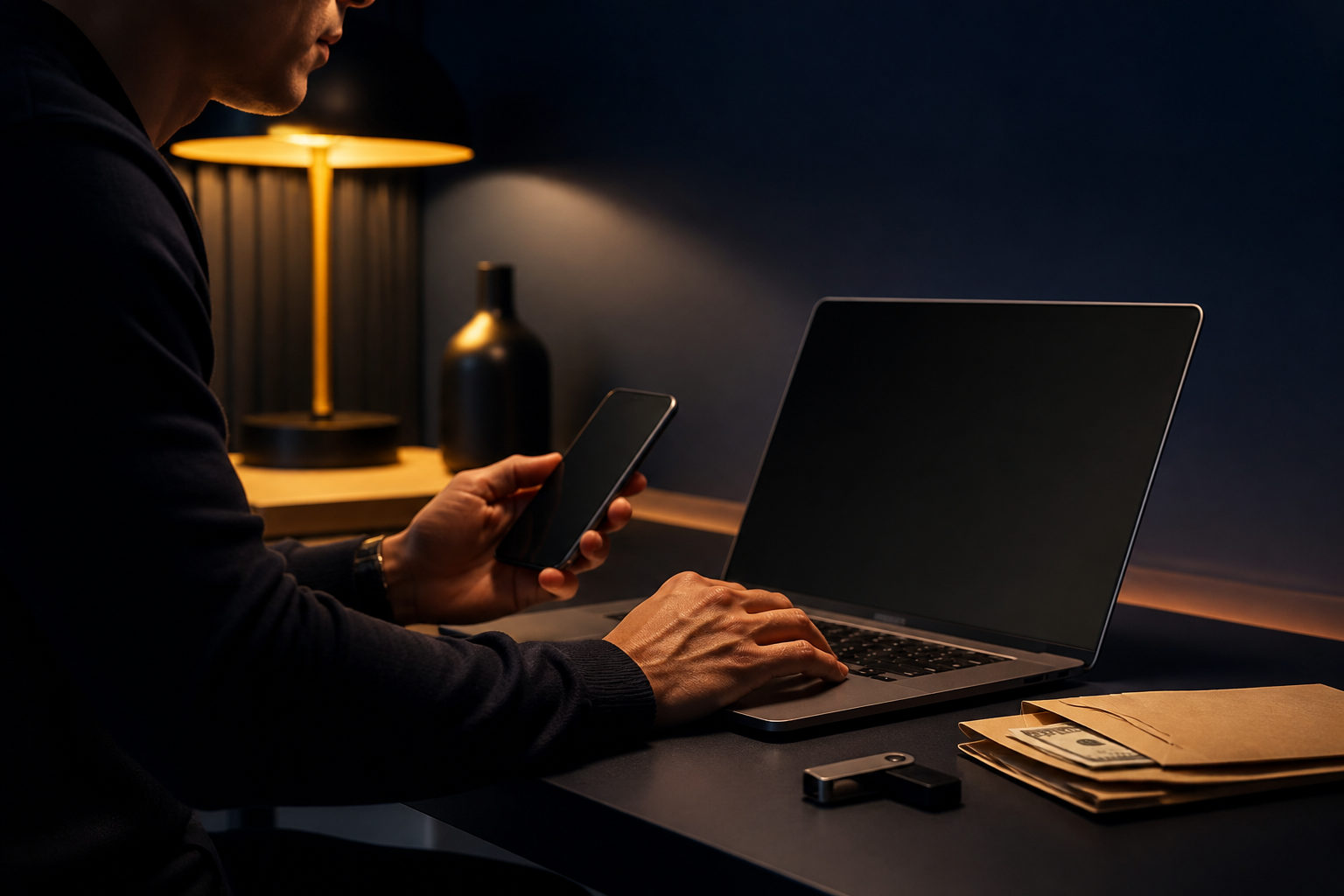
How to buy bitcoin anonymously starts with one reality check: you can improve privacy, but you should not assume total invisibility. The safer approach is to reduce data exposure, control your own wallet, and avoid risky shortcuts.
Privacy first, but be realistic
People who look up how to buy bitcoin anonymously are usually trying to solve one of two problems. They either want to avoid handing too much personal information to a single service, or they want to keep their buying activity from being tied too closely to their everyday online identity.
Bitcoin itself runs on a public ledger. Wallet addresses and transfers can be observed, even if a real name is not attached on-chain. That is why privacy improvement is a better goal than the promise of being completely untraceable.
Any seller, broker, or chat contact claiming “full anonymity” or “guaranteed no trace” deserves extra scrutiny. Those claims often appear next to off-platform payments, fake support, or pressure tactics meant to rush you into a bad decision.
Step-by-step: how to buy bitcoin anonymously with less risk
Step 1: Set up a wallet you control
Before you buy anything, prepare a wallet where you control the private keys. This matters because leaving bitcoin in someone else’s account gives that party visibility into your activity and control over your access.
Use a non-custodial wallet and back up the recovery phrase or private key carefully. Do not store that backup in a chat app, a cloud note, or a screenshot folder. If the backup leaks, your privacy plan stops mattering very quickly.
Step 2: Separate your trading habits from your daily identity
If you care about privacy, the purchase method is only part of the picture. The same browser, the same logged-in accounts, and the same saved autofill data can connect your bitcoin activity to your normal online profile.
A cleaner setup helps. Use a separate browser environment for research and transactions, reduce saved history when possible, and avoid staying signed in to social media or personal email while handling a purchase.
Step 3: Choose a lower-exposure acquisition method
When people ask how to buy bitcoin anonymously, they often focus on finding a secret channel. That is usually the wrong question. A better question is which method leaves less personal information behind while still giving you a process you can verify.
Peer-to-peer trades, in-person cash arrangements, and sellers that collect less personal information are common ideas. The tradeoff is simple: less data collection can mean more counterparty risk, so scam prevention has to stay at the center of your decision.
Step 4: Test with a small amount first
Do not send your full budget in a first transaction. A small test trade lets you check how the seller communicates, whether the process stays consistent, and whether your receiving wallet works as expected.
Breaking the purchase into parts also limits the damage from a mistake. Copy the destination address carefully and verify it before sending or receiving. Malware that swaps wallet addresses is a real concern, and manual typing creates its own problems.
Step 5: Move the bitcoin into self-custody
Once you receive the bitcoin, do not leave it sitting in a temporary account longer than necessary. If you do not control the keys, you do not fully control the asset.
After the transfer arrives, move it to the wallet you prepared in advance and keep different uses separated when practical. Avoid posting screenshots, balances, or addresses in public spaces. Oversharing can undo privacy work you did earlier.
How to judge the other side of the trade
A lot of problems linked to buying bitcoin privately come from the person on the other side, not from Bitcoin itself. The biggest warning signs are rushed payment requests, changing terms, poor explanations, and pressure to leave a normal process for a private side deal.
Look for clear rules, steady communication, and a dispute path that makes sense. A safer setup usually explains payment conditions, release conditions, and what happens if something goes wrong.
- Be careful with extreme pricing: an offer that looks unusually cheap or oddly expensive may be bait to pull you away from a safer process.
- Be careful with “I’ll buy it for you” offers: that puts your money and your privacy in the hands of a stranger.
- Be careful with screen sharing: anyone asking to see your wallet or payment interface is asking for too much access.
- Be careful with off-record messaging: social replies, forum direct messages, and chat groups are common places for impersonation and fraud.
Do not turn privacy steps into new security problems
Many beginners make this mistake. They try to stay private, then end up exposing their recovery phrase, downloading unknown software, reusing the same receiving address too often, or letting someone else “help” manage the wallet.
A better model is layered protection. Payment privacy is one layer. Counterparty risk is another. Wallet custody is another. Keep each layer simple, and do not sacrifice basic security habits just to leave less information behind.
Small details that matter
- Do not trust search ads automatically; fake wallet pages and fake support portals are common.
- Do not tell unnecessary people about your privacy goals; extra exposure creates its own risk.
- Do not handle larger transfers on public networks where others can watch or interfere.
- Do not mix work accounts, personal email, and bitcoin purchase communication.
FAQ
What should I do before trying to buy bitcoin with more privacy?
Start by setting up a wallet that you control yourself. That separates the act of buying from the long-term storage of your bitcoin and gives you more control over what happens next.
Can I buy bitcoin without sharing much personal information?
Some methods involve less data collection than standard account-based services. The tradeoff is that lower information exposure often comes with higher trust risk, so you need to weigh both sides together.
Is meeting in person a better option for privacy?
It can reduce online records, but it adds personal safety and cash-handling risk. If you go that route, agree on the process in advance and choose a setting where safety comes first.
Where should I keep bitcoin after I buy it?
A self-custody wallet is usually the stronger choice if privacy matters to you. As long as someone else controls the keys, your control and your privacy both remain limited.
Why do private bitcoin purchases attract scams?
Because buyers who want less exposure may feel pressure to move quickly and avoid normal checks. Scammers use that urgency with low-price bait, private payment requests, and fake support messages.
If you plan to buy bitcoin anonymously, prepare the wallet first, separate your browsing habits, test with a small trade, and stop immediately when the rules are unclear or the other party tries to rush you.
Disclaimer: This article is for informational and educational purposes only and is not investment, financial, or legal advice. Crypto assets are highly volatile and you could lose your entire investment. Do your own research and decide carefully.