
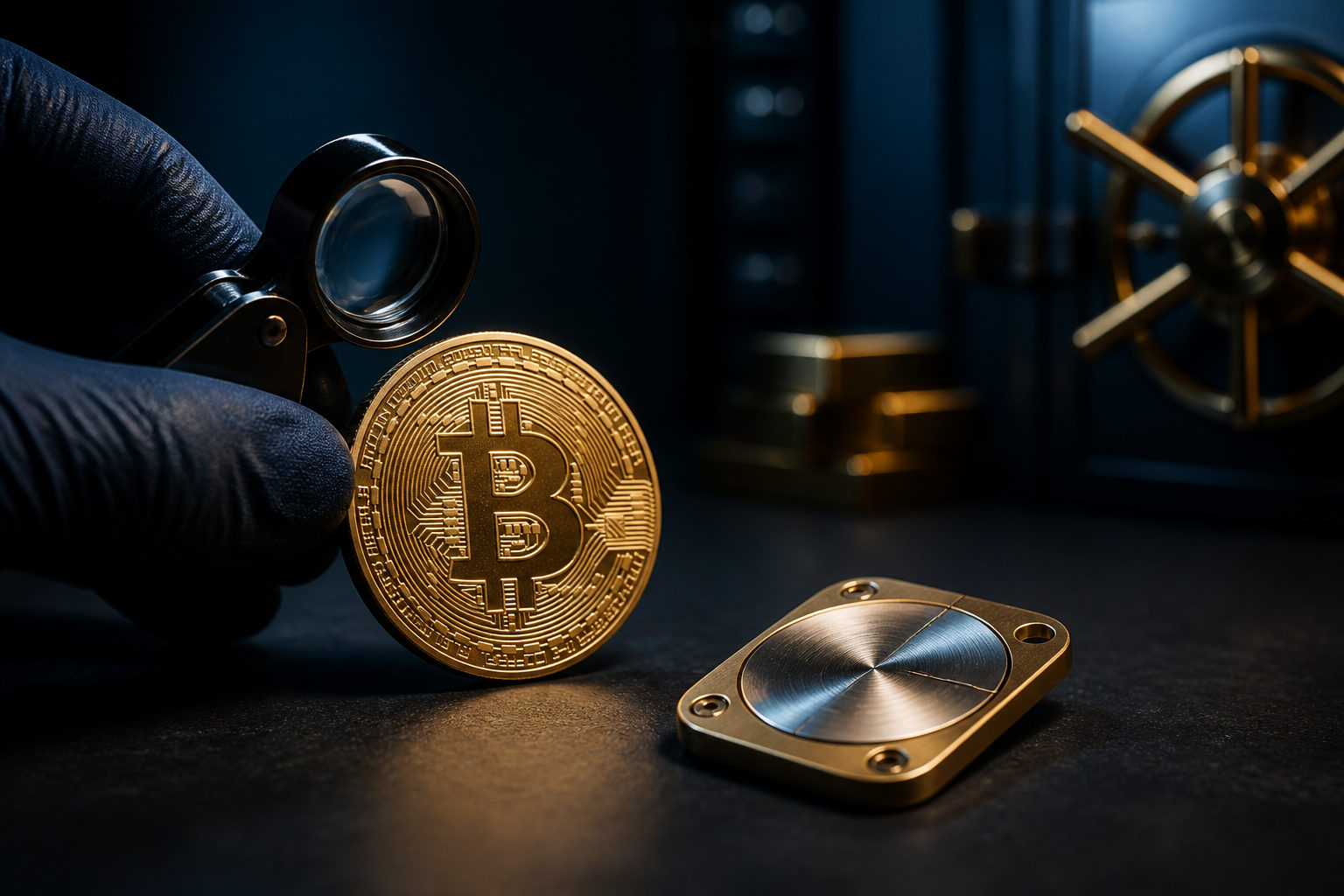
If you want to know how to get physical bitcoins, the short answer is this: most physical bitcoins are collectibles, while only some contain private-key data tied to real BTC. Before you buy anything, figure out whether you want a display piece or a physical item that represents on-chain control.
What “physical bitcoin” usually means
People often use the phrase for very different items. That causes confusion, and it is where many bad purchases begin.
- Collectible coins: metal pieces with the Bitcoin symbol, made for display, gifts, or collecting. They usually do not give access to real bitcoin.
- Physical key carriers: coins, cards, or sealed items that may include a private key, recovery data, or a hidden code linked to a wallet.
- Self-made physical storage items: a wallet you create yourself, then turn into a card, engraved plate, or sealed backup.
If your goal is collecting, the focus is design, condition, and provenance. If your goal is actual BTC control, the real issue is whether anyone else has ever seen or copied the key material.
Step-by-step: how to get physical bitcoins with less risk
Step 1: Decide what you actually want
Start by defining your goal. Are you buying a gift, building a collection, or trying to hold bitcoin through a physical object?
This matters because the buying process changes with the goal. A collectible can be judged by craftsmanship and presentation, but a key-bearing item should be judged by control, exposure risk, and how fast you can move the funds afterward.
Step 2: Ask whether it really includes bitcoin access
If a seller says the item is a real physical bitcoin, ask what that means in practice. Does it include a sealed private key, hidden recovery data, or importable wallet information?
The reason to ask early is simple: appearance proves very little. A polished design, premium box, or tamper sticker does not prove that the key was never copied before the item reached you.
Step 3: Consider making your own physical bitcoin
If safety matters more than brand or rarity, making your own version is often the cleaner option. Create a new wallet yourself, then turn the public address or backup format into a physical item such as a card or metal record.
This approach reduces third-party exposure. The key warning is obvious but important: do not hand your seed phrase or private key to a shop, engraver, or custom maker just to get a nicer-looking product.
Step 4: Inspect seals, packaging, and consistency
If you still plan to buy a pre-made item, inspect it closely once it arrives. Check whether seals look uneven, edges appear lifted, or the packaging story does not match the included instructions.
You are not trying to prove perfection with a glance. You are looking for signs that the item may have been opened, altered, or assembled in a careless way. Even then, an intact seal only lowers some risks; it does not erase the possibility of earlier key exposure.
Step 5: Move control to your own wallet quickly
If the item really does carry access to bitcoin, the safer move is usually to transfer control to a wallet you created yourself as soon as practical. That is because you cannot verify what happened before the item got to you.
Once that transfer is done, the physical object shifts from “storage tool” to “collectible with a history.” You can still keep it, display it, or archive it, but your long-term security no longer depends on trusting that original key setup.
Step 6: Store the object and the recovery information separately
A common mistake is keeping everything together in one box or safe: the coin, the card, the hidden code, and every backup note. That is convenient, but it concentrates risk in one place.
Separate the display item from the recovery material, and keep any backup in another location. If one part is exposed, lost, or damaged, the entire setup is less likely to fail at once.
How scams happen with physical bitcoins
Physical bitcoins appeal to beginners because they feel tangible. That feeling can create false confidence.
- A collectible is sold as if it carries real BTC: the product description stays vague on purpose.
- “Sealed” is used as a trust shortcut: a seal cannot prove the private key was never recorded elsewhere.
- The seller offers to preload or manage it for you: if someone else controls the key flow, your security depends on them.
- Urgency replaces clarity: heavy focus on rarity and limited availability can distract from the real question of key handling.
- You are asked to share sensitive wallet details: proper verification should not require you to expose your own recovery data.
If a seller avoids direct answers about private keys, wallet creation, or post-purchase transfer steps, walk away. Missing one item is cheaper than trusting a product that another person may still control.
Is a DIY physical bitcoin better?
For many people, yes. If what you want is a gift, keepsake, or offline representation of bitcoin, building it yourself is often more sensible than buying a ready-made “loaded” item.
You can create a fresh wallet, keep the sensitive data private, and put only the public-facing parts into the physical design. That gives you the look and feel of a physical bitcoin without relying on a stranger’s key-generation process.
Still, the object itself is only the shell. Security comes from how the keys are created, backed up, hidden, and recovered. A beautiful metal coin does not fix weak key handling.
FAQ
Where can you buy physical bitcoins?
You can find collectibles, novelty items, and some products that claim to include wallet access. The important question is not where they are sold, but whether the private-key path was ever exposed before it reached you.
What is the difference between a collectible bitcoin coin and a real physical bitcoin?
A collectible coin is mainly decorative. A physical bitcoin in the stricter sense would include data that can lead to wallet control, which brings a very different security standard.
What should you do after getting a physical bitcoin with key data?
The safer move is usually to transfer control into a wallet you set up yourself. That step reduces the risk that an earlier copy of the key could still be used by someone else.
Is making your own physical bitcoin safer?
It often is, because you control the wallet creation process from the start. It is only safer, though, if you keep the recovery data private and avoid exposing it during design, printing, or engraving.
Can a physical bitcoin be good for long-term storage?
It can work as a collectible or as part of a backup plan, but the object alone is not what makes long-term storage safe. Key isolation, backup discipline, and private handling matter far more than the outer form.
If you are serious about how to get physical bitcoins, keep the order simple: identify the type, check whether key material is involved, inspect the physical packaging, then move control into your own wallet. If you cannot verify those points, treat the item as a collectible rather than a secure way to hold bitcoin.