
To ask for bitcoin donations, you need a clear purpose, an easy way to send BTC, and enough trust that supporters can act without second-guessing the process.
Set up donation-ready bitcoin payments first
Before you publish any request, prepare a wallet meant for donations rather than daily personal use. Keeping donation funds separate makes tracking easier and reduces the amount of personal activity tied to a public receiving address. If you run a project, newsletter, open-source tool, community, or charity effort, a dedicated setup is even more important.
The right wallet depends on how you plan to use the funds. If you expect occasional support, a wallet that makes receiving bitcoin simple may be enough. If you plan to keep donations for a longer period, backup, recovery, and storage practices matter more. In either case, make sure you have saved your recovery information before you post a public donation request.
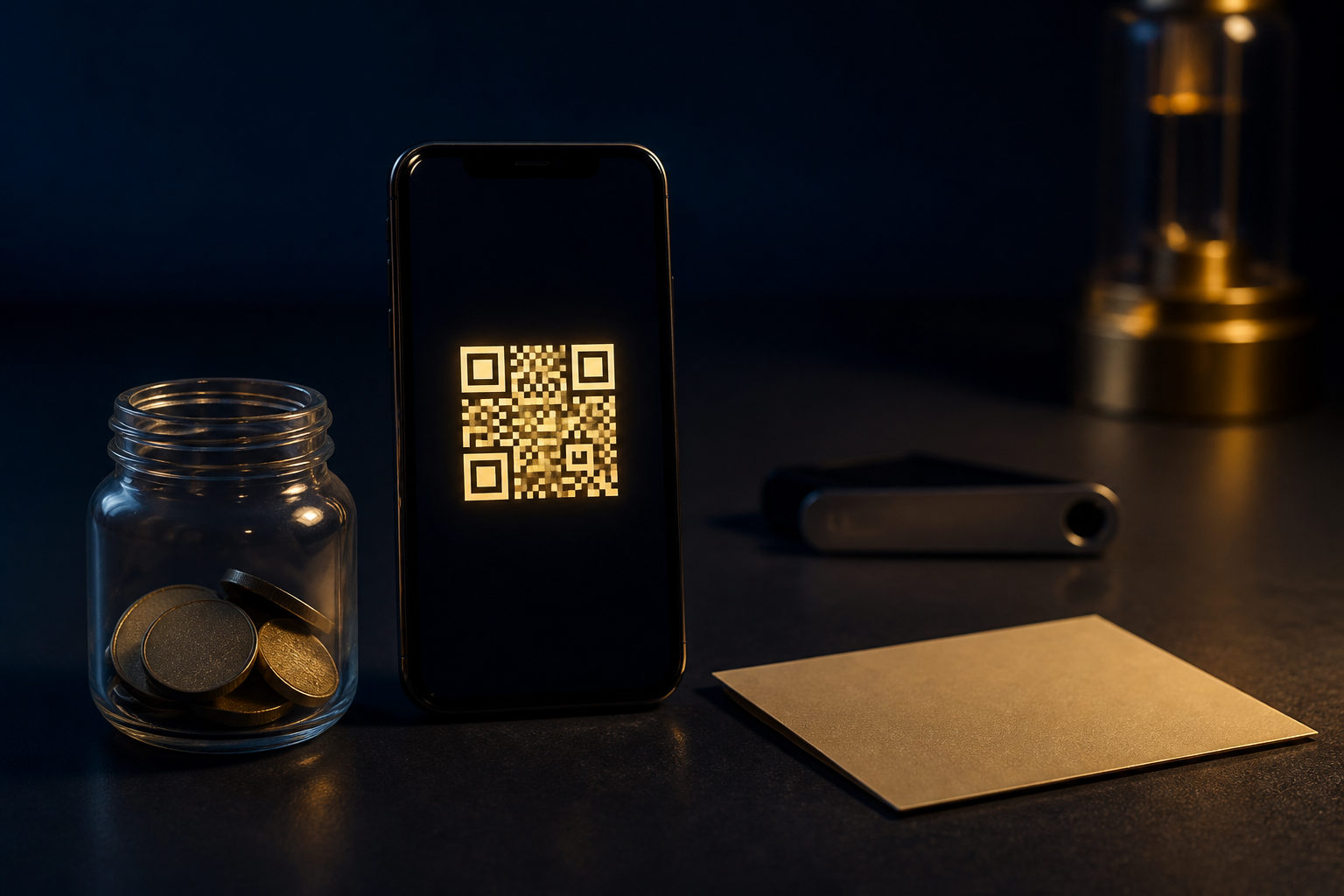
People should be able to send bitcoin without friction. That usually means offering both a plain text address and a QR code. Some donors will copy and paste from a desktop browser; others will scan with a phone. If you only provide one method, you create avoidable drop-off.
Test the full flow yourself before going live. Open the page on another device, copy the address, scan the QR code, and send a small test transaction. A donation page can fail in quiet ways: a truncated address, a low-quality image, confusing placement, or a layout that hides the only action a supporter needs to take.
Explain why the donation matters
Most people do not donate because a wallet address appears on a page. They donate when they understand what their support keeps alive. Your request should answer three questions quickly: who you are, what you are doing, and what bitcoin donations help you continue.
This works for many use cases. A writer may be funding future articles. A developer may be maintaining an open-source tool. A community organizer may be covering basic operating costs for events or member resources. A researcher may be publishing work outside a paywall. The stronger the connection between support and output, the easier it is for a donor to say yes.
Be specific about the purpose without turning the page into a life story. “Support my work” is vague. “Support weekly tutorials,” “help maintain this project,” or “fund public educational content” gives the reader a reason to care. Clear language builds trust faster than emotional pressure.
You should also stay away from language that makes a donation sound like an investment product. Bitcoin donations belong in the context of support, patronage, tips, or grants. If your wording starts to imply returns, future payouts, or financial benefit, you create confusion and risk.
Write a donation request people can act on
A useful donation message is short, but it has to do real work. Start by saying that you accept bitcoin donations. Then explain what the support is for. End with a direct instruction such as copying the address below or scanning the QR code. The donor should not need to interpret your intent.
It also helps to name the audience in a natural way. You might be speaking to regular readers, users of your software, listeners of a podcast, or members of a niche community. When people can recognize themselves in the message, the request feels relevant rather than random.
Placement matters as much as wording. Put the address, QR code, purpose statement, and a short note in the same area. If the address is buried in a long article or hidden behind a vague label, many people will never complete the process. A donation button can work, but only if the underlying bitcoin payment details are still clear.
Simple message structures that work
- For creators: If this content has been useful, you can support future work with a bitcoin donation. The address and QR code are below.
- For open-source projects: This project takes ongoing maintenance and documentation work. If you use it, you can support that effort with bitcoin.
- For community or public-interest work: Bitcoin donations help cover the stated purpose, and progress updates will be shared as the work moves forward.
Another detail people appreciate is clarity around privacy and recognition. Say whether anonymous donations are welcome and whether supporters will be publicly thanked. Some donors want their name listed. Others want no attention at all. A single line can remove that uncertainty.
If you accept messages from supporters, define the rules in advance. Let people know where the official bitcoin address is published and whether you will ever ask for a transfer through direct messages. That reduces the chance of confusion and impersonation scams.
Choose places where the request feels natural
Where you ask for bitcoin donations affects how the request is received. For written content, the end of an article, an author bio, a resource page, or a site sidebar can work well. For video or audio creators, a profile page, show notes, or a closing mention is usually more fitting than interrupting the main content flow.
On social platforms, a standing donation option often works better than a one-off plea. A profile bio, pinned post, or recurring support note gives people a stable place to find your bitcoin address after they have already seen your work. Support tends to follow value, context, and repetition of trust.
Email newsletters and private communities can also be good places for a donation request, provided the ask matches the content. If readers are already following a project update, a donation option makes sense. If the message has nothing to do with the support request, the ask can feel forced.
Offline settings are still relevant. A talk, meetup, workshop, or conference booth can include a QR code for bitcoin donations. In those moments, brevity matters. A short line about what the donation supports is usually enough; people standing in front of a sign will not read a long appeal.
Handle privacy, security, and record-keeping
A public bitcoin address is visible on the blockchain. If you reuse the same address across every channel and every campaign, it becomes easier for others to connect activity over time. Whether you choose one address or different receiving setups for different purposes should be a deliberate decision, not an accident.
Address replacement is another real risk. If your website, social account, or publishing system is compromised, an attacker may swap your bitcoin address for their own. Protect your accounts, review public donation pages after edits, and keep the official payment details consistent across your channels. If you ever change the address, update every place where the old one appears.
There is also an operational side to donations. If you are collecting funds as a team, organization, or long-running project, keep records of what was received and how you describe its intended use. Tax and reporting treatment depends on where you operate, so it is wise to keep internal documentation even if your public page stays simple.
| Stage | Common problem | Better approach |
|---|---|---|
| Wallet setup | Using a personal address in public | Separate donation receiving from daily use |
| Page design | Hard-to-copy address or broken QR code | Test the full payment flow before publishing |
| Purpose statement | Vague wording that gives no reason to donate | State what the bitcoin supports |
| Security | Address tampering or impersonation | Use clear official channels and verify them often |
| Follow-up | No records or updates after receiving funds | Keep documentation and share progress when promised |
FAQ
How do I ask for bitcoin donations without sounding awkward?
Lead with the value you already provide, then present bitcoin donations as an optional way to support that work. The request feels more natural when it appears after the audience understands what they are helping sustain.
Should I keep the same bitcoin donation address forever?
That depends on your privacy needs and your workflow. A stable address is easy to share, but repeated reuse makes activity easier to connect on-chain. Some people prefer different receiving setups for different projects or channels.
Do I need to set a minimum donation amount?
In most cases, no. Extra rules can slow down people who were ready to send support right away. If you do mention any preference, keep it simple and avoid turning the donation page into a list of conditions.
Do I have to disclose every donation publicly?
Not always. A solo creator may only need to explain the general use of donations. A public project or organization may face stronger expectations around updates, accountability, and financial records.
Can I ask for bitcoin donations without having a website?
Yes. You can publish your bitcoin address and QR code in a profile bio, pinned social post, newsletter, event slide, or digital business card. What matters is that the payment details are easy to verify and easy to use.
If you want to start today, do three things before you post the request: prepare a dedicated receiving wallet, write one plain sentence that explains the purpose, and test the address and QR code from another device. That foundation solves most of the practical problems before the first donor arrives.
Disclaimer: This article is for informational and educational purposes only and is not investment, financial, or legal advice. Crypto assets are highly volatile and you could lose your entire investment. Do your own research and decide carefully.