
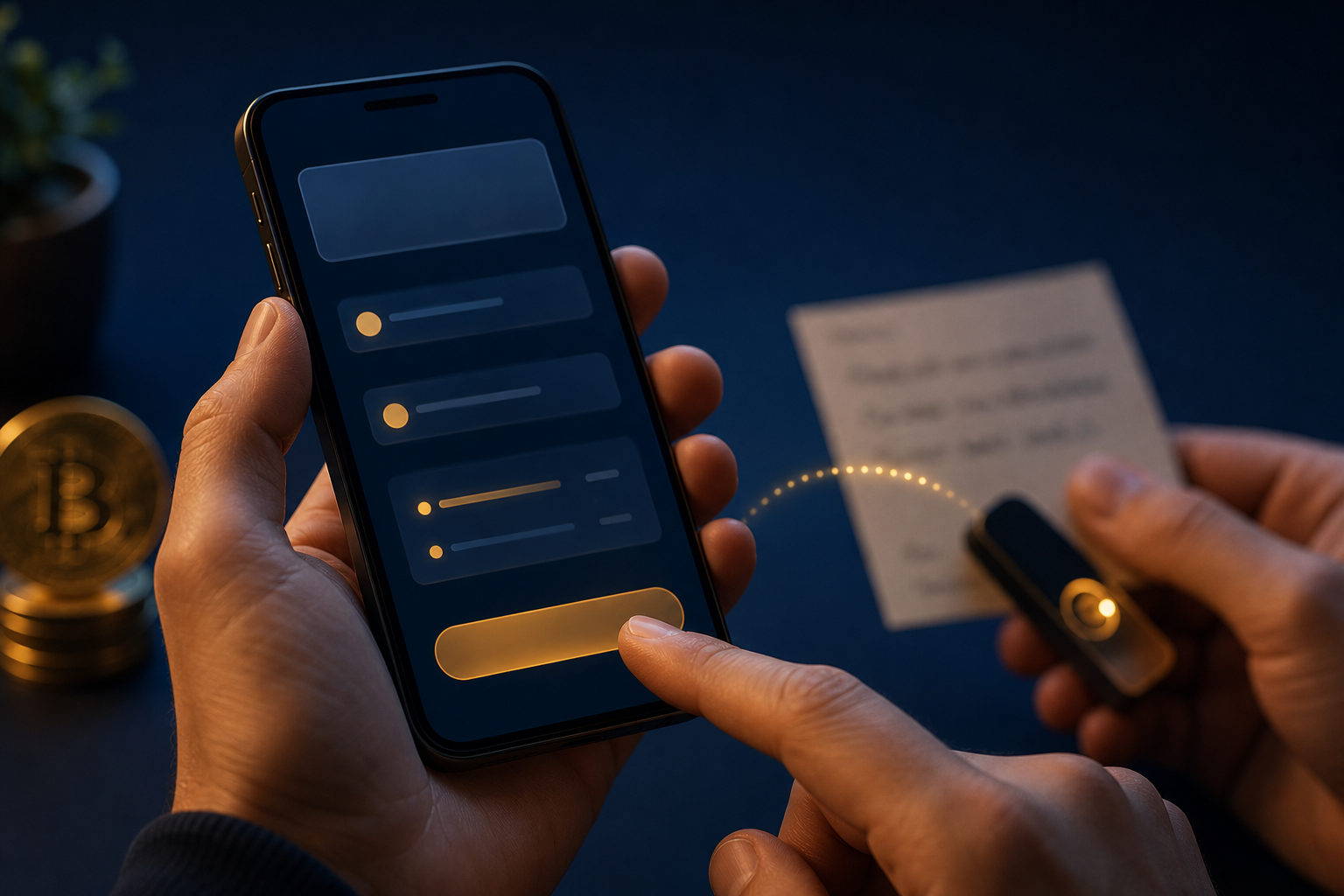
How to send bitcoin safely comes down to a short checklist: verify the receiving address, confirm the network, send a small test first, and review the fee before you approve the transfer. One mistake matters because bitcoin transactions are usually irreversible.
What sending bitcoin actually means
When you send bitcoin, your wallet creates and signs an on-chain transaction that moves control from one address to another. This is different from a bank transfer, where a company may be able to stop or reverse a payment.
That difference is why accuracy matters more than speed. A wallet app may look simple on screen, but the action behind the button is final once the network accepts the transaction and confirmations begin.
How to send bitcoin to another wallet
Get the correct receiving address first
Start by asking the recipient for their bitcoin address or QR code. Before doing anything else, confirm that the address is meant for BTC and not for another asset or a different transfer system offered by an exchange.
If the recipient is using an exchange account, check whether that platform has deposit rules. Some services only credit funds after a certain number of confirmations, and some may show extra instructions on the deposit page.
Check the address carefully
Do not rely on a quick glance. Compare both the first part and the last part of the address, and make sure the pasted string matches what the recipient sent.
This matters because clipboard malware can replace a copied address without making the change obvious. Scanning a QR code is useful, but you should still inspect the address shown in your wallet before you continue.
Confirm that you are sending BTC on the correct network
Inside the send screen, check the asset name and any network setting shown by your wallet or exchange. If a platform gives you several withdrawal options, the sending method must match what the receiving side supports.
People often assume that similar labels mean compatibility. That is a risky shortcut, and recovery may be difficult or impossible if the transfer is sent through the wrong route.
Send a small test transaction first
If this is your first transfer to that wallet, or if the amount is meaningful to you, send a small test payment before sending the full amount. Once the recipient confirms receipt, you can send the rest with more confidence.
Yes, this can mean paying a fee twice. For many users, that extra cost is easier to accept than the loss caused by a wrong address, a network mismatch, or a misunderstanding on the recipient's side.
Review the fee before you approve
Bitcoin transfers include a miner fee, and the fee level can change with network activity. Many wallets offer slow, normal, or fast options, which usually affect how quickly your transaction is picked up and confirmed.
If timing is flexible, a lower fee may be fine. If the recipient needs the funds confirmed soon, a higher fee may make sense. The goal is not to choose the cheapest setting every time, but to match the fee to your urgency.
Save the transaction record after sending
Before you hit send, review the address, amount, fee, and network one more time. After approval, save the transaction ID or keep a record from your wallet so you can track the transfer and compare details with the recipient if needed.
If your wallet asks for a password, code, or hardware confirmation, slow down at that stage. The last few seconds are often where rushed mistakes happen.
How long does it take to send bitcoin
Bitcoin produces a new block about every 10 minutes, so transfers are not usually instant. The actual wait depends on network congestion and whether your fee is competitive enough for current conditions.
There is also a difference between a transaction being broadcast and being fully credited by the receiving service. Some wallets show an incoming payment quickly as pending, while exchanges may wait for more confirmations before making the balance available.
So if you are asking how long it takes to send bitcoin, the practical answer is: first the transaction is broadcast, then it gets confirmed on-chain, and after that the receiving platform applies its own crediting rules.
Pre-send checklist
- Use the correct recipient address: do not pull an old address from a random chat without checking.
- Verify the full destination: compare the beginning and end of the address after pasting.
- Make sure the asset is BTC: avoid mixing bitcoin with other coins or tokens.
- Match the transfer network: the sender and receiver must be using compatible settings.
- Send a small test first: this is especially helpful for a new address or a larger transfer.
- Review the fee level: very low fees can slow confirmation.
- Check the required confirmations: each wallet or exchange may use its own rule.
- Keep the transaction record: you may need it for tracking or support.
FAQ
What is the safest way to send bitcoin to someone else?
The safest routine is to verify the address, confirm the network, and send a small test amount first. After the recipient confirms that it arrived, you can proceed with the main transfer.
Can a bitcoin transaction be canceled after I send it?
Usually, no. Once the transaction has been accepted by the network and starts moving toward confirmation, it does not work like a card payment that can be reversed through a service desk.
Why does my wallet show sent while the other side says nothing arrived?
The transaction may still be waiting for confirmation, or the receiving platform may require more confirmations before crediting the balance. Compare the transaction record on both sides before assuming anything is wrong.
Does paying a higher fee always mean a better transfer?
Not always. A higher fee can help with faster confirmation, but that does not mean every transfer needs the fastest setting. What matters is whether the fee fits your timing needs.
Can I send my entire balance in one go?
Sometimes, but you need to account for the miner fee as well. Check how your wallet calculates the spendable amount so the transfer does not fail at the final step.
Practical warnings before you send
Do not share your seed phrase, private key, or verification code with anyone. Avoid sending from unknown software, suspicious browser extensions, or public devices, and if this is your first bitcoin transfer, finish a small test round before moving the full amount.