
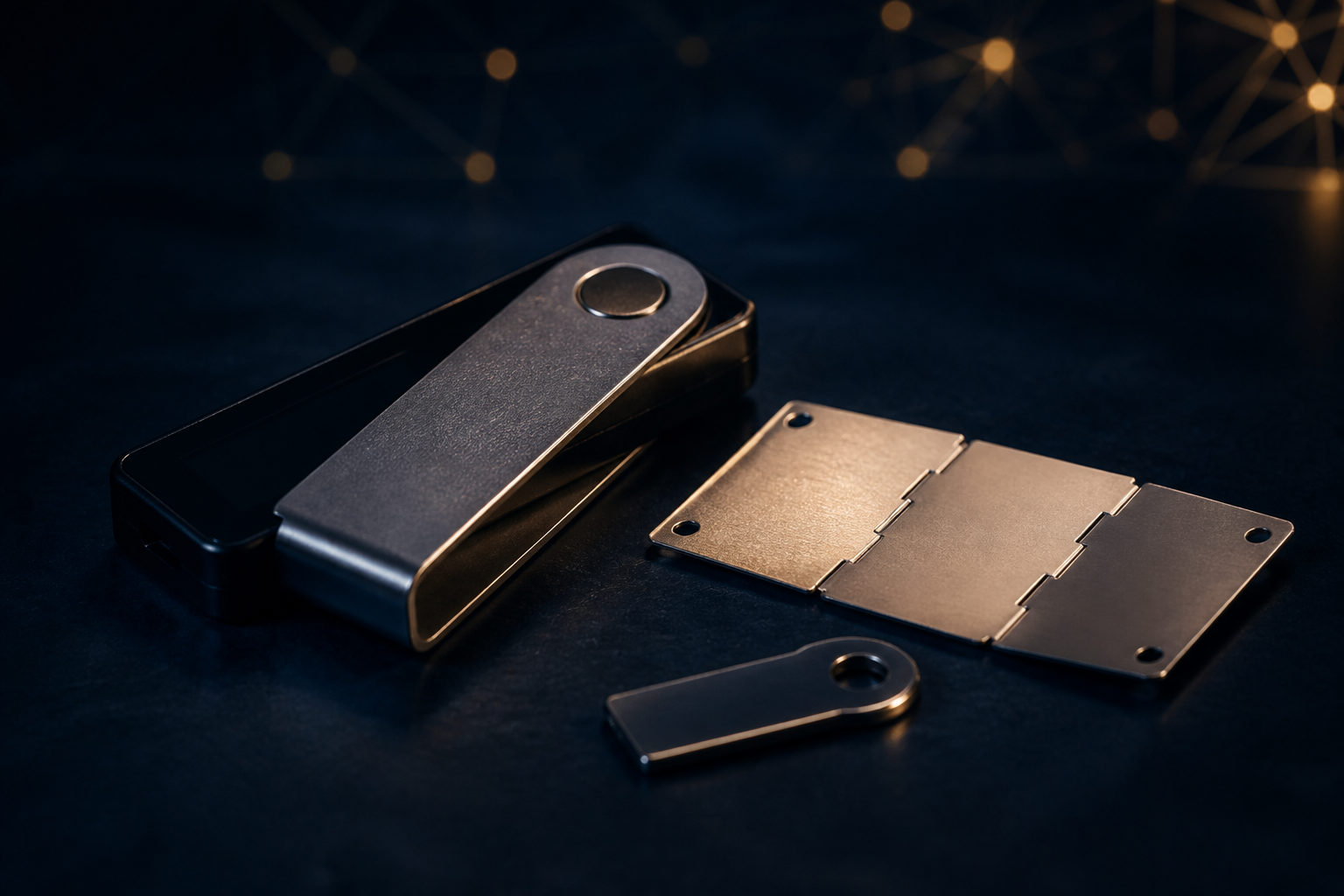
A seed phrase is often the main backup for a Bitcoin wallet, but it is not always the only one. What matters is whether you kept enough information to restore control of your private keys if your device, app, or original setup disappears.
What a wallet backup is actually backing up
People often talk about a wallet as if it stores bitcoin inside an app. In practice, a Bitcoin wallet manages private keys and signs transactions. Your coins stay on the blockchain; the wallet gives you a way to prove control over them.
A seed phrase became popular because it turns key material into human-readable words that are easier to write down and import later. In many self-custody wallets, those words can regenerate the wallet. Still, there are setups where recovery depends on more than the phrase alone, such as an extra passphrase, multisig configuration, or other technical details needed to rebuild the same wallet structure.
That is why a checkbox saying your wallet is backed up does not answer the full question. The real test is simple: if the original app vanished today, could you restore the wallet somewhere else with the records you kept?
When a seed phrase is enough
For a common single-signature self-custody wallet, a standard seed phrase is often sufficient for recovery. If your phone is lost, your computer fails, or you reinstall the wallet software, importing that phrase into a compatible wallet can usually rebuild the same addresses and show the same funds.
There are conditions attached to that. The words must be complete and in the correct order. The wallet you use for recovery must support the same standard. You also need to know whether the original setup used a specific address type or account structure, because some wallets do not scan every possibility by default.
That last point causes a lot of confusion. A person can import a valid seed phrase, see an empty balance, and assume the backup failed. In reality, the wallet may be looking at a different script type or only showing one account while the funds sit under another branch of the same seed.
So a seed phrase can be enough, yet still demand context. Recovery is easier when you know how the wallet was originally set up.
When the seed phrase alone is not enough
One common case is the use of an additional passphrase. Some wallets let you add a secret string on top of the seed phrase. If you lose that passphrase, importing the seed phrase may still work technically, but it can open a different wallet from the one that holds your bitcoin. That catches people off guard because the restore process appears successful.
Another case is multisig. A multisig wallet spreads control across multiple keys under a signing policy. You may hold one seed phrase and still lack the other signing material or the wallet configuration needed to reconstruct the setup properly. In that situation, one phrase is only one piece of a larger recovery puzzle.
Hosted or account-based products create a different kind of misunderstanding. Some services let you sign in with an email address, sync between devices, or restore settings through an account. Those features can improve convenience, but they do not always mean you hold a full key-level backup that works outside the provider's system.
A separate issue is poor storage practice. Saving a seed phrase in a notes app, cloud drive, photo gallery, or chat archive may count as making a copy, but it also widens the attack surface. If that copy leaks, there is usually no safe reset button for the exposed wallet.
What else you may need to record for a real recovery plan
A useful backup is more than a sheet of words. It should give future you a workable path to recovery, even if the original device is gone and the original software is unavailable.
- Wallet model: Know whether you use self-custody or a hosted service, and whether the wallet is single-signature or multisig.
- Extra passphrase status: If you enabled one, record that fact clearly and store the passphrase in a way that makes sense for your threat model.
- Address or script type: Some recovery problems come from the wallet scanning the wrong branch or format.
- Account layout: If the wallet supports multiple accounts, labels, or separate branches, note that for future recovery.
- Multisig configuration: In multisig, each key matters, but so does the configuration that defines how the wallet is assembled.
- Recovery instructions: A short offline note can save a lot of guesswork later, especially if the setup is more complex than a standard mobile wallet.
Many people skip that last item because they assume they will remember everything. A few years later, they may not remember which paper contains the seed phrase, which one contains a passphrase, and which details belong to a hardware wallet or desktop wallet setup. If family members may need to handle recovery one day, clear separation between those items becomes even more important.
A practical backup checklist for Bitcoin wallet recovery
If you want a backup that works under stress, use a checklist instead of relying on memory.
- Confirm whether you actually control the private keys. If you do not, the seed phrase question may not apply in the same way.
- Write the seed phrase down offline and verify each word in order.
- Check whether you enabled an extra passphrase. If yes, treat it as essential recovery material rather than an optional note.
- Record the type of wallet you use, such as single-signature, multisig, hardware wallet plus companion app, or desktop wallet.
- Keep full recovery material away from always-online devices when possible. Do not leave complete records in cloud notes, email drafts, or chat apps.
- Choose at least one compatible wallet path you would trust for recovery if the original app stopped working.
- Run a recovery test in a controlled environment so you know the backup is usable before an emergency happens.
- If you suspect the seed phrase or related key material has been exposed, move funds to a new wallet setup as soon as practical.
That final step matters because Bitcoin transactions are generally irreversible. Once an attacker spends from an exposed wallet, there may be little you can do.
FAQ
Can I recover bitcoin if I have the seed phrase but forgot the wallet app name?
Often yes, because recovery depends more on the underlying key material than on the original app brand. The hard part is figuring out whether the wallet also used an extra passphrase, a special address type, or multiple accounts.
Is saving a seed phrase in my phone notes good enough as a backup?
It is a copy, but it is a weak security choice. If the device is compromised, synced to cloud services, or accessed by someone else, the phrase can lose its secrecy very quickly.
Do I still need a seed phrase if I use a hardware wallet?
Yes. A hardware wallet protects how private keys are used during signing, but the recovery path still depends on the backup material you kept when the wallet was created.
Why is one seed phrase not enough for a multisig wallet?
Because multisig divides control across several keys and a signing rule. One seed phrase may recover one signer, yet still leave you without the rest of the information required to rebuild and spend from the full wallet.
What should I verify after making a backup?
Verify that the backup can actually restore the wallet in a compatible environment and that the resulting addresses match your expected setup. A recovery drill is far more useful than simply assuming the written words are correct.
If you only do one thing today, check whether your wallet uses an extra passphrase, a multisig setup, or a provider-controlled account model. That answer tells you whether the seed phrase is your full backup or only one part of it.