
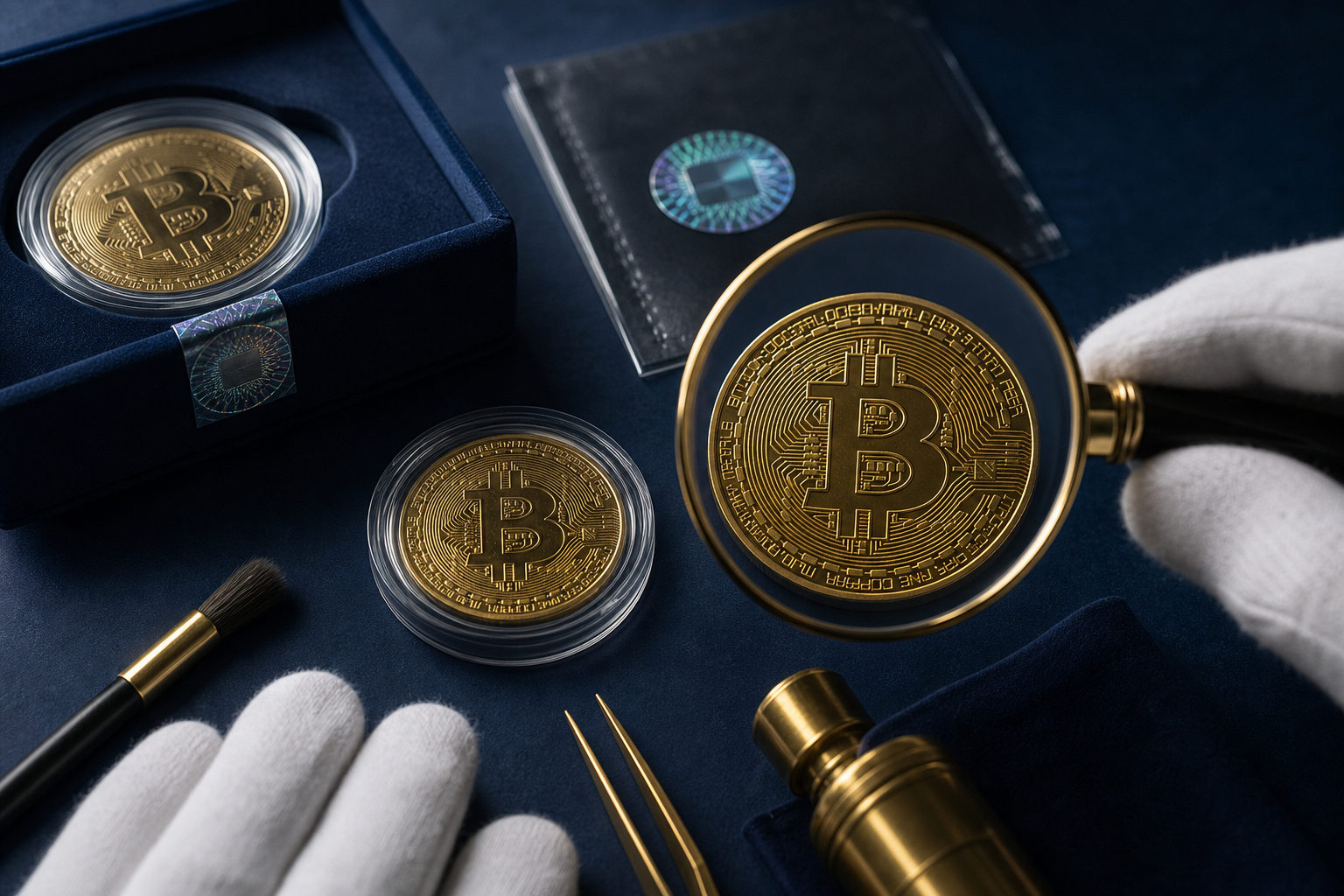
If you want to know how to buy physical bitcoin, start by separating two very different things: a bitcoin-themed collectible and a physical item that holds private-key control. That distinction changes everything about risk, value, and what you should do next.
What “physical bitcoin” usually means
People use the term in a loose way. Sometimes they mean a metal coin with the Bitcoin logo. Sometimes they mean a sealed item that supposedly contains a private key, recovery phrase, or redemption information tied to real bitcoin on-chain. Those are not the same product, and treating them as if they were the same is where many buyers get into trouble.
Bitcoin itself does not live inside a coin, card, or piece of paper. It exists on the blockchain, and control comes from the private key. A metal object can act as a souvenir, a display piece, or a storage medium for key material, but the object is not the asset by itself.
That is why your first job is not shopping. Your first job is classification. Are you buying a collectible for display, or are you trying to acquire real control over bitcoin through a physical medium?
Step 1: Decide whether you want a collectible or actual control
Before you compare sellers or designs, define the goal. If you only want something tangible with the Bitcoin symbol on it, the process is much simpler. If you want the item to represent spendable bitcoin, your standards need to be much higher.
If you want a collectible
Your focus should be on clear labeling, build quality, condition, packaging, and whether the seller plainly states that the item does not include on-chain bitcoin. This matters because many listings blur the line between “bitcoin-themed item” and “bitcoin itself.”
The main caution here is simple: a physical coin with a Bitcoin logo is often just a novelty item. It may still be worth buying if you like the design or want a gift, but that is a different decision from buying bitcoin.
If you want a physical item tied to real bitcoin
Now the problem changes. You are no longer judging metal, packaging, or presentation first. You are judging whether the private key is truly under your sole control and whether anyone else may have copied it before you received the item.
That is the reason physical bitcoin products can be riskier than they first appear. A private key can be copied once and remain usable later. The item may be in your hands, while someone else still has the information that matters.
Step 2: Ask exactly what the item contains
Do not ask a vague question like “Is this physical bitcoin?” Ask specific ones. Does the item contain a private key, a seed phrase, a redemption code, or nothing at all beyond design elements? Is the sensitive information hidden under a tamper layer, printed openly, or not present? Is the product blank for you to initialize yourself, or is it preloaded by the seller?
The reason for this step is that each format creates a different threat model. A blank storage medium is one thing. A seller-generated wallet sealed into a product is another. If someone else created the key, that person may have retained a copy, even if the packaging looks clean.
One warning sign is evasive language. If a seller keeps repeating that the item is “secure” or “authentic” but will not explain what information is inside and how it was created, walk away. In this category, vague reassurance is not a safety feature.
Step 3: Treat preloaded products as high-risk by default
If a seller offers a “physical bitcoin” that already contains spendable bitcoin, assume the risk is high unless you can independently reduce it. The core issue is not whether the seller seems trustworthy. The issue is whether the private key ever existed outside your control.
This matters because bitcoin ownership is based on cryptographic control, not possession of an object. If the seller generated the wallet, viewed the seed phrase, printed the key material, or supervised packaging, there was a point at which the secret may have been copied. You usually have no reliable way to undo that fact.
The practical caution is this: a tamper seal does not prove exclusive control. It may help detect crude interference, but it does not prove that nobody saw the key before sealing. A polished presentation should never replace a clean key-generation process under your own control.
Step 4: Prefer blank physical backup media over seller-made key products
For most people, the safer route is not buying a preloaded physical bitcoin. It is buying a blank physical backup medium and using it only after you generate your own wallet. That could mean a metal backup plate, a blank card, or another offline medium designed to hold your recovery information.
The reason this approach is stronger is straightforward: it removes the seller from the most sensitive step. You generate the wallet yourself, you record the recovery information yourself, and you decide where it is stored. The seller provides the material, not the key.
The caution here is also important. A blank physical item is not a wallet by itself. It is only a place to store backup information. You still need a sound wallet setup and a secure way to create and record recovery data. Never enter seed phrases into random websites, never share them with support staff, and never store them casually on internet-connected devices.
Step 5: Verify what can be checked without exposing the secret
If the item is supposed to correspond to actual bitcoin, ask what can be verified before any private information is revealed. In some cases, a public address may be visible or provided separately. That can help you understand the claimed structure of the product.
Why does this matter? Because buyers often confuse the existence of an address with proof of safe ownership. They are not the same. A public address can be observed without risk, but it does not tell you whether the private key was duplicated, mishandled, or already known to someone else.
So the caution is not to overread visible data. A public address may be useful context. It is not proof that the item is secure, and it is not proof that you will be the only party able to spend the funds tied to it.
Step 6: Check tamper features, but do not rely on them
If you still want to buy a sealed physical bitcoin product, inspect the packaging carefully. Look for one-time seals, scratch-off covers, or other tamper-evident elements. Ask the seller how the sealing process works and what signs would indicate prior access.
There is a good reason to do this. Tamper-evident features can filter out the most obvious forms of interference and can help with collectible resale judgments later. They are not useless.
Still, they have clear limits. A seal can show whether the package was opened after a certain stage. It cannot prove the private key was never copied before that stage. That is the caution buyers miss most often. Physical security features can support trust, but they cannot replace exclusive key generation.
Step 7: Plan to move the bitcoin immediately after receipt
If you receive an item that really does contain access to bitcoin, do not treat the embedded key as a long-term storage solution. Prepare your own fresh wallet first, make sure your backup is complete, and move the bitcoin to a new address under your control as soon as you safely can.
The reason is plain. Even if the seller acted honestly, an externally generated key is still a weak foundation for long-term storage. The moment you transfer the funds to a new wallet that only you set up, the old key becomes far less relevant.
The caution is operational. Do not rush through the transfer on an unfamiliar device or in a stressful setting. Do not type seed phrases into websites that claim to “help restore” the item. Do not send secret information to anyone posing as support. Prepare first, then move the funds.
Step 8: Keep records of the listing and the seller’s claims
Save the product description, screenshots, messages, photographs of the sealed item, and notes on how the seller described it. If the purchase happens in person, get the nature of the item stated clearly: collectible only, blank storage medium, or product that supposedly includes control information.
This step matters because disputes in this area often start with different assumptions. One side thinks the item was decorative. The other thinks it included actual bitcoin. Clear records will not guarantee a recovery, but they do reduce the chance of a total he-said-she-said problem later.
The caution is that reluctance to describe the product clearly is a serious red flag. If a seller avoids written statements about what is actually being sold, the safest move is not to proceed.
Common traps buyers fall into
The biggest trap is buying a souvenir while thinking you bought bitcoin. A heavy coin, attractive finish, gift box, or printed code can create a strong impression, but none of that proves private-key exclusivity.
Another trap is assuming secondhand items are safe because they appear intact. With a physical bitcoin product, “looks unopened” is not enough. Sensitive information may have been viewed long before the current seal or current owner. Once a secret is copied, later packaging cannot reverse that.
Gift purchases are another problem area. A preloaded physical bitcoin item sounds memorable, but the recipient may not know to move the funds right away. That delay creates a window of risk. If the private key was ever known elsewhere, the bitcoin may be vulnerable until transferred out.
Collectors face a separate issue. A physical bitcoin item can have real collectible appeal because of design, history, or rarity in the collector sense. That still does not mean the key material tied to it should be trusted for storage. Collectible value and secure bitcoin control are different judgments.
A safer way to get the “physical” experience
For many buyers, the better answer is not to buy a ready-made physical bitcoin at all. Instead, create your own wallet using a setup you control, then use a durable offline medium as a physical backup for recovery information. This keeps the tangible element while limiting dependence on a seller.
The reason this route works better is that it separates roles. Your wallet setup handles asset control. The physical medium handles offline backup. That is a cleaner security model than buying a finished object and hoping nobody else knows the secret inside.
The caution is that physical backup still needs planning. Think about theft, fire, water damage, accidental disposal, and who can access the backup. Also think about inheritance and what happens if someone else in your household finds the recovery information without understanding what it is.
FAQ
Does buying a metal bitcoin coin mean I own bitcoin?
Not necessarily. Many metal bitcoin coins are souvenirs only. You only control actual bitcoin if you have exclusive control of the relevant private key and the funds have not already been moved by someone else.
Can I safely buy a physical bitcoin that someone else already set up?
You can buy it as a collectible, but it is much harder to trust it as long-term storage. If another party generated or handled the private key, there is always a chance that a copy exists.
Why can a physical bitcoin item be less safe than it looks?
Because physical possession and cryptographic control are not the same thing. A secret can be copied without changing the appearance of the item, so the object may look secure while the key is already compromised.
What should I do right after receiving a loaded physical bitcoin item?
Prepare your own new wallet first, then transfer the bitcoin to an address you created yourself. That reduces your reliance on the old key and shortens the time during which any copied secret could still matter.
What is the better option if I want both a collectible and real bitcoin exposure?
Keep those goals separate. Buy a collectible as a collectible, and manage your bitcoin through a wallet you set up yourself. If you want something tangible, use physical media for offline backup rather than trusting a seller-made private-key product.
If your goal is display or gifting, a clearly labeled bitcoin-themed collectible is the simpler choice. If your goal is secure ownership, the stronger path is usually to create your own wallet, use physical media only for offline backup, and treat every offer of preloaded “physical bitcoin” as a product that must earn trust through process, not appearance.
Disclaimer: This article is for informational and educational purposes only and is not investment, financial, or legal advice. Crypto assets are highly volatile and you could lose your entire investment. Do your own research and decide carefully.