
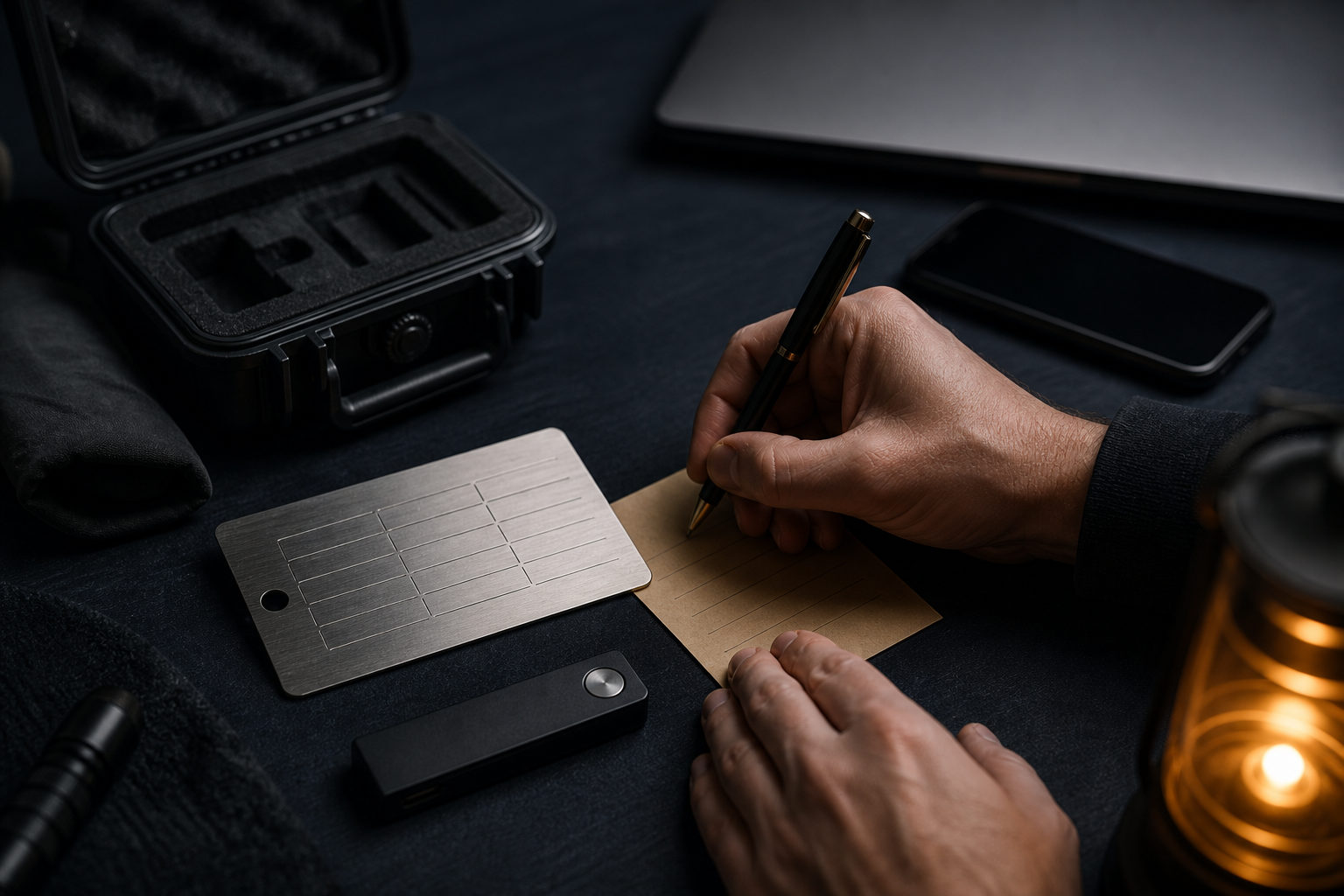
A Bitcoin seed phrase usually should not be stored digitally. If it touches a phone, computer, cloud drive, or chat app, a leak can give someone full wallet access, and that loss is often irreversible.
Why seed phrase storage matters so much
A seed phrase is not just another password. It is the recovery key to a wallet, and in many cases anyone who gets the full phrase can restore the wallet, access the private keys, and move the bitcoin.
That changes the security standard. With an online account, you may be able to reset a password or contact support. With Bitcoin, control sits with the holder of the keys, so a bad storage decision can become a permanent problem.
Should Bitcoin seed phrase be stored digitally?
For most people, no. Storing a Bitcoin seed phrase in notes apps, email drafts, cloud folders, screenshots, or photo galleries adds exposure without giving real security. It may feel organized, but convenience is doing most of the work in that decision.
The main issue is not only theft by malware or a remote attacker. Digital storage can create copies through sync services, device backups, clipboard history, shared accounts, resale of old hardware, and simple human error. You may think you made one copy, while the system quietly made several.
If someone asks whether a Bitcoin seed phrase should be stored digitally, the practical answer is this: unless you fully understand your device security, your backup paths, and your recovery process, keep the phrase offline.
Safer ways to store a seed phrase
The basic approach is still the best starting point for most holders: write the phrase down offline and store it in a place only you, or a clearly authorized person, can access. While writing it, check each word and the order carefully. A backup that looks complete but contains one mistake can fail when you need it most.
After recording it, test your backup with the wallet recovery process in a safe setting. The point is not to memorize the phrase or to admire the setup. The point is to confirm that the backup is readable, accurate, and usable under pressure.
- Write the phrase offline rather than typing it into a connected device
- Make sure every word is clear and in the correct order
- Store the backup away from your daily devices
- Keep the seed phrase separate from any wallet password or extra passphrase
- Review your recovery steps before an emergency happens
Some people also choose a more durable offline medium if they worry about water, fire, or wear. The format matters less than reliability. If you cannot read it later, it is not a backup.
Digital methods that look safe but often are not
Encrypted files on a laptop may sound acceptable, but the file is only one part of the risk. The phrase can be exposed when you type it, copy it, decrypt it, back it up, print it, scan it, or move it between apps. A single moment of exposure is enough.
Another common idea is splitting the phrase across several apps or devices. That can reduce convenience without giving much real protection. In practice, people often lose their own map first, and if one compromised environment ties those pieces together, the benefit disappears.
These methods deserve extra caution:
- Taking a photo of the seed phrase card
- Saving it in notes, documents, or email drafts
- Placing it in a cloud drive or chat app archive
- Keeping it in a password manager note field without a clear threat model
- Typing it into a website, wallet screen, or support chat that asks for the full phrase
The last point is a hard rule: normal wallet use, updates, support requests, and routine verification should not require your full seed phrase. If a page or person asks for it, stop there.
What to do if your seed phrase was stored digitally
Start by checking every place where it may exist: photo galleries, deleted files, cloud folders, email, notes apps, chat history, old phones, old laptops, and synced backups. If the phrase has ever lived in a digital environment, do not assume that deleting the visible file solved the problem.
The safer response is often to create a new wallet in a clean setup, write down the new seed phrase offline, verify the backup, and then move your bitcoin to the new wallet. This is an irreversible action, so use a small test transfer first and confirm that the destination, recovery plan, and backup are all correct.
- Audit every possible digital copy
- Treat deletion as incomplete unless you can prove otherwise
- Prepare a fresh offline backup before moving funds
- Double-check the receiving address before sending
- Finish the move in a calm setting without distractions
FAQ
Is it okay to keep a seed phrase in a password manager?
For most users, it is still not the preferred choice. Password managers are useful for many account passwords, but a Bitcoin seed phrase carries a different kind of risk because one exposure can hand over wallet control.
If I took a photo and deleted it, am I safe?
Not necessarily. The image may still exist in cloud backups, device storage, cache files, or old hardware. Deleting what you can see is not the same as removing every copy.
Is paper too fragile for a seed phrase backup?
Paper has limits, but offline storage still gives many people a better security tradeoff than digital storage. What matters is clear writing, careful placement, and a recovery check before you need it.
Should family members know where the seed phrase is?
That depends on your plan, though direct access is not the only option. A better setup can be to leave clear instructions or access steps for a trusted person without giving them routine access to the full phrase.
If your Bitcoin seed phrase has already been stored digitally, the next useful step is usually not adding one more layer of file protection. It is deciding whether the wallet should be replaced and the funds moved to a fresh setup with a new offline backup.