
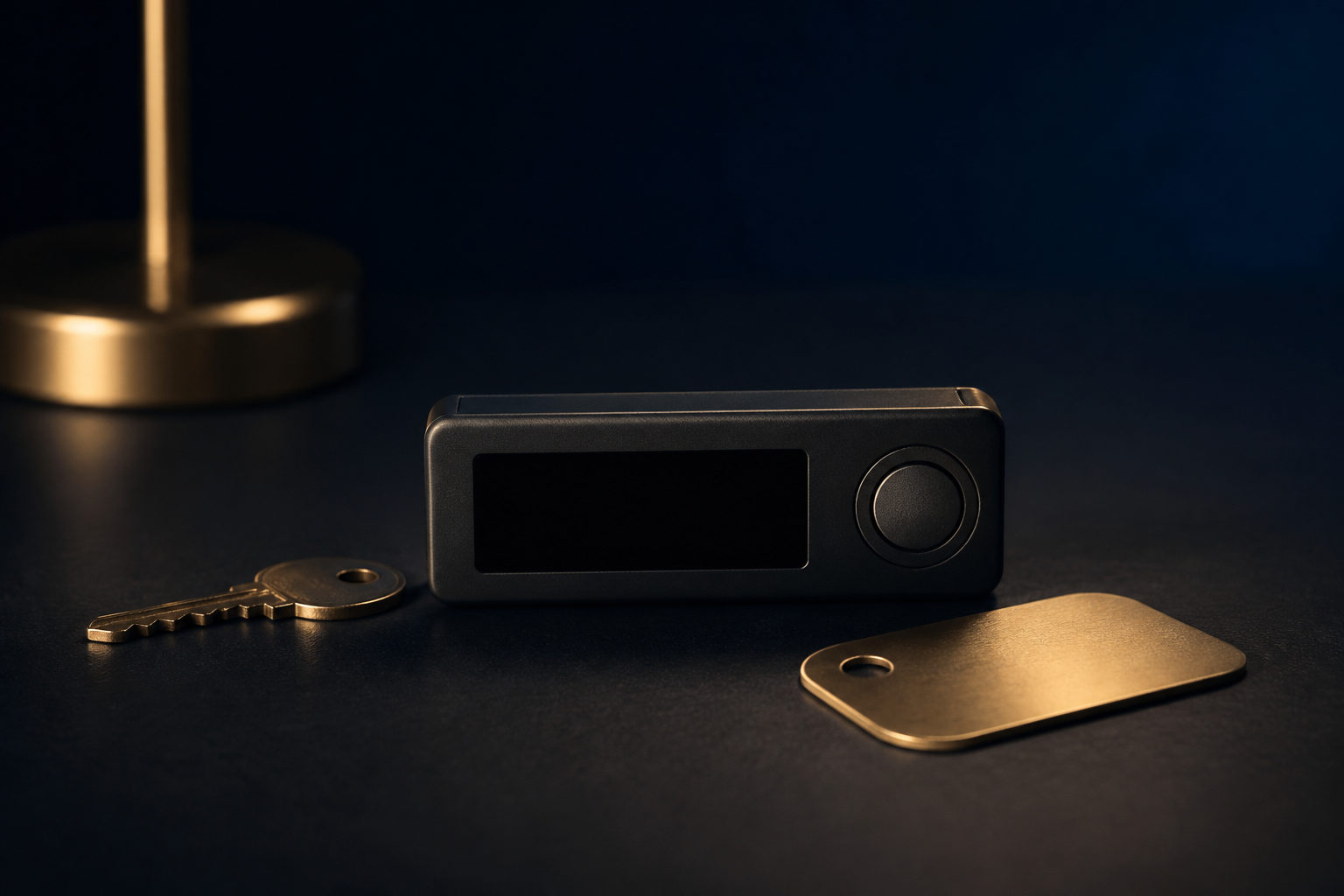
A Trezor bitcoin wallet is not necessary for everyone, but it becomes very useful when you want to hold bitcoin yourself for the long run. The real question is whether you want control of your private keys and the responsibility that comes with it.
Who actually needs a Trezor
Trezor is a hardware wallet. Its main job is to keep private keys in a more isolated device so transaction signing does not happen directly in your everyday online environment. If you buy small amounts, trade often, and rarely withdraw, a Trezor may not be your first priority. If you plan to hold bitcoin over time and want custody that does not depend on an exchange account, it becomes much easier to justify.
The part many beginners miss is that buying a hardware wallet does not complete security on its own. It gives you a better setup for key management, while also moving the burden onto you. If you send coins to the wrong address, expose your recovery phrase, or lose your backup, bitcoin transactions are usually irreversible and the wallet maker cannot recover funds for you.
| Situation | Is Trezor a good fit? | Why |
|---|---|---|
| Frequent short-term trading | Not always | Withdrawals and device confirmations add friction compared with keeping funds on an exchange |
| Long-term bitcoin holding | Often yes | Independent key control matters more when storage is the goal |
| Larger balance over time | Usually yes | As holdings grow, custody design deserves more attention |
| No interest in learning backups | No, not yet | Hardware wallets require basic understanding of recovery phrases and address checks |
| Shared family access planning | Depends | You need a clear backup and inheritance plan before moving serious funds |
What problem a Trezor solves
People often describe hardware wallets as secure USB sticks. That misses the point. What they really improve is the signing environment. When you send bitcoin, the key material used to approve the transaction stays inside the device as much as possible, instead of sitting on a laptop or phone that also handles email, browsing, downloads, and daily app use.
That can reduce the risk from malware, fake wallet apps, and phishing pages. It does not remove every danger. A hardware wallet cannot stop you from typing your recovery phrase into a fake form. It cannot fix a mistaken address. It cannot reverse a transaction after you confirm it. The device lowers one class of risk; it does not replace judgment.
| Risk type | Can Trezor reduce it? | How to think about it |
|---|---|---|
| Malware on your regular device | Yes | Private keys do not need to live in your daily online environment |
| Phishing and fake interfaces | Partly | On-device confirmation helps, but the user still has to read carefully |
| Exchange custody problems | Yes | Self-custody removes direct dependence on exchange account controls |
| Recovery phrase exposure | No | If the phrase leaks, someone may restore the wallet without the device |
| Wrong address entry | No | Blockchain transfers are usually irreversible |
| Total backup loss | No | A broken or lost device is manageable only if your recovery backup still exists |
The real test: are you ready for private key responsibility?
To decide whether a Trezor is necessary, ask a harder question: do you want self-custody badly enough to handle the duties yourself? Since the genesis block on 2009-01-03, one of bitcoin's defining features has been the ability to hold your own keys. That freedom matters because no bank or platform is required to authorize your spending. The tradeoff is simple and serious: once a transaction is confirmed on-chain, there is usually no support desk that can undo it.
When you leave bitcoin on an exchange, the exchange typically controls the keys and gives you a familiar account experience. That is easier. When you move to Trezor, you gain direct control, but you also take over backup storage, privacy, address verification, device handling, and future recovery. For some users this is the whole point. For others it is more burden than benefit.
Use this checklist before you buy, and again before you move meaningful funds:
- You can store the recovery phrase offline. No photos, no cloud drive, no email draft, no chat app, no synced note app.
- You will do a small test transaction first. A new setup should be proven with a small amount before a larger transfer.
- You are willing to verify addresses on the device screen. Do not trust only what appears on the computer display.
- You understand that losing the device is different from losing the bitcoin. What matters most is whether the recovery phrase still exists and remains private.
- You can make a basic inheritance plan. Someone you trust should at least know that the asset exists and how to find the right instructions if needed.
That last point gets skipped all the time. A wallet that only one person knows how to restore can turn into a dead end for the family later, even if the bitcoin is still there.
How to move bitcoin to a Trezor without rushing
Most first-time mistakes happen during setup and the first withdrawal, not because the hardware failed. Slow is good here. Breaking the process into checkpoints reduces the chance of one irreversible mistake.
| Step | What to do | Main warning |
|---|---|---|
| Initialize the device | Create a new wallet and write down the recovery phrase | Keep the phrase offline and check the order carefully |
| Set local protection | Enable the basic protection options for the device and companion software | Do not store any extra secret in the same place as the recovery phrase |
| Create a receiving address | Generate a bitcoin address in the wallet interface | Compare it with the address shown on the device screen |
| Withdraw from the exchange | Paste the address and submit the withdrawal | Make sure you are withdrawing bitcoin to the proper bitcoin address type supported by your setup |
| Send a small test amount | Wait for receipt before sending more | This is the cheapest way to catch copying and recognition mistakes |
| Review the backup | Confirm the phrase is readable, reachable, and private | Do not wait for a device problem before checking backup quality |
It also helps to understand bitcoin units before you start. Wallets may show balances in BTC or in sats. One satoshi equals 0.00000001 BTC, which is one hundred millionth of a bitcoin. This matters because new users sometimes misread decimals during test transfers and think the wallet showed the wrong amount.
You do not need to keep the device plugged in all the time. In normal use, it is mainly there for transaction approval and recovery-related tasks. Day to day, the bigger issue is where your backup lives and whether anyone else can access it.
Can you skip Trezor and still be fine?
Yes. Plenty of people start with exchange custody or a software wallet because both are easier to begin with. The tradeoff is not abstract. Each option places convenience, key control, and operational risk in a different place.
| Option | Convenience | Control | Main drawback |
|---|---|---|---|
| Exchange custody | High | Low | You depend on third-party account rules and withdrawal policies |
| Phone or desktop software wallet | Medium to high | Medium to high | Keys sit closer to your regular online activity |
| Hardware wallet such as Trezor | Medium | High | You must manage backups and verification carefully |
If your bitcoin is mainly for active trading, exchange custody may match your routine better. If you view bitcoin as a long-term asset, self-custody tools make more sense. Bitcoin has a fixed upper limit of 21,000,000 BTC, with issuance expected to continue until about 2140, which is one reason many long-term holders care so much about independent storage discipline.
You also do not need to move everything into one setup. Many users separate spending or trading funds from long-term holdings. A hardware wallet can be reserved for the portion you want to protect with tighter custody standards.
FAQ
Is Trezor a good choice for someone new to bitcoin?
Yes, if the person is willing to learn backups, recovery phrases, and address checks before moving serious funds. No, if the goal is only to buy quickly and avoid all custody learning.
If I lose my Trezor, do I lose my bitcoin too?
Not necessarily. If your recovery phrase is still private and available, you can usually restore the wallet. The more dangerous event is phrase exposure, because that can let someone else rebuild access without your device.
Is it okay to keep bitcoin on an exchange instead?
It can be acceptable if convenience is your priority and you understand the custody tradeoff. You are choosing a service provider to hold the keys, which means access is tied to that provider's systems and rules.
Is a hardware wallet completely safe from hackers?
No. It can reduce some technical risks, especially key exposure on everyday connected devices. It does not protect you from giving away your recovery phrase, approving the wrong address, or falling for social engineering.
What is the most important step during a first withdrawal to Trezor?
Send a small test transaction first and verify the receiving address on the device screen. That extra pause catches many common mistakes before they become permanent.
Do I need to use the device every day after buying it?
Usually not. For most holders, it is used only when approving transactions or handling recovery. Daily safety depends more on backup storage and your ability to follow the same careful process each time.
If you decide to move part of your bitcoin into self-custody, start with an offline backup plan, initialize the device, generate a receiving address, and complete one small test transfer before anything larger. That sequence matters more than buying fast, and it reduces the chance that your first experience becomes an irreversible error.
Disclaimer: This article is for informational and educational purposes only and is not investment, financial, or legal advice. Crypto assets are highly volatile and you could lose your entire investment. Do your own research and decide carefully.