
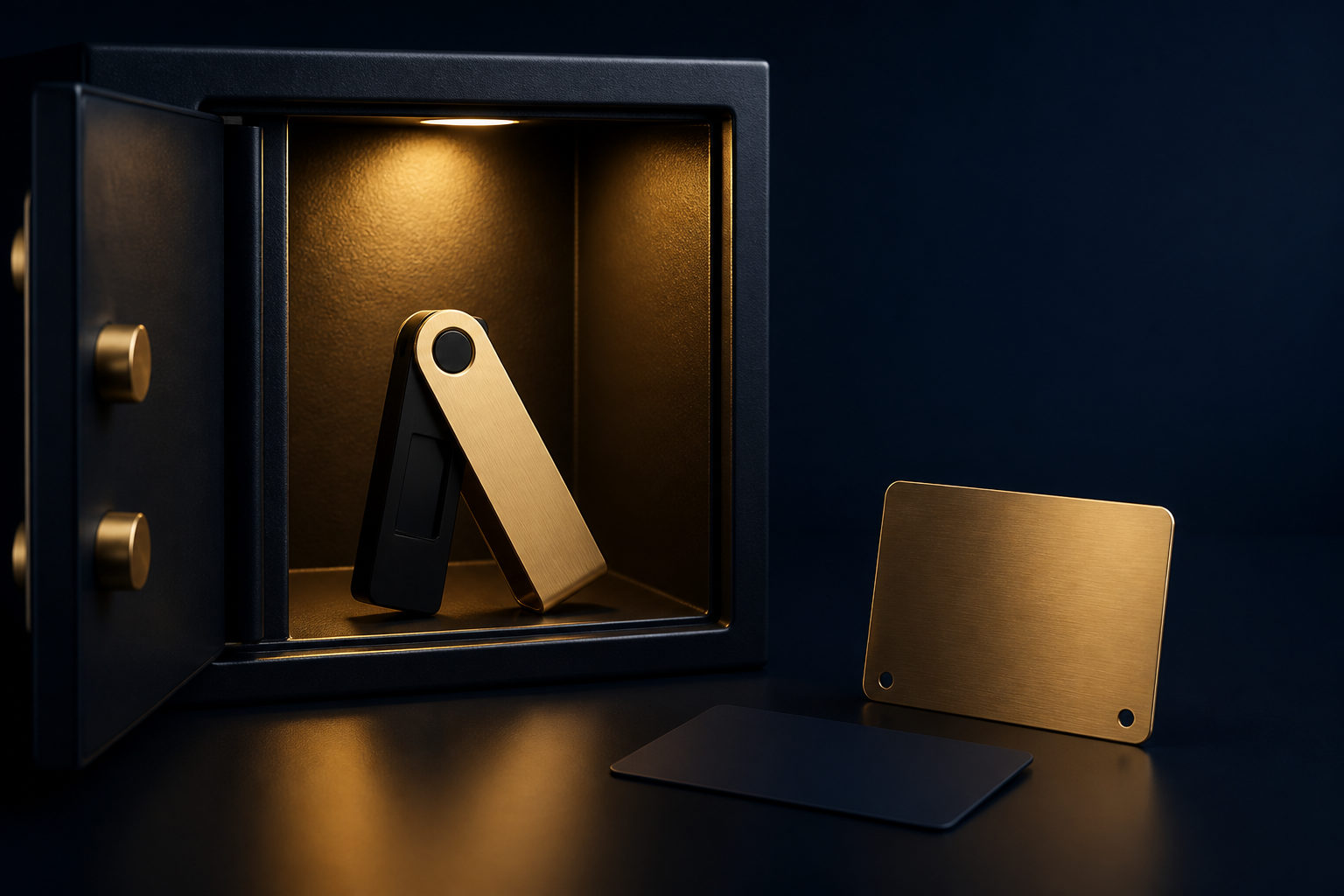
Where to store bitcoin comes down to one question: who controls the private keys? For long-term holdings, many people prefer self-custody wallets, while active traders may keep only a working balance on an exchange.
What bitcoin storage really means
Bitcoin is not stored inside your phone or laptop like a regular file. The coins exist on the blockchain, and a wallet manages the keys that let you authorize transactions and access your balance.
That is why storage is really about key control. If you hold the private keys, you hold direct control over your bitcoin. If an exchange or custodian holds them, access may be easier, but you also depend on that service's security practices, account rules, and operating status.
Main places people keep bitcoin
Exchange accounts
For beginners, an exchange is often the first place bitcoin sits after a purchase. It is simple to use, easy to check, and convenient if you trade often.
The trade-off is custody. In most cases, you do not control the private keys yourself. If withdrawals are delayed, your account is restricted, or the platform faces technical or security trouble, your access can be affected.
Software wallets
Software wallets run on phones or computers and are popular for everyday transfers. They are easier to set up than dedicated hardware and can be a practical choice for moderate holdings.
Still, they stay connected to the internet through the device you use. Fake apps, phishing pages, clipboard malware, and infected systems can all create risk, especially for people who move too quickly and skip address checks.
Hardware wallets
For longer-term storage, hardware wallets are a common choice. They keep private keys inside a dedicated device, which reduces exposure to many ordinary online attacks.
That does not mean the setup is automatic or foolproof. The recovery phrase, device initialization, firmware updates, and the place where you buy the wallet all matter. Losing the device is often manageable if your backup is correct; losing control of the recovery phrase is a far bigger problem.
Offline backups
Some users write down a recovery phrase or private key and keep it offline. This can reduce online exposure, but it shifts the risk toward physical loss, damage, or unwanted access.
An offline backup works best as a recovery method, not as your only operating plan. What matters is whether the backup is accurate, private, and available when you actually need it.
Choose storage based on how you use bitcoin
If you are learning, making small transfers, or testing the process, a software wallet or exchange account may be enough at first. The setup is lighter, and mistakes are easier to contain.
If you plan to hold bitcoin for a long time, the goal usually changes from convenience to exposure control. A common approach is to keep the main balance in a self-custody wallet and leave only a smaller spending or trading amount in a more accessible place.
Many people also assume that easy account recovery should be the top priority. Bitcoin works differently from a normal web account. With self-custody, there is often no support team that can reset ownership for you, so your backup process needs to be clear before anything goes wrong.
Basic rules before you store bitcoin
- Know who holds the keys: do not judge a wallet only by how polished the app looks.
- Back up the recovery phrase offline: avoid screenshots and always-online note apps.
- Store backups separately from devices: one incident should not expose everything.
- Use strong account security: strong passwords, two-factor authentication, and a separate email help reduce avoidable risk.
- Test with a small transfer first: confirm the address and recovery path before moving a larger amount.
- Ignore anyone asking for your recovery phrase: that request is a direct warning sign.
FAQ
Should I keep bitcoin on an exchange or in my own wallet?
It depends on your use case. If you trade often, keeping a smaller amount on an exchange can be practical, but long-term holders often prefer a wallet where they control the private keys.
The real issue is not which option sounds better. It is whether you understand the risks you accept with each one.
What type of wallet is better for long-term bitcoin storage?
Many people look at hardware wallets first because they reduce direct online exposure for private keys. Paired with a solid offline backup, they are often used for longer holding periods.
That said, a software wallet can still work for smaller amounts. Device hygiene and reliable backups matter just as much as wallet type.
Is it safe to keep bitcoin on my phone?
A phone wallet can be fine for daily use and smaller balances. The concern is that phones are always connected, frequently used, and often exposed to links, downloads, and social engineering attempts.
A cautious approach is to treat a phone wallet like a spending wallet rather than your only storage location.
Where should I store my recovery phrase?
Store it offline in a place that is private, accurate, and accessible to you when needed. Many users write it down and verify it carefully rather than saving it in cloud tools or messages.
If someone gets the recovery phrase, they may gain control over your bitcoin. That is why protecting the backup matters as much as protecting the wallet itself.
If my device breaks, do I lose my bitcoin?
Not necessarily. If you still have the correct recovery phrase or private key, you can usually restore access with a compatible wallet.
The bigger danger is having no backup, or having one that is incomplete or wrong. In practice, storage is not just about protecting a device; it is about preserving your ability to recover.
Before choosing where to store bitcoin, run a small test from start to finish: backup, restore, and transfer. If you can complete that process yourself, your storage setup is far more likely to hold up under stress.