
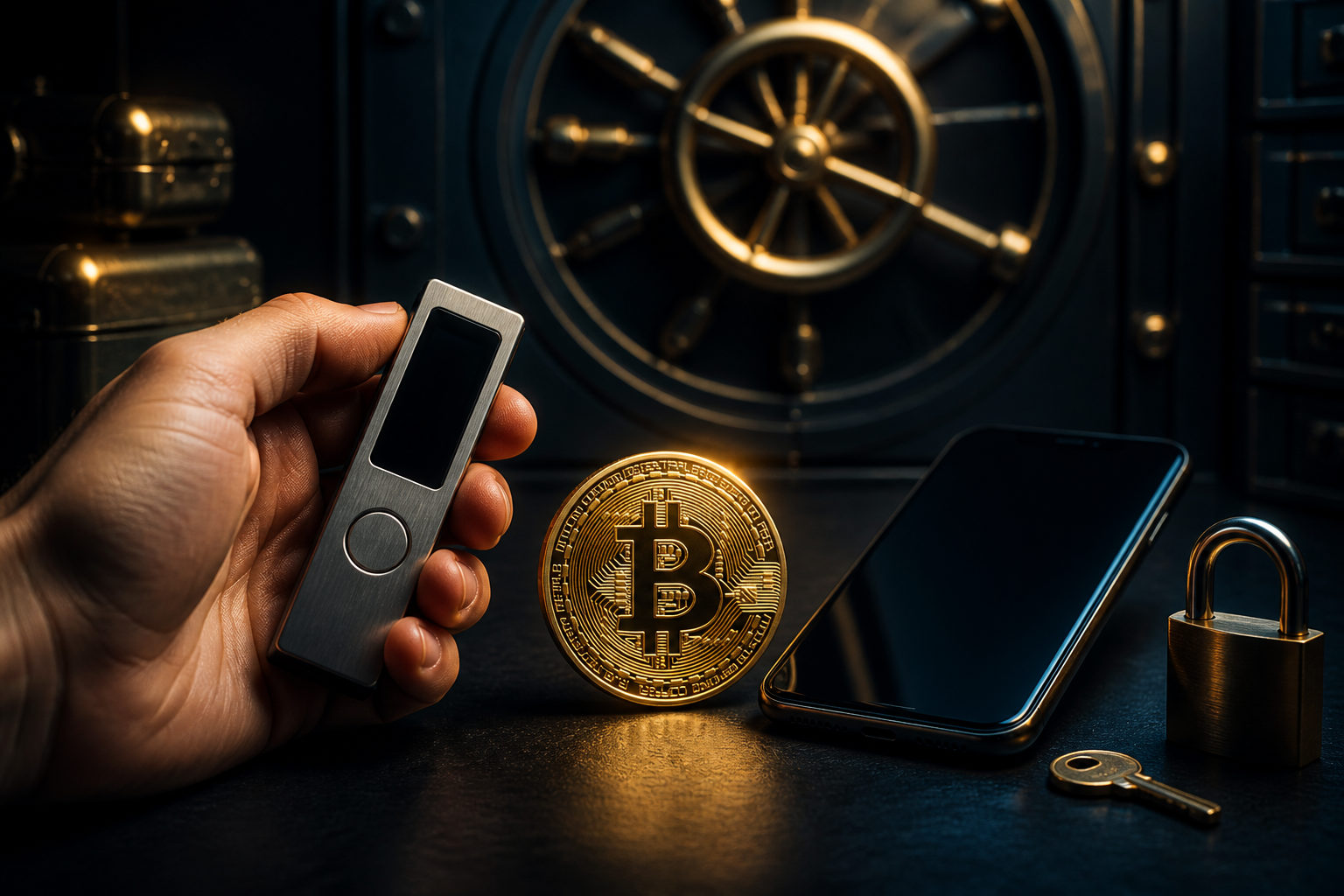
The best Bitcoin wallet is the one that fits your risk tolerance and use case. Start with one question: who controls the private keys, you or a provider?
Put the warning first: Bitcoin transactions are usually irreversible. If you send funds to the wrong address, reveal your recovery phrase, or approve a transfer without checking the details, there may be no practical way to undo the mistake. A wallet can reduce friction, but it cannot erase user responsibility.
What makes a Bitcoin wallet “best” for you
People often search which bitcoin wallet is best as if there is a single universal answer. In practice, wallet quality depends on trade-offs: control versus convenience, access versus isolation, and ease of recovery versus exposure to third parties.
A good wallet should make the basics clear. You should be able to tell whether it is custodial or self-custodial, how backup works, what you need to restore access, and what exactly you are approving before a transaction is sent. If those points are vague, the wallet is not a strong choice, no matter how popular it is.
That is why the better question is not “which is the best bitcoin wallet” in the abstract. The better question is which type of wallet matches the way you plan to hold and move bitcoin.
Start with the key split: custodial vs self-custodial
Custodial wallets: easier access, less direct control
Custodial wallets are common on exchanges and app-based crypto services. You create an account, sign in, and the service manages the key material behind the scenes. This setup is often easier for beginners because the interface feels familiar and account recovery may be simpler.
The downside is direct: the provider usually controls the keys. That means your access depends on the account system, the platform’s internal policies, and the platform remaining available when you need it. If withdrawals are delayed, restricted, or reviewed, your bitcoin may not be as immediately movable as you expect.
Self-custodial wallets: more ownership, more responsibility
With a self-custodial wallet, the private keys or recovery phrase are under your control. This can be a mobile app, desktop software, or a hardware wallet. The device type matters less than the recovery model.
This is closer to Bitcoin’s self-sovereign ideal, but it comes with a hard rule: if you lose the recovery phrase or expose it in the wrong place, there is usually no support desk that can recover your funds for you. Full control includes full responsibility.
Hot wallets and cold wallets serve different jobs
A hot wallet is connected to the internet in some way, which makes it practical for regular transfers. A cold wallet is designed to keep key material away from routine online exposure, often through a hardware device or a more isolated signing process.
These are not opposing camps where one always wins. Many users split their setup by purpose: a hot wallet for spending and receiving, and a colder setup for long-term holdings. That approach is often more sensible than searching for one wallet to do everything.
Choose by use case, not by brand hype
If you are new: prioritize clarity over features
Beginners do not need the longest feature list. They need a wallet that makes common actions hard to mess up. A clear receive screen, a readable send confirmation page, plain backup instructions, and obvious warnings around irreversible actions matter more than advanced settings.
If you are just starting, treat your first wallet as a training environment. Learn how to back it up, restore it, receive a small amount, and send a test payment. The goal is not to look advanced. The goal is to reduce the cost of a first mistake.
If you move bitcoin often: focus on fee visibility and transaction review
For regular use, the wallet should present network fees in a way that is understandable before you send. You should be able to review the destination address, amount, and fee choice without rushing through a cluttered screen.
Transaction history matters too. A wallet that makes incoming, outgoing, pending, and confirmed activity easy to review can save you from confusion at the moment when you most need certainty.
If you hold for the long term: reduce key exposure
Long-term holders usually care less about speed and more about isolation. This is why hardware wallets come up so often in wallet discussions. Their main value is not magic protection. Their value is reducing the chance that private keys are directly exposed to everyday internet-connected devices.
Still, hardware does not fix sloppy process. If you enter your recovery phrase into a fake setup screen, store it in cloud notes, or approve an address you did not verify, the presence of a hardware device does not save you from those mistakes.
If more than one person is involved: plan recovery before an emergency
Some people manage bitcoin with a spouse, family member, or business partner. In those cases, the wallet decision is not only about convenience. You also need a plan for who can recover access, who can authorize transfers, and what happens if the primary operator is unavailable.
If you ignore that early, the setup may feel simple during normal times and become unusable when someone actually needs to step in.
A practical wallet selection checklist
Use this list before installing a wallet and before moving meaningful funds into it. It is more useful than any generic ranking.
- Identify the custody model: Is it custodial or self-custodial? Who controls the private keys or recovery phrase?
- Understand backup: What exactly do you need to restore access: a recovery phrase, a private key, or just an account login?
- Verify the download source: Use the official public source. Avoid ads, clone sites, and fake apps.
- Review the send screen: Does the wallet clearly show the destination address, the amount, and the fee before final approval?
- Test with a small amount: On a new wallet or device, receive and send a small amount first.
- Keep recovery data offline: Do not screenshot the recovery phrase. Do not store it in cloud storage. Do not message it to yourself.
- Secure the device: Keep your phone or computer updated, use a strong password, and avoid installing unknown software.
- Think about continuity: If you cannot access the wallet, is there a safe and limited way for a trusted person to follow the right steps?
If a wallet fails on these basic checks, it is hard to call it the best option for any serious use.
Where people usually get hurt: process mistakes, not wallet labels
Confusing an account password with key security
Many users assume a login password is the main line of defense. Often it only protects local app access or an account session. What actually determines control is whether the key material stays under the right person’s control.
Saving the recovery phrase on an online device
This is one of the most common dangerous habits. A recovery phrase stored as a photo, note, email draft, or chat message may be synced, copied, or exposed without you realizing it. What feels convenient can quietly expand your attack surface.
A safer approach is to record it offline and keep it in a place that is difficult for others to access casually. Whether you use one backup or more than one depends on your own circumstances, but the baseline rule is simple: keep recovery data off your everyday internet-connected workflow.
Sending a large amount on the first try
People make mistakes with address copying, fee settings, wallet permissions, and device prompts. A small test transaction lowers the cost of those mistakes. It is one of the few habits that helps nearly every kind of user.
Giving the recovery phrase to “support”
If anyone asks for your recovery phrase or private key to help with setup, verification, upgrades, or account review, treat that as a danger sign. Real wallet support does not need your recovery phrase to solve routine issues.
FAQ
What kind of Bitcoin wallet should a beginner start with?
Start with one that makes receiving, sending, and backup steps easy to understand. Do not begin by storing a large amount. A small test plus a backup drill teaches you more than a long feature list.
Is a self-custodial wallet always better than a custodial one?
No. A self-custodial wallet gives you direct control, but it also gives you direct liability for backup and mistakes. A custodial wallet may be easier to use, but you depend on the provider’s account system and policies.
Does a hardware wallet mean my bitcoin is safe?
Not by itself. A hardware wallet can reduce direct key exposure, but it cannot stop you from approving the wrong address or revealing your recovery phrase on a fake site. Secure habits still matter at every step.
Do I need more than one Bitcoin wallet?
Often, yes. Many people keep one wallet for regular activity and another for longer-term storage. Separating functions can reduce the chance that one mistake exposes everything at once.
What should I do before changing phones or computers?
First make sure your recovery setup is complete and actually usable. Do not delete the old wallet or reset the old device until you know you can restore access on the new one if needed.
If you need to choose today, use a simple order: define your purpose, decide whether you want to hold your own keys, and run a small real-world test before moving anything meaningful. That process will tell you more than any claim about the “best” Bitcoin wallet.