
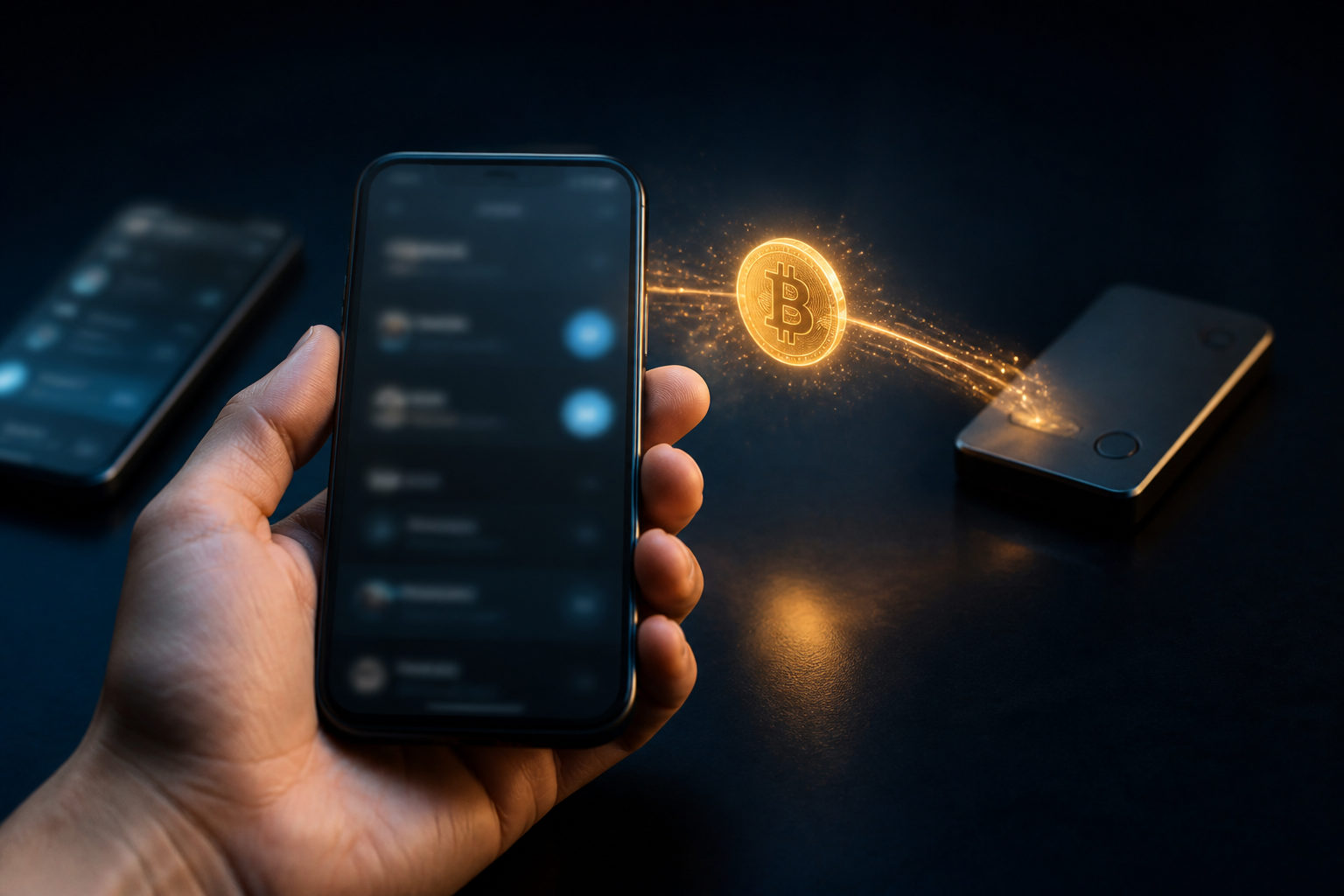
You cannot send Bitcoin on Zelle to another wallet. Zelle moves US dollars between bank accounts; Bitcoin must be sent from a Bitcoin wallet or an exchange withdrawal page, where you verify the destination address, network, and your control over the funds.
Zelle and Bitcoin transfers work on different rails
The search phrase “how to send bitcoin on zelle to another wallet” mixes two separate systems. Zelle is a bank-to-bank payment service, usually tied to an email address or phone number. A Bitcoin transfer happens on the Bitcoin blockchain and uses a wallet address as the destination.
That difference matters in practice. You will not open Zelle, paste a BTC address, and broadcast a blockchain transaction from there. If someone asks you to pay with Zelle first and says they will send Bitcoin to your wallet after that, the process has split into two parts: a dollar payment on one side and a promise of crypto delivery on the other. The main risk in that setup is whether the other party performs as promised.
The correct way to move Bitcoin to another wallet
Start from the place where the Bitcoin is actually held. If your BTC sits in a self-custody wallet, use the wallet’s send function. If your BTC is on an exchange, use the withdrawal or transfer-out page. The screens may look different, but the checks you need to perform are very similar.
Confirm that the asset is really BTC
Do not assume every balance labeled with a familiar ticker can be sent the same way. Some platforms list wrapped versions, internal balances, or products that resemble Bitcoin in name while using different transfer rules. If the recipient gave you a Bitcoin mainnet address, your sending method must match that requirement.
Get the destination address from the recipient’s wallet
The safest source is the recipient directly generating an address from their own wallet. Copy and paste it instead of typing it by hand. Keep one final version for that transaction, since switching between messages or screenshots makes it easier to paste the wrong string.
Check the send page before you confirm
A normal send flow asks for the receiving address and the amount, then shows a network fee or miner fee. Read the labels carefully. You want a BTC send or BTC withdrawal on the Bitcoin network, not some internal transfer route or another chain that happens to be available in the same account.
Use a small test transfer first
This is especially useful when you are sending to that wallet for the first time, or when the recipient is using a service you have never dealt with before. A small test gives both sides a chance to confirm that the address works and the receiving process behaves as expected before more funds move.
Wait for blockchain confirmations
Bitcoin produces a new block about every 10 minutes. A wallet or exchange may show the transaction as sent soon after submission, but that does not automatically mean the receiving side treats the funds as available. Final crediting depends on confirmations and the recipient platform’s own policy.
Your real responsibility: address accuracy, private keys, and irreversibility
Once a Bitcoin transaction is completed, there is usually no bank-style reversal path. Before you confirm anything, be clear about who controls the private keys, who can authorize the transfer, and who stores the recovery phrase. Those points define who carries the operational risk.
With self-custody, you control the wallet and also carry the full burden of securing it. If your recovery phrase is exposed, if your device is compromised, or if malicious software swaps a copied address in your clipboard, the blockchain will still process the transaction you signed. It does not know what you intended to do; it only follows the valid instruction it receives.
With an exchange account, you do not directly hold the private keys, but that does not remove your obligations. You still need to confirm that withdrawals are enabled, that your account can pass any required checks, and that the platform actually supports sending BTC to an external wallet. If any of those pieces fail, you may not be able to move your coins when you expect to.
Common mistakes that cause trouble
- Treating Zelle like a crypto wallet: it does not send on-chain Bitcoin transactions.
- Pasting the wrong address: matching only the first and last characters is a weak check if the middle was altered.
- Choosing the wrong asset or network: similar names do not guarantee compatibility.
- Confusing internal transfers with blockchain withdrawals: some platforms offer both, and the result is not the same.
- Skipping the test transfer: first-time sends carry more uncertainty.
- Ignoring the recipient’s crediting rules: some wallets and services wait for confirmations before showing funds as usable.
A practical checklist before you send
- Confirm that your balance is withdrawable BTC.
- Confirm that the recipient provided a Bitcoin wallet address.
- Open only the official app or official website before signing in.
- Make sure your device is clean and trusted before handling a transfer.
- Paste the address, then verify it again against the original source.
- Confirm the screen says BTC send or BTC withdrawal on the Bitcoin network.
- Send a small test amount first.
- Keep the transaction record so you can track its status later.
FAQ
Can Zelle send Bitcoin directly to another wallet?
No. Zelle sends US dollars between bank accounts. To move Bitcoin, you need a Bitcoin wallet or an exchange withdrawal tool that supports BTC transfers.
If I pay someone with Zelle and they send me Bitcoin later, is that the same thing?
No. You are making a dollar payment first, then relying on the other party to deliver Bitcoin afterward. That adds counterparty risk on top of any wallet-related risk.
Can Bitcoin be sent to an email address or phone number?
On the Bitcoin network, the standard destination is a wallet address. Some services may let users move balances internally with usernames or email identifiers, but that is a platform feature rather than a change to how Bitcoin itself works.
How long does it take for Bitcoin to reach another wallet?
It depends on network confirmations and on how the receiving wallet or service credits deposits. Bitcoin adds a block about every 10 minutes, but usable balance timing can still vary from one service to another.
Can I cancel a Bitcoin transfer if I entered the wrong address?
You generally should not expect the kind of manual reversal that people associate with bank payments. That is why a small test transfer is a strong habit for any new destination wallet.
Where should I check the live price or current fee conditions?
Use a major market data site, a block explorer, or the live fee and price information shown in your wallet or exchange interface. Before acting, verify that you are looking at BTC on the Bitcoin network.
Before the final click, confirm the address source, the wallet type, the withdrawal network, and the result of your test transfer; speed matters far less than getting those checks right.