


The straight-line distance from a venue to any reference point is a fixed number once both coordinates are known, and it is always labelled here as a straight-line measurement. Road distance is longer than that straight-line figure, and this article does not publish driving mileage or travel time for any pair.
This article has no venue-specific coordinates injected for the topic you searched, so no straight-line mile figure can be stated for any named venue. What follows explains the free space in bingo as a rule, and then explains how a fixed venue location is measured and compared when coordinates do exist.
The free space in bingo
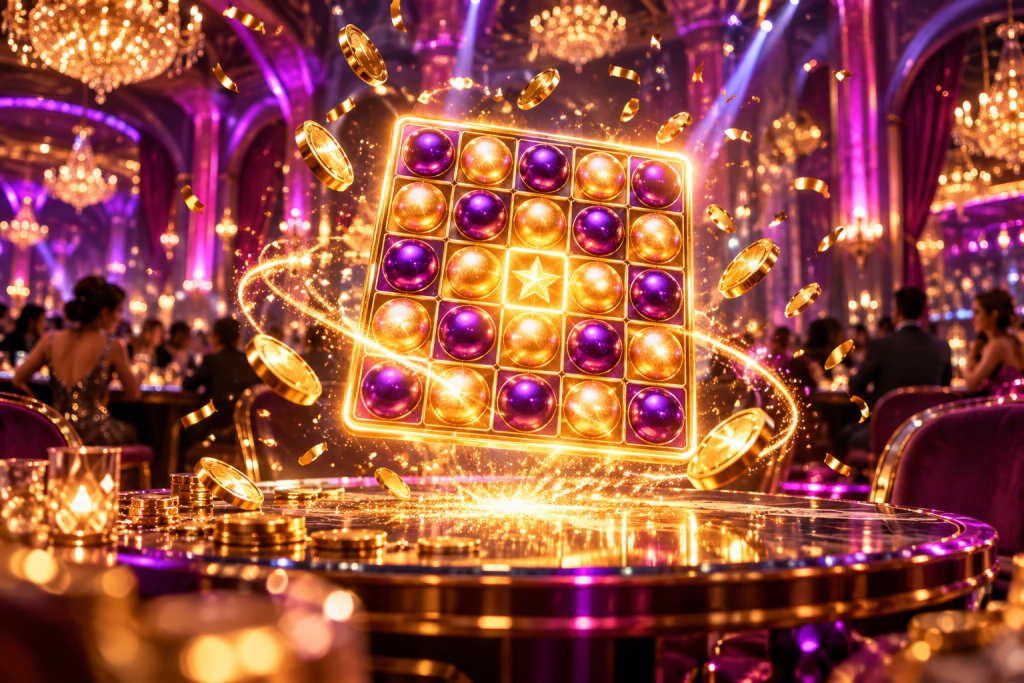
The free space is a square on a bingo card that is marked as already covered before the game begins. On the common 5x5 card layout used in many halls, the free space sits in the exact center of the grid, at the intersection of the third row and third column. The other 24 squares carry numbers drawn from the game's number pool.
A player does not need to daub or mark the free space when a number is called. It counts toward any winning pattern that passes through the center square. Winning patterns that do not touch the center do not use the free space at all.
The free space is not a number and is never called by a caller. It is a structural part of the card. On cards with a different layout, the free space may be placed differently or omitted entirely, depending on the specific game format printed on the card.
How the free space changes what a card can win
Because the free space is already covered, any pattern that includes the center square is one square closer to completion from the first call. A straight horizontal line through the middle row, a straight vertical line through the middle column, and both diagonal lines all pass through the free space. A four-corner pattern does not use it.
The presence of the free space does not change the probability of any particular number being called. It changes only how many additional squares a player must cover to complete a pattern that includes the center. The game's outcome is still governed by the random draw of numbers and the fixed house advantage built into the bingo session's prize structure.
Comparing card patterns that use or ignore the free space
| Pattern | Uses free space | Squares needed beyond free space |
|---|---|---|
| Middle horizontal line | Yes | Four other squares in the row |
| Middle vertical line | Yes | Four other squares in the column |
| Either diagonal | Yes | Four other squares on the diagonal |
| Four corners | No | All four corner squares |
| Full card blackout | Yes | All 24 numbered squares |
A venue's fixed geographic position
A land-based bingo hall or casino venue has one fixed set of coordinates. That position does not change when a reader searches from a different city or device. The venue sits at a documented latitude and longitude, and every distance from that venue to any other documented point is a straight-line, great-circle measurement between those two coordinate pairs.
When a venue's coordinates are documented, the article can state the straight-line distance to reference cities that are also documented. No road distance is ever stated, because road distance depends on a route that a straight-line measurement cannot capture.
Why straight-line distance differs from road distance
A great-circle measurement is the shortest path along the surface of the earth between two points. A road journey cannot follow that path unless a road happens to run exactly along it, which almost never occurs. Terrain, bodies of water, the shape of the road network, and state or county boundaries all force a driven route to bend away from the straight line.
Mountains and rivers create detours. A straight line may cross a lake or a ridge that no public road crosses. The road network connects towns and follows land ownership patterns, not geometric shortest paths. Crossing a state line can also force a route onto a longer corridor because of where bridges and interchanges are placed.
For these reasons, a straight-line figure is always smaller than a realistic road distance. It is useful for understanding relative position, not for planning a drive.
Documented straight-line distances
No distance pairs were supplied for this article, so no table of reference points and straight-line miles can be populated. When a venue is documented, the table below is the format used, with every row marked as a great-circle measurement.
| Reference point | Straight-line miles | Measurement type |
|---|---|---|
| No pairs supplied | — | great-circle |
If the query says me, here, or my location
A venue's position is fixed; a reader's position is not. When a search asks for distance from "me" or "my location," no starting coordinate exists in the query, so no distance can be calculated. The article cannot guess which city the reader is in.
The correct method is to take the venue's documented coordinates and compare them with the reader's own coordinates from a mapping tool. The reader measures from their own fixed starting point to the venue's fixed ending point. The venue does not move closer or farther based on who is asking.
What to confirm before you go
If a reader plans to visit a specific bingo hall or casino venue, several items change frequently and are not published in this article. The venue's own website or guest services desk is the authoritative channel for current opening hours, session schedules, card prices, prize structures, and whether the free space rule applies on the specific card format in use that day.
Confirm the venue's physical address and any entrance or parking instructions before travelling. Road distance and driving time should be checked in a current mapping application, not derived from a straight-line figure. If the venue sits on tribal land or in a different state, local road conditions and legal entry requirements may differ from a reader's home area.
FAQ
Is the free space in bingo always in the center?
On the standard 5x5 card used in many halls, the free space is in the center square. Other card formats may place it differently or omit it. The card itself is the authoritative document for any given session, and the hall's printed rules state whether the free space counts toward a particular pattern.
Does the free space change the odds of winning?
The free space does not change the random draw of numbers. It changes how many additional squares a player must cover to complete a pattern that passes through the center. The house advantage in a bingo session is built into the prize structure, not into the free space itself.
Why does this article not give a driving distance to a venue?
Driving distance depends on a specific route, road network, terrain, and current traffic. This article only uses straight-line, great-circle measurements between documented coordinates, and no venue coordinates were supplied for this topic. A mapping application is the correct tool for road distance and travel time.
Play responsibly
Gambling should be treated as paid entertainment, never as a way to earn income or recover losses. 1-800-MY-RESET (1-800-697-3738)
18+ or 21+ depending on where you are; follow the minimum age that applies to you.
This article is general information about how these mechanics work. It is not legal advice and not a recommendation to gamble or to use any particular operator. Availability and legality differ by jurisdiction — check the rules that apply where you are.