


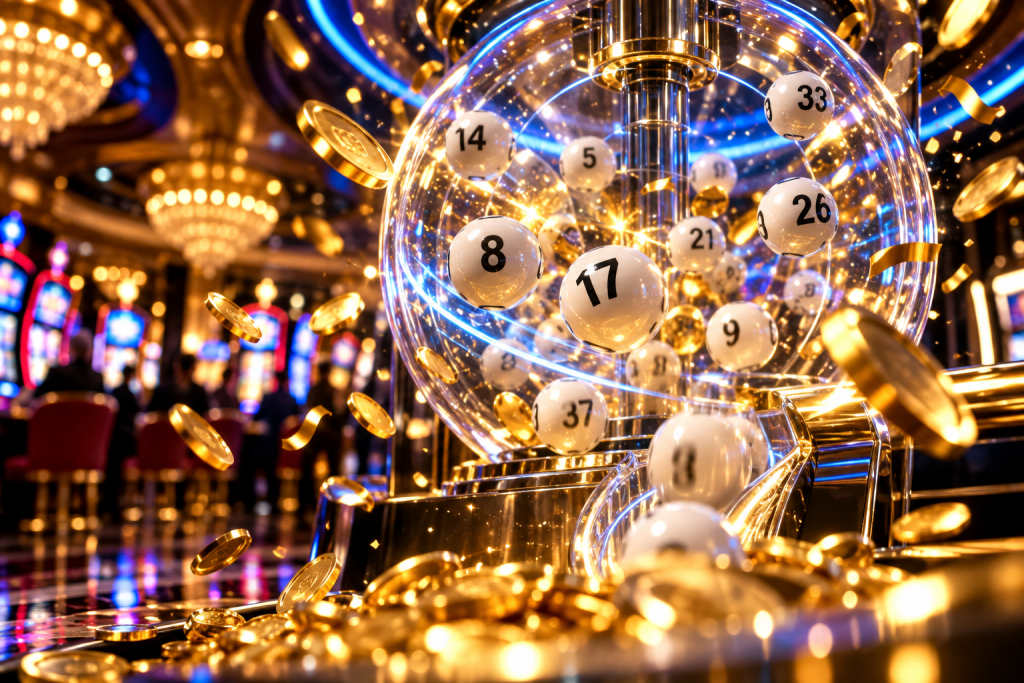
The Draw Is Produced by a Random Number Generator, Not by the Machine Deciding
Every number on a keno machine is produced by a random number generator, commonly called an RNG. The machine does not remember what it drew before, does not look at your ticket, and does not adjust its output to make you win or lose. The RNG is a piece of software or hardware that constantly produces number sequences, and when a draw is triggered, the next numbers in the sequence become the drawn numbers.
What this means for a player is that the machine has no target. It does not know which numbers you picked, and it does not care. The draw is independent of every ticket sold for that game. A number that has appeared ten times in a row has the same chance of appearing again as any other number, because the generator has no memory of the previous draws.
The randomness is not a marketing claim attached to the machine. It is the mechanism by which the game operates. The machine is built so that each of the eighty numbers in a standard keno game has an equal probability of being selected on each draw, and the selection of one number does not change the probability of any other number being selected.
What the Machine Is Doing During a Draw
When you press the draw button, the machine does not reach into a physical hopper of balls. It takes the next set of numbers from the RNG's output stream and maps those numbers onto the keno board. The mapping is a fixed, mechanical process: each possible number from one to eighty is assigned a position in the generator's output, and the machine translates the generator's output into the numbers displayed on the screen.
The machine is not choosing numbers that will produce a particular outcome for you. It is simply reading the next values from a generator that has been running continuously since the machine was powered on. The draw is the same process whether you bet one number or twenty, whether you bet one credit or a hundred, and whether you have won your last ten tickets or lost them.
Because the generator runs continuously, the exact moment you press the button determines which numbers you get. There is no pattern you can learn by watching the screen, and no timing trick that changes the odds. The numbers are produced faster than any human can perceive, and the machine does not pause to consider your ticket before displaying the result.
The House Edge Is Fixed and Does Not Depend on the Draw
Keno carries a built-in house advantage that is set by the pay table, not by the random number generator. The pay table is the list of payouts for matching different numbers of spots. The house edge is the difference between the true odds of matching a given number of spots and the payout the machine offers for that match.
The RNG determines which numbers are drawn. The pay table determines what those drawn numbers are worth to you. These are two separate mechanisms. The RNG cannot change the house edge, and the house edge cannot change the RNG. A machine with a fair RNG and a stingy pay table will still take a predictable percentage of every dollar wagered over time, and a machine with a generous pay table and a fair RNG will still take a smaller but equally predictable percentage.
This means the randomness of the draw is not the thing that determines whether keno is expensive to play. The pay table is. Two machines with identical RNGs can have different house edges because their pay tables differ. The randomness is the same; the cost of the game is not.
How the RNG Is Kept Honest
A random number generator used in a keno machine is not simply trusted to be random. It is tested. Independent testing laboratories examine the generator's output for statistical biases, for patterns, and for any sign that the output can be predicted. The testing is done on the generator itself, not on the machine's display, because the display is only a representation of the generator's output.
The testing process looks at long sequences of numbers and checks whether each number appears with the frequency that true randomness would produce. It checks whether the numbers are independent of each other, meaning that knowing one number gives no information about the next. It also checks whether the generator's output can be influenced by anything outside the machine, such as the timing of button presses or the amount wagered.
A machine that passes these tests is certified as having a compliant RNG. The certification is not a statement about the pay table, the house edge, or the machine's overall fairness to the player. It is a statement about the randomness of the number generation. A machine can have a certified RNG and still have a pay table that gives the house a large edge.
Why Players Sometimes Think the Machine Is Not Random
The most common reason a player believes a keno machine is not random is that the player has seen a pattern. A number appears three times in a row, or a number the player almost picked appears repeatedly, or the player wins several tickets in a row and then loses for a long stretch. These patterns feel meaningful, but they are exactly what a random process produces.
A random sequence of eighty numbers drawn repeatedly will produce streaks, clusters, and apparent coincidences. A number appearing three times in a row is not evidence that the machine is biased toward that number. It is evidence that the machine is producing a random sequence, because random sequences contain runs. If the machine never produced streaks, that would be evidence of bias, because true randomness includes streaks.
The other reason is that the player is remembering the hits and forgetting the misses. A player who picks ten numbers and matches seven will remember that draw vividly. A player who matches zero will forget it quickly. The memory of the unusual event makes the machine seem less random than it is, because the player is not keeping a full record of every draw.
What the Machine Does Not Do
A keno machine does not know your ticket. It does not know how much you wagered. It does not know whether you are a new player or a regular. It does not adjust its output based on your recent results. It does not have a hot mode or a cold mode. It does not become more likely to pay after a long losing streak, and it does not become less likely to pay after a big win.
All of these ideas come from thinking of the machine as an opponent. The machine is not an opponent. It is a device that produces random numbers and then applies a fixed pay table to the result. The machine has no stake in the outcome, no memory of the past, and no ability to change the odds. The only thing that changes from draw to draw is which numbers the RNG produces, and that change is random by design.
The machine also does not draw numbers from a physical hopper. Some keno games in some venues are drawn from physical ball machines, and those draws are mechanical. But a keno machine, the kind a player sits in front of and plays electronically, uses an RNG. The distinction matters because a physical draw can be observed, while an RNG draw is invisible and must be trusted based on testing and certification.
What You Can Verify Yourself
The randomness of a keno machine's draw is not something a player can verify by watching the screen. The screen shows the result of the RNG, not the RNG itself. What a player can verify is the pay table, which is usually displayed on the machine or available in the game's help screen. The pay table tells you what each match pays, and from that you can understand the cost of the game.
A player can also verify that the machine's RNG has been tested by looking for the certification mark of an independent testing laboratory. The mark is usually displayed on the machine's cabinet or in the game's information screen. The mark does not tell you the house edge, but it tells you that the number generation has been examined and found to be random.
For the current rules, pay table, and any machine-specific information, the authoritative source is the game's own help screen on the machine, or the gaming authority in the jurisdiction where the machine operates. The authority publishes the standards that machines must meet, and the testing laboratories publish the results of their examinations.
What to Confirm Before You Play
Before you sit down at a keno machine, confirm the pay table. The pay table is the single most important piece of information on the machine, because it determines the house edge. Two machines side by side can have different pay tables, and the difference can be substantial.
Confirm whether the machine is a Class III machine or a Class II machine if you are playing in a jurisdiction where that distinction exists. The distinction affects how the game operates and how the draw is produced. The machine's help screen or the venue's gaming information will state which class the machine belongs to.
Confirm the denomination and the maximum bet. These are displayed on the machine and affect how much each ticket costs. Confirm the number of spots you are playing, because the pay table changes with the number of spots. And confirm whether the machine offers any side bets or bonus features, because those carry their own pay tables and their own house edges.
FAQ
Do keno machines really draw random numbers?
Yes. The numbers are produced by a random number generator that has no memory and no target. The machine does not know your ticket and does not adjust its output. The RNG is tested by independent laboratories to confirm that each number has an equal chance and that the draws are independent of each other.
Can I predict the next keno draw by watching the screen?
No. The screen shows the result of the RNG, not the RNG itself. The generator runs continuously and produces numbers faster than any human can perceive. Previous draws give no information about future draws, and streaks are a normal part of a random sequence, not a signal.
Does the machine change its odds based on how much I bet?
No. The amount wagered does not affect the RNG. The machine produces the same random draw whether you bet one credit or a hundred. The pay table determines what the drawn numbers are worth, and the pay table is fixed regardless of your bet size.
Play responsibly
Gambling should be treated as paid entertainment, never as a way to earn income or recover losses. 1-800-MY-RESET (1-800-697-3738)
18+ or 21+ depending on where you are; follow the minimum age that applies to you.
This article is general information about how these mechanics work. It is not legal advice and not a recommendation to gamble or to use any particular operator. Availability and legality differ by jurisdiction — check the rules that apply where you are.