


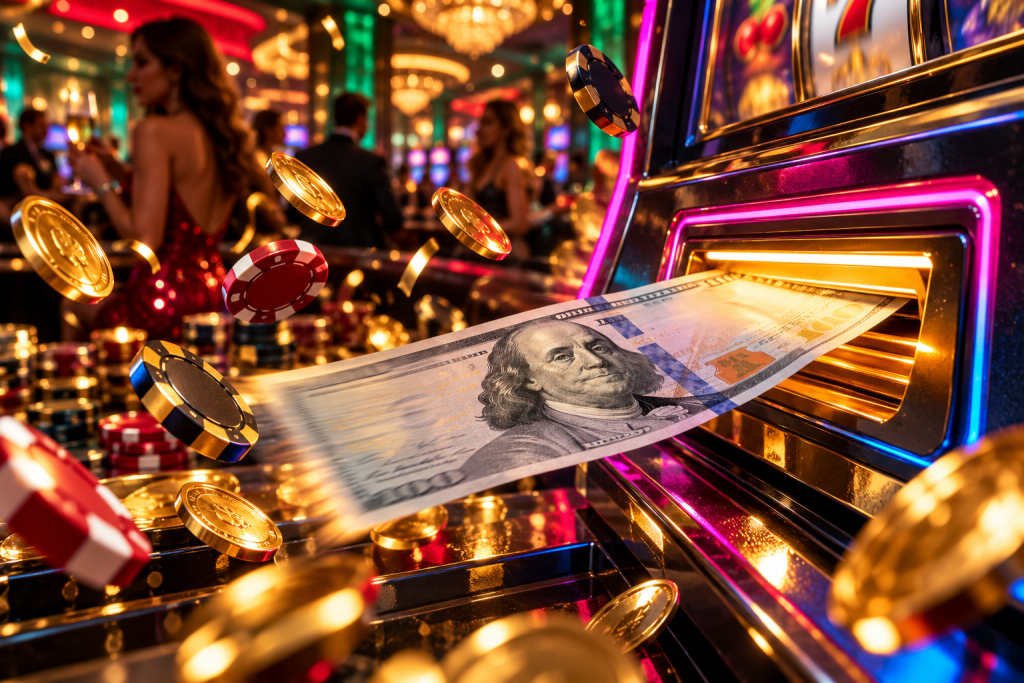
Slot machines do not read dollar serial numbers. A bill acceptor inside the machine validates the note's denomination and authenticity using optical and magnetic sensors, but it does not decode or record the serial number printed on the bill.
The road distance between what a machine checks and what a serial number is matters here: the machine's job is to confirm the bill is real and worth a known amount, not to identify that specific piece of paper. This article explains what the machine reads, what it ignores, and where the authoritative answer lives.
What a bill acceptor checks
When a player inserts a paper bill into a slot machine, the note passes through a validator unit. That unit performs several checks in sequence, and none of them involves reading the serial number as a unique identifier.
The validator's optical sensors look at the printed patterns, colors, and security features on the bill. Magnetic sensors check for magnetic ink in specific locations. The machine compares these readings against stored templates for each denomination it is configured to accept.
The serial number is printed on the bill, but it is not part of the template the machine matches. The machine does not need to know which specific bill it is holding; it only needs to know the bill is genuine and belongs to a denomination the casino will credit.
| What the machine checks | What the machine does not check |
|---|---|
| Printed patterns and colors | Serial number digits |
| Magnetic ink presence and location | Bill's unique identity |
| Denomination templates | Issuing bank or series year as a record |
| Paper thickness and ultraviolet marks | Whether the same bill was used before |
Why serial numbers are not part of the validation
A serial number identifies one specific note. A bill validator does not need that level of identification. Its purpose is to accept a valid note and send a credit signal to the game's accounting system.
Recording serial numbers would require storing and matching every note against a database, which is not necessary for the transaction. The machine credits the player based on denomination, not on which particular bill was inserted.
Some currency handling systems outside slot machines do record serial numbers, such as certain cash counting or anti-money laundering systems. A slot machine's validator is not one of those systems.
What the machine does with the bill after acceptance
Once the validator accepts a bill, the note is typically moved into a secure cashbox inside the machine. The game then adds the bill's denomination to the player's credit meter.
The credit meter is the number the player sees on screen. It rises by the denomination of the accepted bill, not by any information tied to the serial number.
If the validator rejects a bill, the note is returned to the player. Rejection can happen for many reasons: the bill is worn, folded, counterfeit, or a denomination the machine is not set to accept. The serial number is not the reason for rejection.
Where the authoritative answer lives
The exact sensors and acceptance criteria in a given slot machine depend on the manufacturer and the model of bill validator installed. Casino operators and machine manufacturers publish technical specifications for their equipment.
A reader who wants the precise specification for a specific machine should check the manufacturer's technical documentation for that validator model. The casino's slot operations department can also confirm which validator units are in use on their floor.
No single universal answer covers every machine ever built. Older machines may use simpler validators, while newer ones add more sensors. The principle, however, is consistent: serial number reading is not part of slot machine bill validation.
What to confirm before you go
If a player is concerned about how a specific casino handles bills, the property's slot operations or guest services desk can explain which validators are in use. The manufacturer's documentation for that validator model carries the technical detail.
Before relying on any machine's acceptance behavior, confirm the denomination range the machine accepts. Some machines accept only certain bill denominations, and that is a setting the venue controls.
Currency acceptance policies can change when validators are updated or replaced. Check with the venue directly for current information.
FAQ
Do slot machines store the serial numbers of bills they accept?
No. A slot machine's bill validator does not store serial numbers. It validates the note's denomination and authenticity, then moves the bill to a secure cashbox. The machine credits the player based on denomination only. Serial number recording is not part of the validator's function.
Can a slot machine tell if a bill has been used before?
No. The validator checks the bill's physical and magnetic features against denomination templates. It does not track whether that specific note was previously inserted into any machine. A bill that is genuine and in acceptable condition will be accepted regardless of its history.
Why do some bills get rejected by slot machines?
Bills are rejected when the validator cannot match the note to its stored templates. Common causes include wear, folds, tears, counterfeiting, or a denomination the machine is not configured to accept. The serial number is not a factor in rejection.
Play responsibly
Gambling should be treated as paid entertainment, never as a way to earn income or recover losses. 1-800-MY-RESET (1-800-697-3738)
18+ or 21+ depending on where you are; follow the minimum age that applies to you.
This article is general information about how these mechanics work. It is not legal advice and not a recommendation to gamble or to use any particular operator. Availability and legality differ by jurisdiction — check the rules that apply where you are.