


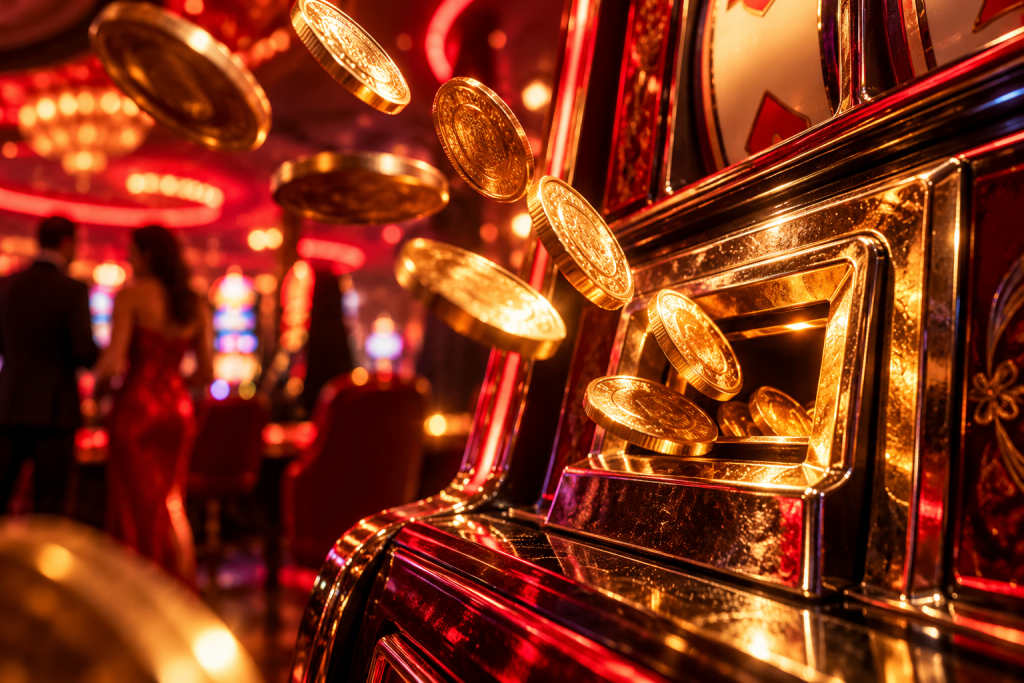
The coin tray is mostly gone, but the question is about the machine, not the building
Most slot machines on a modern casino floor do not accept or dispense coins as their primary payment method. The standard mechanism is ticket-in, ticket-out, usually shortened to TITO, where a player inserts paper currency or a barcoded voucher and receives a printed redemption ticket instead of a coin payout. A small number of older or deliberately retrofitted cabinets still carry coin hoppers, coin-in slots, and metal payout trays, but they are the exception rather than the rule on a contemporary floor.
Whether any particular venue has coin-operated slots is a property-level detail that changes as machines are replaced, refurbished, or moved between rooms. This article explains how the coin mechanism works, why most floors moved away from it, and where the authoritative answer for a specific venue lives.
How a coin slot works when one is present
A coin-operated slot machine contains a coin acceptor that validates size, weight, and metal composition before routing accepted coins into a hopper. The hopper is a storage bin that feeds a payout mechanism when the player cashes out or hits a winning combination that the machine pays in coins. On older electromechanical cabinets, the entire cycle is physical: coin in, reels spin, hopper counts out coins on a win.
On a modern cabinet that still has coin hardware, the coin path is usually a secondary or legacy feature. The machine may accept coins for play but pay wins to a ticket, or accept tickets but retain a coin tray for jurisdictions or player preferences that expect metal payout. The presence of a coin slot does not tell you which of those modes the machine is set to, and the setting can differ from one cabinet to the next on the same floor.
Why most floors moved to ticket-in, ticket-out
TITO removes the physical handling of coins from the player and the casino. Coins are heavy, require armored transport, jam hoppers, and force the casino to maintain counting rooms, wrapping machines, and coin inventory. A printed ticket is cheaper to produce, faster to issue, and can be redeemed at a kiosk or cashier rather than carried to a cage in a bucket.
For the player, the practical difference is that a TITO machine pays a barcoded receipt that must be inserted into another machine or redeemed before leaving the property. A coin machine pays metal that is immediately spendable anywhere, but only if the player is willing to carry it. Neither mechanism changes the odds of the game; the payment rail is separate from the random number generation that determines outcomes.
What the coin question tells you about a venue
Asking whether a venue still uses coins is a question about the age and maintenance cycle of its slot floor. A floor with a large number of coin-operated cabinets is typically running older inventory, while a floor that is fully TITO has cycled through machine replacements over the past two decades. Some properties deliberately retain a small bank of coin machines as a nostalgia feature, but that is a marketing decision made at the property level, not a regulatory requirement.
No public reference source maintains a live, machine-by-machine inventory of which cabinets on a given floor accept coins. The information changes when a property buys, sells, or refurbishes machines, and it is not the kind of figure that gets published in a stable directory. The only reliable way to know is to ask the property directly or to look at the machine itself when you are standing in front of it.
Comparing coin play and ticket play on the same floor
| Feature | Coin-operated cabinet | Ticket-in, ticket-out cabinet |
|---|---|---|
| Primary input | Coins through a coin acceptor | Paper currency or barcoded voucher |
| Primary payout | Coins from a hopper, or a ticket depending on setting | Printed redemption ticket |
| Cash-out step | Hopper counts coins into a tray | Machine prints a ticket for kiosk or cage redemption |
| Floor prevalence today | Minority, often legacy or nostalgia cabinets | Standard on most contemporary floors |
| What it changes about the game | Nothing; payment rail only | Nothing; payment rail only |
Where the coin slot sits in the machine's geography
The coin slot is a physical aperture on the front or side of the cabinet, usually near the bill acceptor and the button deck. On a machine that has both a bill acceptor and a coin slot, the two input paths feed the same credit meter, so a player can mix payment methods in a single session. The coin tray, where metal payouts land, is typically a curved metal or plastic basin at the bottom front of the cabinet.
These physical features do not vary by venue in any meaningful geographic sense. A coin slot on a machine in one state is the same hardware as a coin slot in another. What varies by venue is whether the property has chosen to keep any coin machines on the floor at all, and that is an inventory decision, not a geographic one.
What to confirm before you go
If you are travelling specifically to play a coin-operated slot machine, confirm the following with the property before you leave: whether any coin-operated cabinets are currently on the floor, which section or room they are in, whether they accept coins for play or only for display, and whether the cashier or a kiosk can convert paper currency to coins for you. The property's slot operations desk or guest services line is the channel that holds the current answer.
Do not rely on a photograph or a review from a previous year. Machines move between floors, get sold at auction, or get converted to TITO during routine refurbishment, and a machine that was coin-operated last season may not be there this season. The only current answer comes from the property itself.
FAQ
Do any casinos still have coin slot machines?
Some do, but they are a minority. A property may keep a small bank of coin-operated cabinets as a legacy or nostalgia feature, while the rest of the floor runs on ticket-in, ticket-out. Whether a specific venue has any coin machines today is a property-level inventory detail that changes, so it must be confirmed with the venue directly.
Can I still use coins in a modern slot machine?
Only if that specific cabinet has a coin acceptor installed and enabled. Most modern machines are built for TITO and have no coin path at all. On a cabinet that does have coin hardware, the machine may accept coins for play but pay wins to a ticket, or it may pay metal. The setting varies by machine and property.
Why did casinos stop using coins in slot machines?
Coins are heavy, jam hoppers, and require counting rooms, armored transport, and coin inventory. Ticket-in, ticket-out is cheaper to operate and faster for players to cash out. The switch is about payment logistics, not about the odds of the game, which are unchanged by the payment method.
Play responsibly
Gambling should be treated as paid entertainment, never as a way to earn income or recover losses. 1-800-MY-RESET (1-800-697-3738)
18+ or 21+ depending on where you are; follow the minimum age that applies to you.
This article is general information about how these mechanics work. It is not legal advice and not a recommendation to gamble or to use any particular operator. Availability and legality differ by jurisdiction — check the rules that apply where you are.