


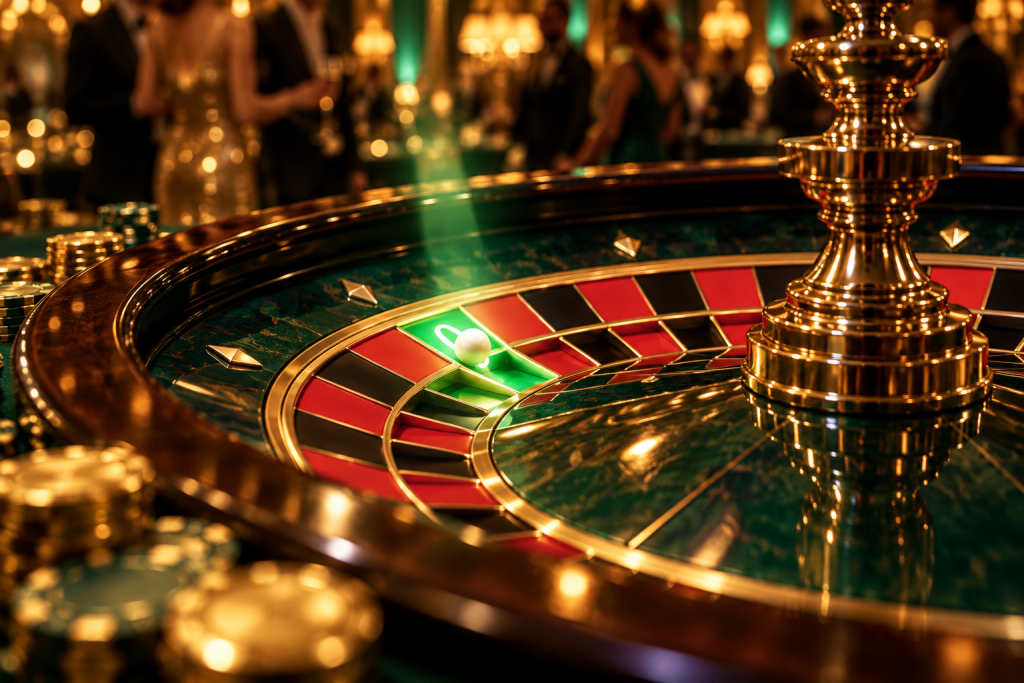
The zero pocket sits outside every even-money bet
Walk up to a roulette table and look at the betting layout. The even and odd boxes cover the numbers 1 through 36. The zero is printed separately, in its own pocket on the wheel and its own space on the felt. When the ball lands in zero, every wager on even, odd, red, black, high and low loses in the standard version of the game. The zero does not switch sides to make the result even or odd. It simply is not part of that bet.
This is not a technicality buried in the fine print. It is the entire reason the even-money bets do not pay at their true odds. Without the zero, an even-money wager would be a fair coin flip: 18 winning numbers against 18 losing numbers. The zero adds a nineteenth losing outcome to that bet, and the operator keeps the difference.
What the zero is
Zero is a number on the wheel, but it is a special number. It carries no colour in the sense that matters for the red and black bet, and no parity in the sense that matters for the even and odd bet. On a European wheel it is the only pocket with that status. On an American wheel the double zero shares it.
Some players describe zero as green, which is true of the pocket's physical colour on most wheels, but the red and black bet does not include green as a winning side. The layout makes this visible: the red and black boxes sit apart from the zero, and the even and odd boxes do the same.
European and American wheels differ by one pocket
The number of pockets changes how often the zero family appears, and therefore how much the even-money bets cost over time. A European wheel has 37 pockets with a single zero. An American wheel has 38 pockets with a single zero and a double zero. The extra pocket increases the house edge on every bet that loses to it.
| Wheel type | Pockets | Zero pockets | Effect on even-money bets |
|---|---|---|---|
| European | 37 | One (single zero) | One losing pocket added to the 18 winning and 18 losing numbers |
| American | 38 | Two (single and double zero) | Two losing pockets added to the 18 winning and 18 losing numbers |
The structural difference is simple: more zero pockets means more spins where even, odd, red, black, high and low all lose at once. Nothing about a betting pattern removes those pockets from the wheel.
How a round plays out from buy-in to settlement
You buy in at the table and receive chips. On many tables each player gets a distinct chip colour so bets do not get mixed together. You place chips on the layout before the dealer calls no more bets. The ball is spun, it settles in a pocket, and the dealer marks the winning number on the layout. Losing bets are cleared first. Winning bets are then paid, and the player's original stake stays on the layout until the player picks it up.
The sequence matters because the zero affects it at a specific moment. If the ball lands in zero, the dealer clears every even-money wager along with most other losing bets. The only wagers that can win or survive a zero depend on the table rules, which brings us to the next point.
Some tables soften the zero with a shared rule
A rule found on some European-style tables changes what happens to even-money bets when zero appears. Instead of losing immediately, the wager is held in place for the next spin. If the next spin wins, the player gets the original stake back without profit. If the next spin loses, the stake is gone. This is sometimes called la partage, and it lowers the cost of the zero on those specific bets.
A related rule, sometimes called en prison, leaves the bet imprisoned on the layout for the next spin under the same conditions. The effect on the player is similar: the zero still threatens the bet, but it does not always take the whole stake on the spin where it lands.
| Rule | What happens to an even-money bet when zero hits | Effect on the bet |
|---|---|---|
| Standard | Bet loses immediately | Full stake taken |
| La partage | Half the stake is returned, half is lost | Reduced loss on zero spins |
| En prison | Bet is held for the next spin; wins return the stake only | Loss delayed and sometimes avoided |
These rules are not universal. A table either has them or it does not, and the presence of the rule is usually printed on the layout or stated in the table's posted rules. Before you sit down, check whether the table you are joining applies one of them to even-money bets.
The main bet types and how their edges differ
Roulette offers more than even-money wagers, and the bets do not all cost the same. The house edge on a given bet comes from the gap between the payout and the true odds of winning. On a European wheel, a straight-up bet on one number pays at a rate that leaves a fixed gap between what the player receives and what the true odds would pay. The even-money bets carry the same house edge as the straight-up bet on a standard European table, because the single zero creates the same proportional shortfall across the layout.
That changes on an American wheel. The double zero widens the gap on every bet, but the even-money bets feel it most directly because the player expects them to behave like coin flips. They do not.
| Bet type | Numbers covered | Payout | How the zero affects it |
|---|---|---|---|
| Straight-up | One number | Fixed multiple of the stake | Loses unless the number is zero itself |
| Split | Two adjacent numbers | Lower multiple than straight-up | Loses unless one of the two numbers hits |
| Street | Three numbers in a row | Lower multiple than split | Loses unless one of the three hits |
| Even / odd | 18 numbers | Even money | Loses on zero and double zero |
| Red / black | 18 numbers | Even money | Loses on zero and double zero |
| High / low | 18 numbers | Even money | Loses on zero and double zero |
The payout multiples are printed on the layout and in the table rules. What matters for this question is that the zero is not a member of any of the groups above except when it is bet directly as a number.
What a strategy chart can and cannot do
Roulette does not have a decision-based strategy chart in the way blackjack does, because the player makes no choices after the ball is spun. The only decisions are which bets to place and how much to stake. A published chart or guide that suggests a betting pattern is describing a way to distribute wagers, not a way to change the house edge.
Where strategy charts do exist, they derive from the exact rule set in use. In blackjack, a basic strategy chart for a game where the dealer stands on soft 17 differs from one where the dealer hits. The same principle applies to roulette: whether the table uses a European or American wheel, and whether it applies la partage or en prison, changes the cost of the even-money bets. Read the table's posted rules before trusting any chart.
Procedural mistakes new players make at the wheel
The first mistake is treating zero as a colour or a parity. A player who believes zero counts as even, or as black, has misunderstood the bet they placed. The layout itself is the correction: the zero sits outside those boxes.
The second mistake is betting after the dealer has called no more bets. Late bets are returned or refused, and on a busy table the call comes quickly. Have your wager placed before the ball slows.
The third mistake is picking up losing chips before the dealer has cleared them, or reaching across the layout while other bets are being paid. Roulette tables run on a strict order: losing bets cleared, winning bets paid, then players collect. Touching chips out of turn creates disputes that slow the table and can void a wager.
The fourth is assuming every table uses the same zero rule. A player who has only played on a la partage table may expect half their even-money stake back when zero hits. At a standard table, that stake is gone. Check the layout before the first spin.
Where the zero fits in the long run
Return to Player (RTP) is a theoretical percentage of total wagered money a game returns to players over a very large number of spins. House edge is the mathematical advantage the operator holds, expressed as a percentage of each wager. The two sum to 100% for the same game under the same rule set.
The zero is the mechanism that creates the gap. On an even-money bet, the player covers 18 numbers and the operator's advantage comes entirely from the pockets the player cannot cover: the zero, and the double zero where it exists. There is no betting pattern that removes those pockets. A player can choose a table with one zero instead of two, or a table with la partage, and that choice changes the expected rate of loss on the even-money bets. It does not turn the bet into a favourable one.
FAQ
Does 0 count as even or odd when betting on even or odd?
Neither. Zero is outside the even and odd boxes on the layout, and a spin that lands in zero loses every even and odd wager under standard rules. Some tables with la partage or en prison soften that loss, but zero never counts as a winning even or odd number.
What happens to a red or black bet when the ball lands in 0?
The bet loses on a standard table. Zero is not red or black for the purposes of that wager, even though the pocket itself is usually green. If the table applies la partage or en prison, the bet may be partially returned or held for the next spin.
Does betting on 0 pay the same as betting on any other single number?
Yes. A straight-up bet on zero pays the same fixed multiple of the stake as a straight-up bet on any other single number. The payout multiple is printed on the table layout and in the posted rules for the table you are playing.
Gamble responsibly. If you or someone you know has a gambling problem, call the helpline printed in the footer below for confidential support.
Play responsibly
Gambling should be treated as paid entertainment, never as a way to earn income or recover losses. 1-800-MY-RESET (1-800-697-3738)
18+ or 21+ depending on where you are; follow the minimum age that applies to you.
This article is general information about how these mechanics work. It is not legal advice and not a recommendation to gamble or to use any particular operator. Availability and legality differ by jurisdiction — check the rules that apply where you are.