


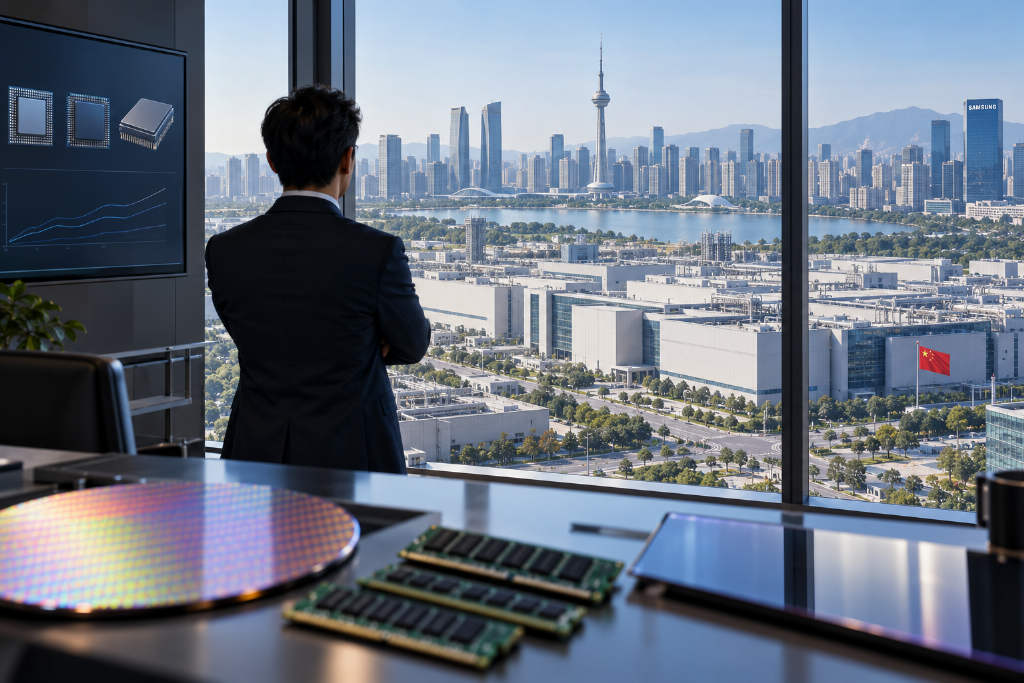
Elon Musk recently reposted a South Korean financial column that argued the country’s memory-chip boom could face oversupply by 2029, leaving only two to three years to develop new industries.

Musk then added that China will produce large amounts of RAM in 2028. The comment quickly drew attention to ChangXin Memory Technologies in Hefei. After CXMT disclosed plans to roll out DDR5 built on a 4F² architecture by the end of this year, shares of Samsung Electronics, SK Hynix and Micron fell.
Some analysts said the sell-off was an overreaction. Still, from a South Korean perspective, the concern is not hard to understand. Hefei has challenged Korean incumbents before. LCD panels were an earlier case.
How Hefei entered the LCD panel business
Before 2008, South Korea held a dominant position in LCD panels. China was producing more televisions than any other country, but it had little presence in high-generation LCD panels and spent large amounts of foreign exchange on imports.
BOE Technology Group was under pressure at the time. Its fifth-generation line in Beijing had posted heavy losses for two straight years, pushing the company’s debt-to-asset ratio to 90% at one point. BOE had long wanted to build a sixth-generation line in China, but the plan stalled after interference from Sharp. It was only after a 4.5-generation line in Chengdu turned profitable in 2008 that the project was revived.
That created an opening for Hefei. In 2008, the city’s local fiscal revenue was only 16.1 billion yuan, while BOE’s sixth-generation line required total investment of 17.5 billion yuan. The economic and political risks were substantial. Hefei still decided to proceed, with the city government promising up to 9 billion yuan in backstop funding and assistance in securing 8.5 billion yuan in loans.
That decision later became a defining part of Hefei’s reputation as a city willing to make bold industrial bets. The sixth-generation line went into production in 2010. Hefei kept investing through industry cycles, moving on to an 8.5-generation line and then, in 2015, starting construction on what the article describes as the world’s first 10.5-generation line. Mass production began in 2018.
The impact went beyond meeting domestic demand. It also changed the supply chain. In BOE’s early years, much of the profit pool sat with upstream suppliers of glass substrates, polarizers and liquid-crystal materials. As BOE’s capacity expanded, it gained leverage in negotiations.
Corning, for example, built a 10.5-generation glass-substrate plant next to BOE to reduce transport costs. A group of Chinese suppliers also set up operations in Hefei, cutting into the margins of overseas vendors and helping the city form what the article calls a trillion-yuan industrial chain.
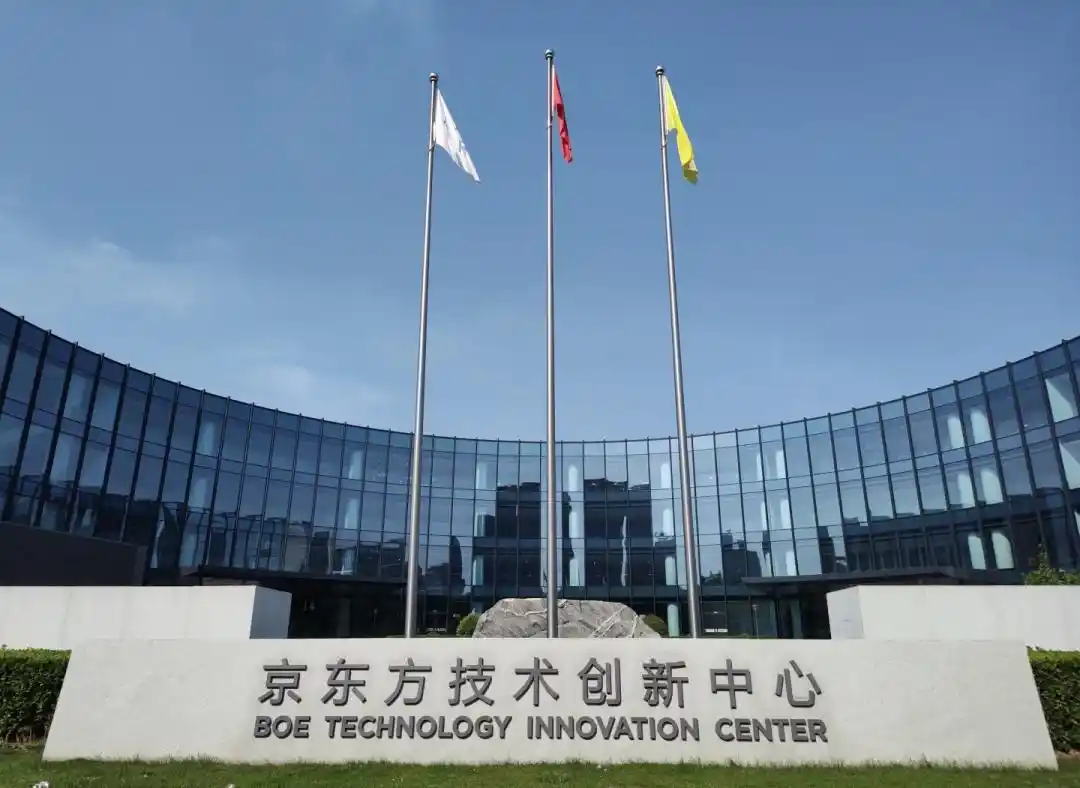
As Chinese panel makers ramped output, global LCD capacity expanded quickly. Panel prices fell by more than 30% in 2018 and 2019, making the business increasingly difficult for Korean manufacturers. Samsung Display exited LCD production in 2022. In 2025, LG Display sold its last LCD plant in Guangzhou to TCL CSOT, marking the end of South Korea’s role in LCD manufacturing.
From panels to DRAM
If panels were one pillar of South Korean industry, memory has been even more important. For a long time, 95% of the global memory market was controlled by Samsung, SK Hynix and Micron, with the two Korean companies alone accounting for about 70%.
China had tried to break that structure. In 2015, Tsinghua Unigroup sought to acquire Micron for $23 billion, but the offer was rejected. Fujian Jinhua then spent hundreds of billions of yuan to build a plant with United Microelectronics Corp., only to be sued by Micron in 2018 and cut off from U.S. supplies, which halted production.
With acquisitions blocked and self-built projects facing major obstacles, Hefei stepped in again. When GigaDevice founder Zhu Yiming came to the city, he had the idea of making memory chips but no production line. Hefei approved a first-phase cooperation agreement worth 18 billion yuan. GigaDevice contributed 3.6 billion yuan, while the remaining 14.4 billion yuan came from Hefei Construction Investment and other local state-backed capital platforms, according to the article.
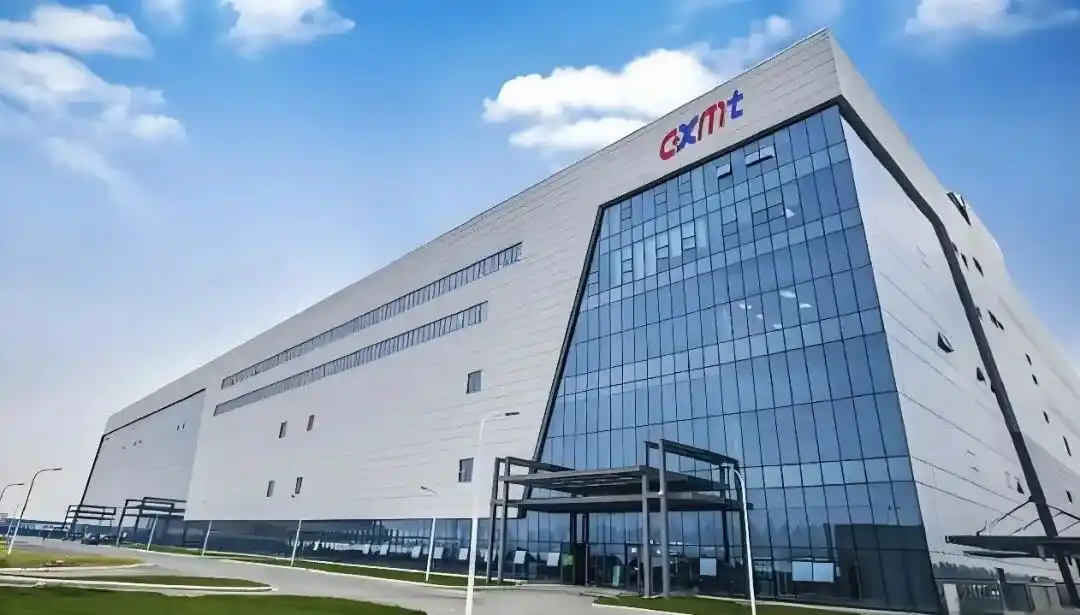
To build the wafer fab, Hefei provided land and staffing support and helped CXMT gradually establish its own technology system under patent restrictions. By 2019, CXMT had made a breakthrough and started mass production of mainstream DRAM chips.
The timing was difficult. The global memory cycle was turning down, and yields were still climbing, leaving the company in a position where each chip sold at a loss. Even so, local state capital, the National Integrated Circuit Industry Investment Fund and later financing rounds kept the company running. During the severe downturn in 2022 and 2023, the article says CXMT lost 30 billion yuan over three years and still pushed ahead with construction of its second-phase wafer fab in Hefei.
What followed is now widely known in the market. Demand tied to AI computing lifted memory demand, raising CXMT’s profile and putting Hefei back in the spotlight as an example of city-led industrial development.
A path that resembles South Korea’s, but with a broader mandate
The article says Hefei’s rise looks strikingly similar to South Korea’s earlier industrial playbook, while also going a step beyond it in several ways.
Spending through downturns
Panels and memory are both highly cyclical businesses. In upcycles, many companies can make money. In downturns, losses spread across the sector. They also share another trait: larger capacity and newer process technology lower unit costs for each chip or display. That means survival often depends on who can bring better and cheaper products to market when the next recovery begins.
Most companies cut budgets, reduce capacity and trim research spending when losses mount. Samsung historically did the opposite. Starting in 1985, it invested hundreds of millions of dollars a year in memory. By 1992, it had launched what the article calls the world’s first 64M memory chip, overtaking Japan to become the top player in DRAM. During the 2008 financial crisis, when memory prices collapsed, Samsung announced plans to double output. Germany’s Qimonda went bankrupt in 2009, and Elpida, Japan’s last memory maker, failed three years later.
The article describes this as a game of nerve. On that front, it argues, Hefei has been even more resolute. Whether with BOE or CXMT, the city kept backing expansion and next-generation products during long periods of losses.
South Korean conglomerates could use counter-cyclical investment partly because rivals were constrained by bank credit and shareholder tolerance for losses. Hefei, by contrast, was not measuring success only by near-term profit. It was also asking whether the city could gain an industry it previously lacked and whether that industry could anchor a broader supply chain. Under that logic, as long as technology kept improving and the industrial base kept forming, support continued.
One example cited in the article is the second half of 2022. Global consumer electronics demand slumped and DRAM prices were cut in half. Samsung and SK Hynix both reduced output to support pricing. CXMT, backed by Hefei and fresh capital, kept buying equipment and advancing new factory construction. The article argues that if CXMT had behaved like a conventional commercial company and cut spending during heavy losses, including halting the Beijing plant and Hefei Phase II, it would not have had enough wafer capacity in 2025 to capture later demand.
Creating a built-in customer base
Display fabs and wafer fabs require investments measured in the tens of billions of yuan. Their biggest risk is not having buyers. New lines usually start with immature processes and yields, and they lack brand recognition. Customers have little reason to switch suppliers early on. Without large orders to absorb output, inventory and depreciation can overwhelm a plant.
Samsung had an internal solution. It made chips and displays, but it also sold televisions, computers and later smartphones. Those downstream businesses could serve as anchor customers.
Hefei scaled that idea to the city level. In 2005, it adopted an “industry-led city” strategy and brought in appliance makers including Haier, Midea, Gree and TCL to build production bases. Together with local manufacturers, that helped Hefei develop what the article calls the country’s largest home-appliance assembly cluster. By the time BOE’s sixth-generation line arrived, the city already had enough companies to absorb its early output.
Once the display business took shape, one generation of industry fed the next. Display fabs needed driver chips, and BOE became a customer for Nexchip, which Hefei introduced in 2015. The same pattern later appeared in CXMT and in Hefei’s automotive sector.
The article also points to China’s broader manufacturing base behind the city. Samsung relied on downstream divisions within one conglomerate. Hefei used industrial clustering to connect multiple companies inside one city, while those companies were supported by orders from across the country. Televisions need panels. Computers and phones need memory. New energy industries are also increasing their use of displays and chips.
State capital with an exit route
The article says South Korea’s model helped companies survive downturns and win industrial competition, but it also produced conglomerates with deep influence over the national economy. Samsung’s weight in South Korea is often cited as the clearest example.
Hefei’s approach, it argues, includes an exit mechanism. The government provides support in the early stage. Once a company has moved through the trough and can generate its own cash flow, state capital exits through transfers, buybacks and stake reductions, then recycles the money into the next industry.
One example came at the end of 2022, when BOE spent more than 6.9 billion yuan to buy back a 28% stake in the 10.5-generation line from Hefei state-owned investors. The recovered capital can be redeployed, while the factories already built and the talent already trained remain in Hefei as part of the city’s industrial base.
More than a financial return
The article closes by saying Hefei defines “return” differently from a conventional investment institution. The city is often described as a venture-capital hub, but that label captures only part of the story. In this telling, investment is a tool. The larger goal is to turn each successful project into the starting point for the next stage of industrial development.
It also makes clear that saying South Korea fears Hefei is partly rhetorical. BOE and CXMT have not comprehensively surpassed Korean rivals. Samsung still holds a strong position in high-end OLED, and South Korea’s two memory leaders still have deep moats in high-value HBM. BOE and CXMT still have a long way to go in those segments.
Even so, the article argues that Hefei’s significance lies in helping industries that were once constrained by foreign suppliers gain more autonomy over time. In that view, the city’s role has been to target gaps in China’s industrial chain and keep investing through periods when others were unwilling to absorb losses and wait for the cycle to turn.
The original article was published by the WeChat account IC Lab, with authorship credited to IC Lab.