memory chips
Nov 5, 2026

Memory shortage seen lasting into 2030 as SK Hynix, Micron and other storage names slide

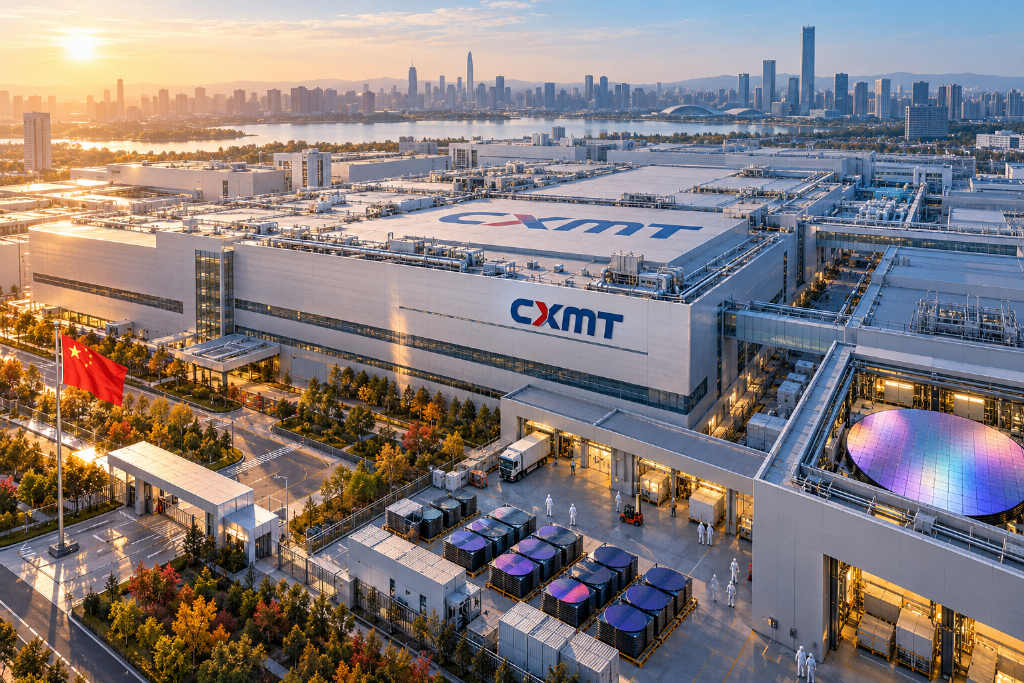
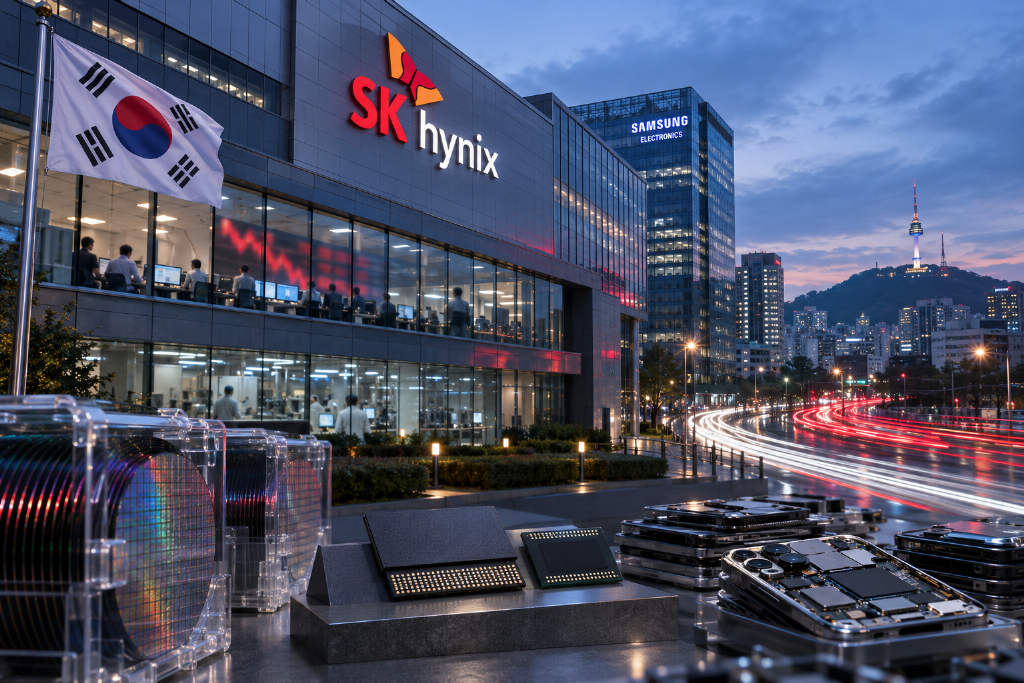
A market report on Nov. 4 said the memory shortage could last through 2029 or 2030, with bill-of-materials costs for smartphone makers still climbing. Storage stocks sold off sharply in the U.S. that day, with Micron, SanDisk, Western Digital, Seagate, SK Hynix and Kioxia ADR all posting losses, while the Philadelphia Semiconductor Index fell more than 3%. The weakness carried into South Korea on Nov. 5, when the KOSPI dropped more than 5% and shares of SK Hynix and Samsung Electronics fell sharply. The report said major memory suppliers had already warned that tight supply could persist for years. SK Hynix said on Oct. 28 that supply-demand imbalance in memory may last until 2030, citing rising process complexity and the long lead time required to build new production facilities. Samsung, Kioxia and Micron were also described as having sold out much of their forward capacity through long-term agreements, with LTA structures becoming the dominant way to secure supply. The squeeze is now feeding into end-market costs. Apple said on a recent fourth-quarter earnings call that it expects higher memory costs in the first quarter of fiscal 2027, while PC, smartphone, automotive and industrial device makers are also facing tighter supply and higher procurement pressure. The report also pointed to CXMT as an important incremental supplier in the global DRAM market.
710
Memory shortage seen lasting into 2030 as SK Hynix, Micron and other storage names slide
Samsung Electronics
Nov 5, 2026

Former Samsung employee gets 5 years in prison over chip technology leak

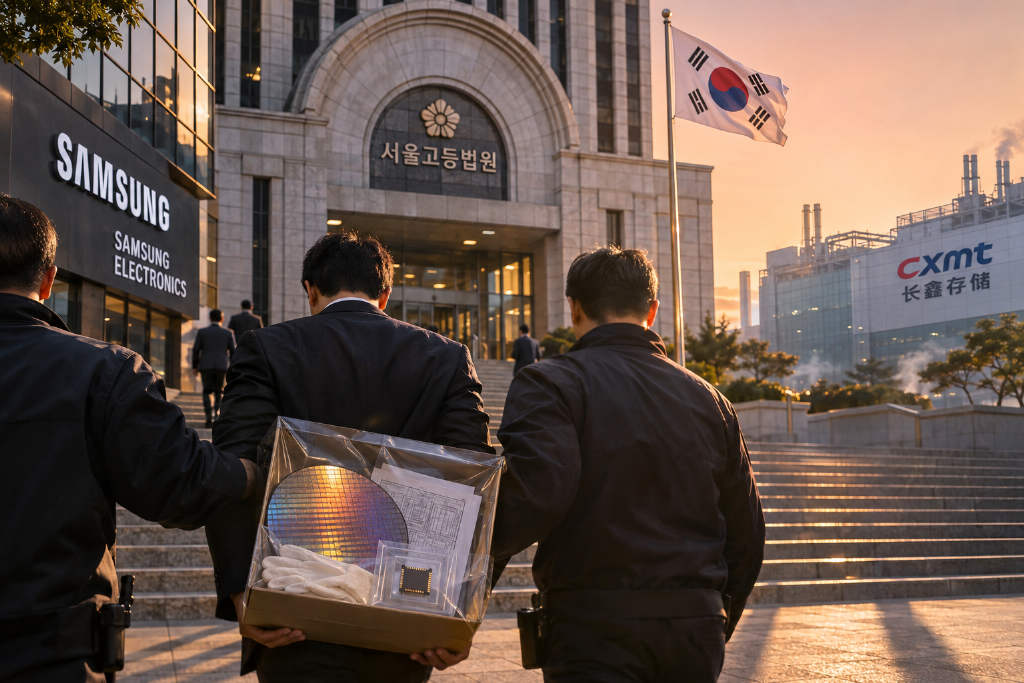
A former Samsung Electronics employee was sentenced to five years in prison by the Seoul High Court on Oct. 22 for leaking the company’s chip technology, according to Techub News, citing CNBC. The employee had joined Chinese memory chipmaker ChangXin Memory Technologies, or CXMT, in 2016. The latest ruling reduced the sentence from the seven-year prison term handed down in the first trial in April this year. CNBC said the case highlights intensifying competition over semiconductor know-how as Chinese chipmakers narrow the technology gap with more established rivals. The report also said Chinese semiconductor companies have been recruiting experienced overseas engineers with high pay, equity, housing and family support. Under U.S. export restrictions, that expertise has helped Chinese chipmakers work through technical bottlenecks.

590
Former Samsung employee gets 5 years in prison over chip technology leak
Huawei
Nov 3, 2026

Huawei still depends on Korean HBM as HBM3E black-market prices climb to about $4,000

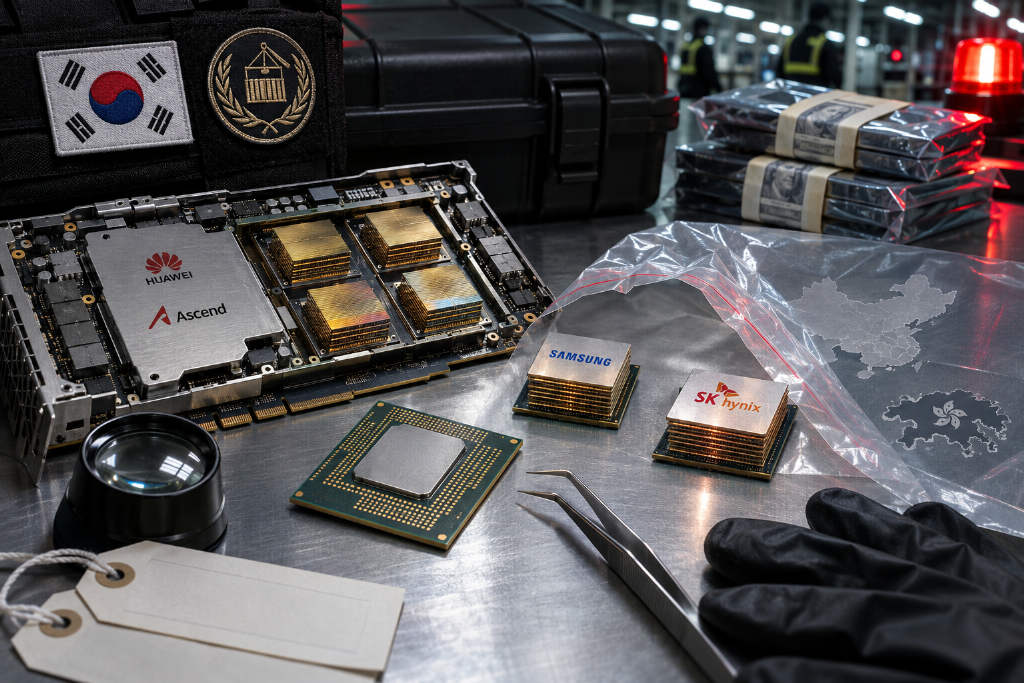
An investigation by The Information says smugglers have been exploiting differences in U.S. export classifications for packaged chips to move high-bandwidth memory, or HBM, made by Samsung and SK hynix into China. The reported method involves combining advanced memory with low-end server processors, shipping the packaged products through Hong Kong, and then removing the HBM for resale after arrival. The report says the black-market price of HBM3E in China has jumped from a few hundred dollars a year ago to about $4,000 per unit. The story points to a broader supply problem for China’s AI chip sector. Huawei is said to be preparing its Ascend 960DT for the first quarter of 2027 and has told some customers that the new chip will rely heavily on memory from Samsung and SK hynix because domestic suppliers cannot provide enough advanced HBM. Some customers have reportedly been asked to secure the required memory themselves. The report also says China’s local alternatives remain constrained. JHICC trails Korean suppliers by several years in memory technology, while CXMT is moving toward HBM3E production but still faces yield and performance issues. At the same time, South Korean customs authorities have stepped up enforcement, with trade security violations reaching KRW 770 billion, or about $560 million, as of May 2026.

710
Huawei still depends on Korean HBM as HBM3E black-market prices climb to about $4,000
DRAM
Nov 2, 2026

DRAM makers split on 4F² path as CXMT pushes ahead, Samsung stays in, and Micron opts out

The DRAM industry is no longer moving in lockstep on next-generation cell architecture. After ChangXin Memory Technologies, or CXMT, disclosed progress on its 4F² design and said it expects to launch a next-generation DDR5 RDIMM product combining 4F² architecture with hybrid bonding by year-end, major rivals laid out sharply different positions. Samsung Electronics said it is continuing work on 4F² and had already shown a 16Gb 4F² DRAM test chip earlier this year, with mass production reportedly targeted for 2028. SK hynix said it will transition to 4F² over time, but not as an immediate priority, while Micron made clear that 4F² is not part of its current roadmap. At the center of the split is not just engineering feasibility, but economics. In theory, 4F² can shrink the planar area of a DRAM cell from the typical 3F×2F layout used in 6F² to 2F×2F, cutting area by one-third and lifting cell count per unit area by 50% at the same feature size. But the article argues that real-world gains are reduced by capacitor spacing limits, peripheral circuitry, redundancy, yield pressure, reliability demands, and ramp costs. For companies with EUV lithography and large market share, extending 6F² may still be the more attractive option. For CXMT, which faces tighter lithography constraints, 4F² could open a different competitive window.

510
DRAM makers split on 4F² path as CXMT pushes ahead, Samsung stays in, and Micron opts out
CXMT
Nov 2, 2026

CXMT says its sixth-generation DRAM uses 4F² as Micron dismisses some debate around the approach as a “smokescreen”

Chinese memory maker ChangXin Memory Technologies, or CXMT, said in an investor relations record that its sixth-generation DRAM platform is built on a 4F² architecture, has passed engineering sample verification, and is expected to deliver its first samples to customers by the end of 2026. The disclosure was widely seen as a response to Micron’s earlier criticism of the 4F² path. Micron president and chief technology and products officer Scott DeBoer said at a technical seminar that the company will stay with 6F² and then move directly to 3D DRAM, adding that Micron has studied 4F² for more than 20 years and views some related discussion as a “smokescreen.” CXMT replied that memory-density gains are a complex system-engineering problem and that different architectures carry different trade-offs in process integration, lithography steps and thermal budget. The company also said its 4F² design uses vertical surround gate transistors and is backed by more than 300 public patent families. Samsung and SK hynix are still advancing their own 4F² work, while commentary cited by local media said CXMT’s update rattled global memory stocks because investors fear aggressive price competition from Chinese suppliers.

690
CXMT says its sixth-generation DRAM uses 4F² as Micron dismisses some debate around the approach as a “smokescreen”
CXMT
Nov 2, 2026

CXMT posts 54.4 billion yuan quarterly profit, but a 20%-30% HBM3E yield keeps the next phase uncertain

Changxin Memory Technologies, or CXMT, reported third-quarter net profit attributable to shareholders of 54.4 billion yuan on revenue of 118.71 billion yuan, up 613.2% year over year and 19.3% from the prior quarter. The report argues that the earnings surge was driven less by a decisive technology leap and more by a structural supply squeeze in standard DRAM, as Samsung, SK Hynix and Micron redirect more wafer capacity toward high-bandwidth memory, or HBM. That shift has tightened supply for PC, smartphone and general server DRAM, creating a favorable pricing window for CXMT, whose global DRAM revenue share reached 8% in the first quarter of 2026. At the same time, CXMT’s planned HBM3E ramp highlights the gap it still needs to close. The company is expected to begin limited HBM3E production within two months and has delivered samples to several Chinese AI chip design firms, but people familiar with the matter said yields are only 20% to 30%, versus about 70% for SK Hynix on a comparable product. The report says CXMT’s HBM effort currently looks more like a strategic push to secure a place in the domestic AI memory supply chain than a near-term profit engine. With the stock down 32% from its August high as of mid-to-late October, investors appear to be reassessing how long the DRAM upcycle can last and whether low-yield HBM can offset any future cooling in standard DRAM pricing.

690
CXMT posts 54.4 billion yuan quarterly profit, but a 20%-30% HBM3E yield keeps the next phase uncertain
CXMT
Oct 30, 2026

CXMT posts sevenfold revenue jump in Q3, with growth starting to slow

Chinese chipmaker CXMT reported third-quarter results showing revenue rose sevenfold from a year earlier, though the pace of growth slowed. According to Bloomberg, the deceleration suggests that the AI-driven rally in China’s memory chip prices may be losing momentum. The company has been expanding production capacity while working to strengthen its position as a global supplier of conventional dynamic random-access memory, or DRAM. After that push, CXMT has also moved back into profitability from a loss position. The update points to a shift in the earnings trajectory: revenue is still rising sharply on a yearly basis, but the rate of increase is no longer as strong as before. The report did not provide additional figures beyond the year-on-year revenue growth and the note that the company returned to profit.

630
CXMT posts sevenfold revenue jump in Q3, with growth starting to slow
Changxin Technology
Oct 30, 2026

CXMT reports Q3 2026 revenue of 118.714 billion yuan

Changxin Technology, also known as CXMT, reported revenue of 118.714 billion yuan for the third quarter of 2026, up 613.18% from a year earlier, according to a newsflash published by Odaily. The company also posted revenue of 269.024 billion yuan for the first three quarters of 2026, marking a 738.51% year-over-year increase. The update was released as a brief technology sector item, with no additional operational details, profit figures, or management commentary included in the source. Odaily categorized the item under technology trends. The report focused solely on the company’s disclosed revenue figures for the quarter and the first nine months of the year.

490
CXMT reports Q3 2026 revenue of 118.714 billion yuan
Total 237 items
Go topage