YMTC
Oct 18, 2026

Citrini says YMTC may go public in December, setting up a liquidity clash with CXMT

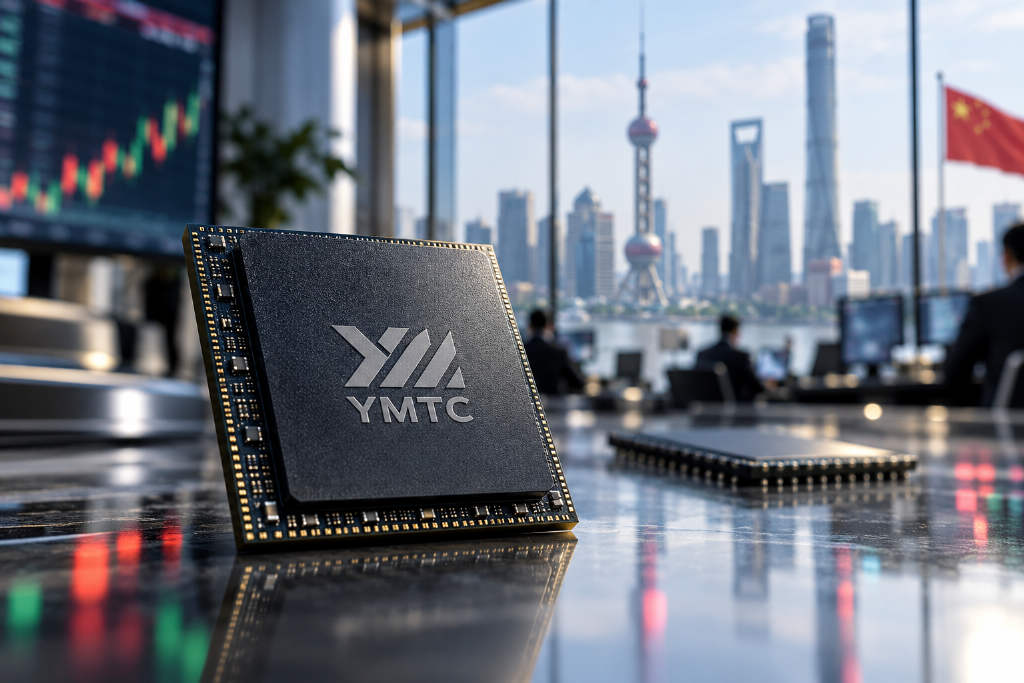
Citrini analyst Jukan, citing a research note from South Korean brokerage Hanwha Investment, said Yangtze Memory Technologies Co. (YMTC) is now seen as more likely to list in December this year rather than in mid-March next year, which had been inferred earlier by referencing ChangXin Memory Technologies' timeline. According to the note, Hanwha reached that view after local research in China. The report said YMTC is seeking to raise about 33 billion yuan, above the roughly 29.5 billion yuan associated with CXMT. Of that total, around 20.8 billion yuan is earmarked for expanding mass production and building a third-phase production line aimed at lifting its NAND share by 2027. Jukan also said a large IPO could divert liquidity from existing tech stocks in the short term, with investors potentially selling holdings, including CXMT, to subscribe to the new listing. CXMT's current free float is only about 6.73%, while shares equal to roughly 2.24% of total equity are set to unlock from late January 2027, a block valued at about 68.5 billion yuan based on the Oct. 16 close, or about 94 billion yuan if the stock returns to its peak.
1110
Citrini says YMTC may go public in December, setting up a liquidity clash with CXMT
CXMT
Oct 16, 2026

CXMT’s DRAM 4F² and vertical transistor push raises questions for memory leaders

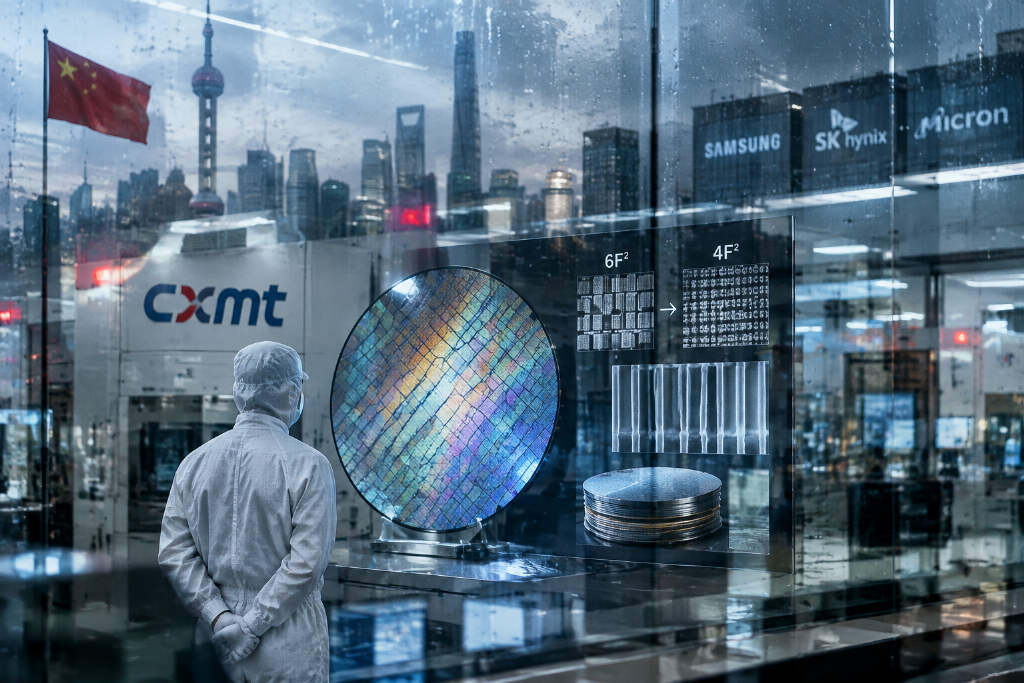
Changxin Memory Technologies, or CXMT, said it has made major progress in DRAM devices, 4F² cell architecture and hybrid bonding, a set of developments that quickly shifted investor attention to the global memory market. The concern outlined in the source report is straightforward: if a Chinese DRAM maker can break through a core technology barrier and pair that with a structure that lifts bit output per wafer, effective supply could rise faster than many had expected. The report focuses on two changes. One is the move from the mainstream 6F² cell layout to 4F². The other is CXMT’s self-developed VSG, short for Vertical Surrounded Gate, a vertical gate-all-around style transistor that supports that layout. Under the same process node, a 4F² cell is described as roughly one-third smaller than a 6F² cell, which in theory allows about 50% more memory cells in the same area, though chip-level gains would be lower once peripheral circuits are included. The analysis then walks through how a DRAM 1T1C cell works, why vertical transistors matter, where 4F² manufacturing becomes difficult, and how the timetable at Samsung, SK hynix and Micron compares with CXMT’s announcement. The source argues that near-term industry fundamentals may not change much, but the medium-term supply outlook after 2028 could look different if 4F² reaches production and yields scale.

800
CXMT’s DRAM 4F² and vertical transistor push raises questions for memory leaders
CXMT
Oct 16, 2026

Citi analyst says AI funding, not memory supply alone, is the key variable; stays bullish on HBM and SSD demand

China-based CXMT’s disclosure of progress on a new DRAM architecture has stirred fresh concern that more memory supply could pressure pricing. Peter Lee, a global markets semiconductor analyst at Citigroup, argued in an interview that the market may be reading too much into the announcement. In his view, there is still a gap between a technology reveal and high-volume manufacturing, and the bigger near-term variable for semiconductor investment is whether AI companies can keep raising enough capital to fund data center buildouts and compute purchases. Lee said the demand mix in memory has shifted away from the smartphone-led cycle of earlier years toward AI infrastructure, including HBM, server DRAM, SoCAMM2 memory modules and enterprise SSDs. He also cautioned that any assessment of Chinese capacity expansion needs to consider product mix, yields and customer adoption, not just headline output. On customer orders, Lee said long-term agreements matter more when they come with real financial commitments such as prepayments, deposits or escrow arrangements, because those terms raise the cost of double-ordering. He also said new fabs do not translate into immediate supply, estimating that some facilities may need about a year and a half from opening to meaningful effective capacity. Looking ahead, he sees continual learning as a possible new demand driver and estimated HBM demand could grow about 60% in 2027 and approach 70% in 2028.

980
Citi analyst says AI funding, not memory supply alone, is the key variable; stays bullish on HBM and SSD demand
Phison
Oct 16, 2026

Phison CEO K.S. Pua says CXMT's 4F² memory push is a market scare, not a near-term supply shift

Phison Electronics CEO K.S. Pua pushed back against market anxiety after Chinese DRAM maker ChangXin Memory Technologies, or CXMT, said it had completed the design of a next-generation 4F² memory cell architecture. In comments published after an Oct. 15 interview with Economic Daily, Pua said the reaction looked more like a "market ghost story" than an immediate competitive threat. His point was simple: a newly announced technology does not translate into instant mass production. Pua said the path from design disclosure to commercial output still runs through validation, yield improvement and full-scale manufacturing, all of which take time. He argued that the current shortage in memory supply will not be resolved in the short term and said Phison is still seeing strong customer demand. According to him, the company is not worried about a lack of orders; it is more concerned about shortages in materials that could delay shipments. The report also noted prior market pressure across memory stocks after news that CXMT, described as the world’s fourth-largest DRAM producer, aims to launch DDR5 server memory using the technology by the end of 2026. Elon Musk had also weighed in earlier, saying China can scale production faster than many expect once it masters a manufacturing process, though he added memory may be different because HBM and 3D stacking remain harder to catch up on.

970
Phison CEO K.S. Pua says CXMT's 4F² memory push is a market scare, not a near-term supply shift
Elon Musk
Oct 15, 2026

Musk says China will produce large volumes of memory chips by 2028

Elon Musk said in a post on X that China will be producing large amounts of RAM by 2028, weighing in on a discussion around the future of the memory chip market in Asia. His comment came in response to a column from South Korea’s Maeil Business Newspaper, which argued that the country’s memory chip sector could face oversupply in 2029 as new capacity comes online. The column said South Korea may have only two to three years to foster new growth industries before additional output changes the market balance. It also cited Gartner forecasts on the scale of the memory business over the next two years. Gartner expects global memory revenue to reach $837 billion in 2026, accounting for 54% of worldwide semiconductor sales, up from 27% in 2025. The research firm also expects supply to remain tight in 2027, even as memory revenue is projected to top $1 trillion. The report added that Chinese memory maker CXMT accounted for about 8% of global DRAM revenue in the first quarter, while shares of Samsung Electronics and SK Hynix had earlier come under pressure from related developments.

770
Musk says China will produce large volumes of memory chips by 2028
Elon Musk
Oct 15, 2026

Musk says China will produce large amounts of RAM by 2028 as Korean media warn of a 2029 memory market reversal

Global memory markets are enjoying an unusually strong upcycle driven by AI data center demand, but a Korean media commentary is starting to focus on what could come next: oversupply. The discussion gained fresh attention after Tesla CEO Elon Musk reposted a thread on X and wrote that China would be producing "large amounts of RAM" by 2028. The commentary, cited by research account P Equity Research and tied to South Korea’s Maeil Business Newspaper, argues that Korea’s economy is becoming increasingly dependent on Samsung Electronics and SK hynix. As those companies and Chinese memory makers expand output, the global balance between supply and demand could swing in 2029. Market forecasts cited in the report show how large the current boom has become. Gartner said in an August forecast that global semiconductor revenue could reach about $1.56 trillion in 2026, with memory contributing $837.3 billion, or roughly 54% of the total. Gartner also projected memory revenue would top $1 trillion in 2027, helped by AI infrastructure buildouts and rising DRAM and NAND Flash prices. At the same time, China’s CXMT is pushing ahead in both technology and capacity. Reuters reported that the company had moved its fifth-generation memory platform into mass production and launched a 24Gb LPDDR5X chip, while SemiAnalysis estimated its share of global DRAM output could rise from about 11% in 2025 to 17% by the end of 2028.

630
Musk says China will produce large amounts of RAM by 2028 as Korean media warn of a 2029 memory market reversal
Samsung Electronics
Oct 15, 2026

Samsung, SK hynix and Micron capacity buildout may become South Korea’s competitive lever in DRAM, expert says

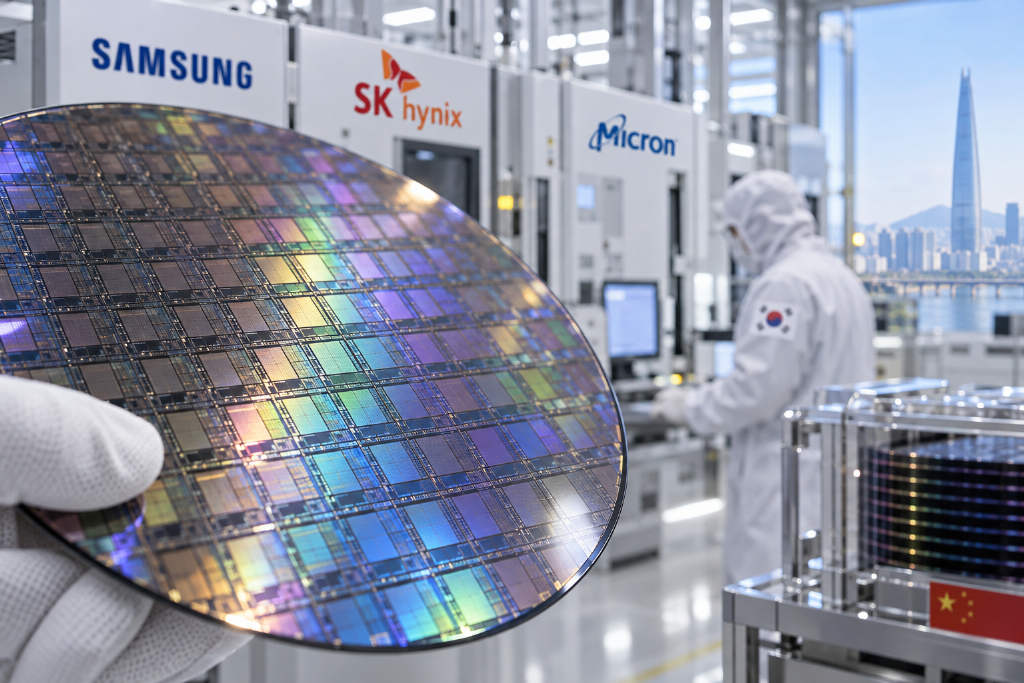
Samsung Electronics, SK hynix and Micron are all pushing ahead with new wafer fabs as AI-driven memory shortages reshape the market, but concerns are rising that the next phase could end in oversupply. Kim Hyung-joon, head of the Next Generation Intelligent Semiconductor Foundation in South Korea, argued in an interview published by The Korea Herald on Oct. 15 that the expansion wave is not only a pricing risk. In his view, it could also help Korean manufacturers recover share in conventional DRAM segments that have become more accessible to Chinese rivals. Kim estimated the current supply gap in memory at 30% to 40%, far beyond the roughly 2% imbalance that historically triggered sharp price swings. He said that scale of shortage suggests the traditional memory cycle has changed in a fundamental way. He also linked China’s gains in standard DRAM partly to Korean suppliers shifting capacity toward higher-margin AI memory, leaving openings in lower-cost products. Based on his estimates, Samsung produces about 720,000 DRAM wafers per month, SK hynix about 550,000 and Micron roughly 300,000 to 400,000. He warned that if AI demand fails to keep pace with the industry’s multiyear fab plans, the market could still face oversupply and falling prices. At the same time, he said additional output would give major suppliers room to redirect production back to conventional DRAM and limit the growth of China’s CXMT.

830
Samsung, SK hynix and Micron capacity buildout may become South Korea’s competitive lever in DRAM, expert says
AI
Oct 14, 2026

AI chip selloff spreads globally as investors shift from growth bets to return scrutiny

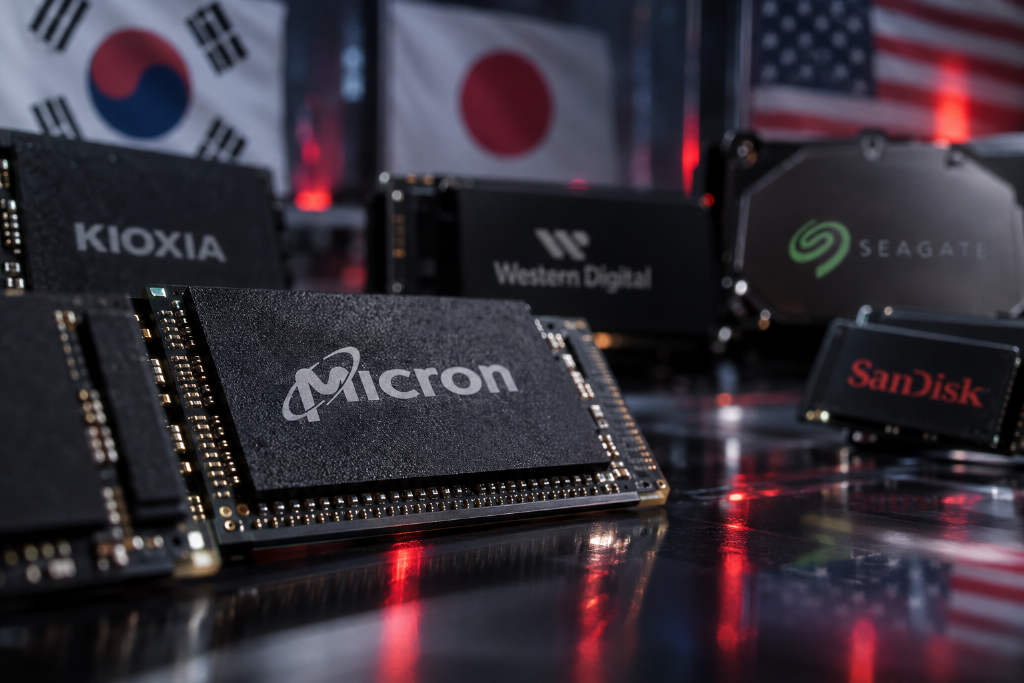
A broad selloff in AI-linked chip stocks swept across Asia and the U.S. on Tuesday, with storage names taking some of the heaviest losses. South Korea’s KOSPI fell 5.5%, Japan’s Kioxia dropped more than 10%, and the Philadelphia Semiconductor Index briefly fell more than 3% before trimming losses by the close. Micron, Western Digital, Seagate and SanDisk all came under pressure during the session. According to Reuters, the move reflects more than a single catalyst. After nearly four years of enthusiasm around AI infrastructure spending, investors are paying closer attention to rising interest rates, bond-market volatility, higher financing costs and whether large capital expenditures can produce the returns markets have priced in. The shelving of Firmus’ planned $5 billion IPO in Australia and debt issuance by Tencent and SoftBank added to concerns around funding conditions. China-based memory chipmaker CXMT also became a focal point after disclosing progress on its 4F² DRAM architecture. Some market participants said the update may have accelerated profit-taking in crowded memory trades, while others argued the company remains far from proving mass production capability, especially in advanced areas such as HBM. The broader shift, analysts said, is that investors are no longer rewarding AI exposure alone and are increasingly asking which companies can convert spending into revenue, profit and cash flow.

570
AI chip selloff spreads globally as investors shift from growth bets to return scrutiny
Total 237 items
Go topage