Hefei
Oct 21, 2026

Why Hefei’s bets on panels and memory are drawing attention in South Korea

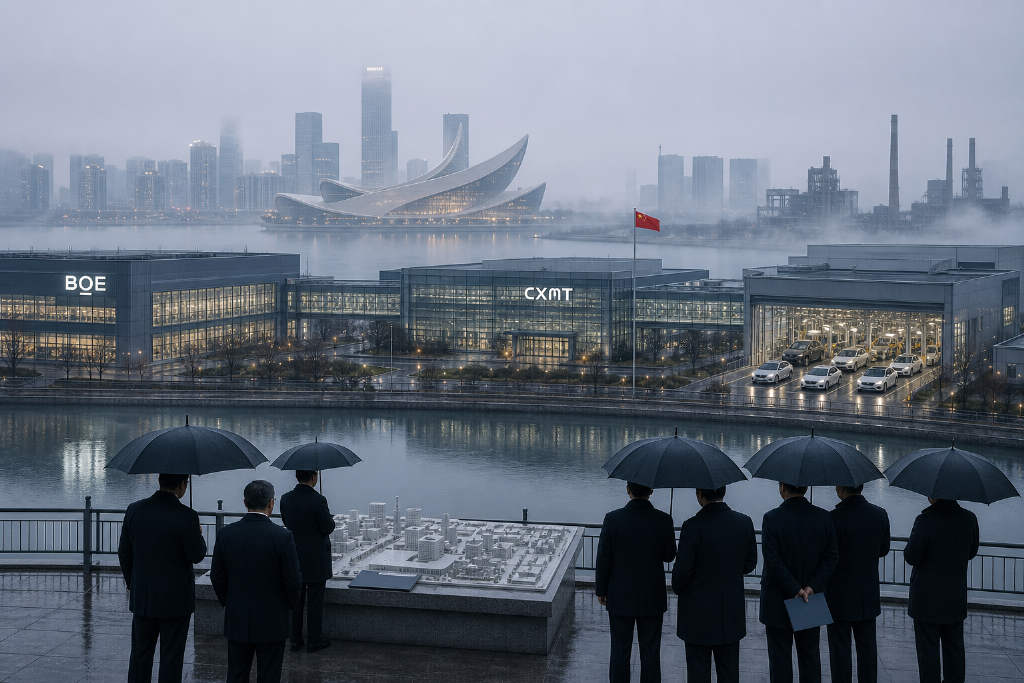
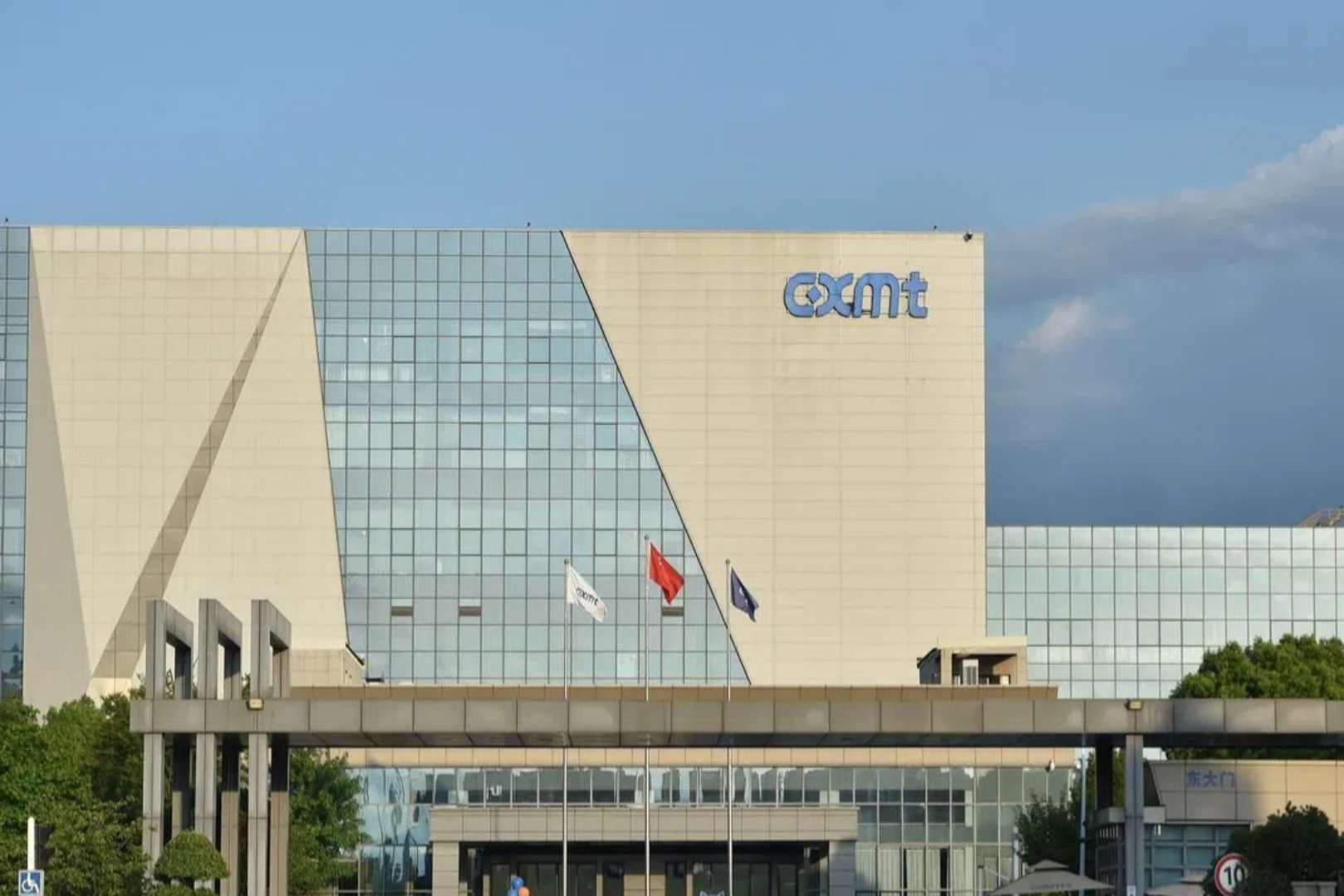
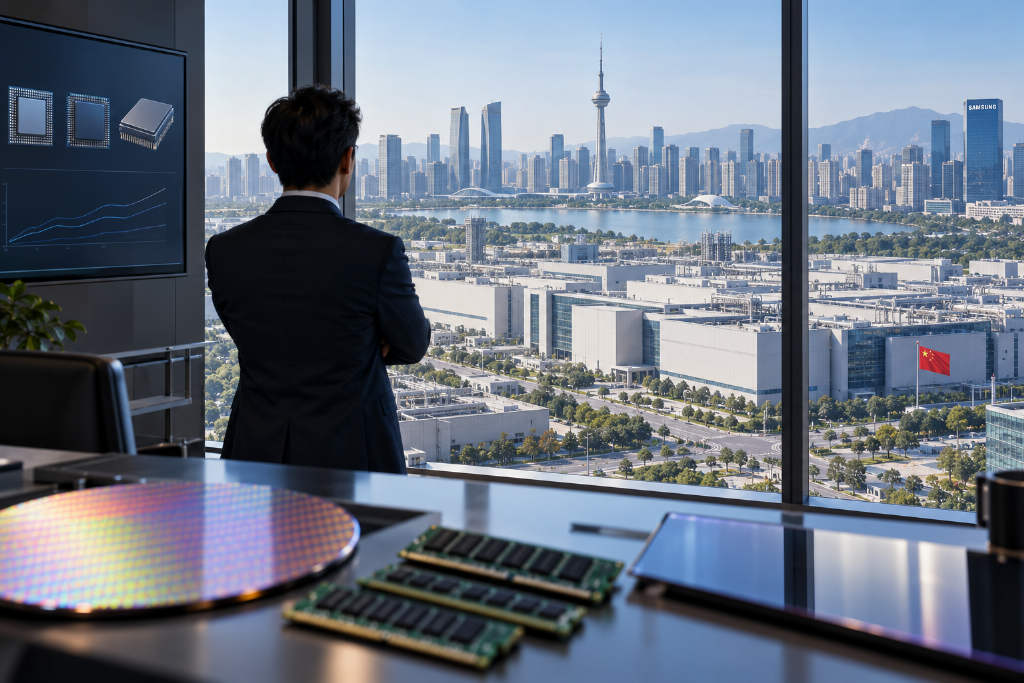
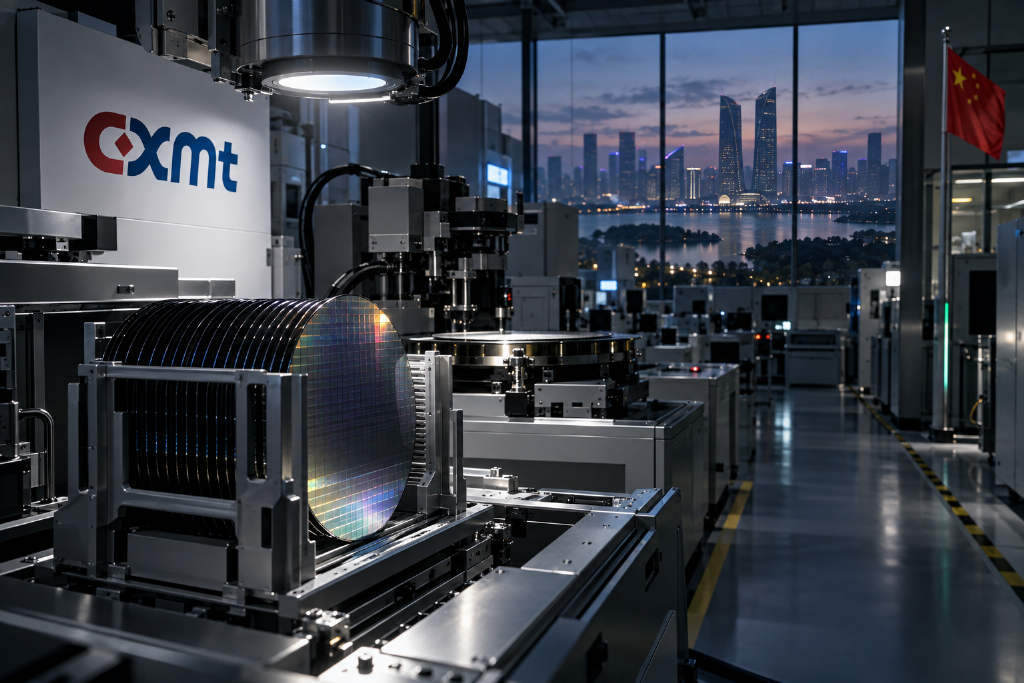
Elon Musk’s repost of a South Korean financial column, followed by his remark that China will produce large amounts of RAM in 2028, has pushed Hefei back into the spotlight. The immediate market focus was ChangXin Memory Technologies, or CXMT, after the company disclosed plans to launch DDR5 based on a 4F² architecture by the end of this year. Shares of Samsung Electronics, SK Hynix and Micron fell after that disclosure, even as some analysts said the sell-off looked excessive. The article argues that South Korea’s sensitivity is rooted in experience. Hefei had already played a major role in reshaping the LCD panel business through its support for BOE, helping build high-generation production lines and a local supply chain that later squeezed Korean manufacturers out of LCD. It says Hefei then applied a similar approach to DRAM by backing CXMT with state capital, land, financing support and long-term tolerance for losses. Rather than framing Hefei as a conventional venture capital success story, the piece says the city’s model is about building industrial autonomy: investing through downturns, creating local demand through clustered manufacturing, and exiting once companies can fund themselves. It also notes that Samsung still holds a strong position in high-end OLED, while Korean memory makers retain deep moats in high-value HBM products.
2580
Why Hefei’s bets on panels and memory are drawing attention in South Korea
ChangXin Memory Technologies
Sep 28, 2026

CXMT plans new R&D project and phase-two wafer back-end testing base

ChangXin Memory Technologies said it plans to use 13 billion yuan in excess raised funds to build a new technology research and development project. The company also said it intends to provide 5 billion yuan in excess raised funds to its wholly owned subsidiary, ChangXin Memory Products (Hefei) Co., Ltd., through a capital increase and loans. The subsidiary will use the money to build the phase-two project of a memory wafer back-end testing base. The total planned investment for the two projects stands at 24.1 billion yuan and 10.8 billion yuan, respectively. The update was cited by Odaily, which referenced Sina Finance.

1270
CXMT plans new R&D project and phase-two wafer back-end testing base
Hefei
Aug 19, 2026

How Hefei Built a 20-Year Industrial Investment Playbook From BOE to CXMT

The listing of ChangXin Technology has pushed Hefei’s long-running industrial investment strategy back into focus. In the original MarsBit article, the city’s state-owned capital system is estimated to hold about 33.1% of the company under a neutral scenario that values ChangXin at RMB 2 trillion, implying a stake worth more than RMB 660 billion. That figure is presented as nearly half of Hefei’s projected 2025 GDP of RMB 1.4 trillion. The piece traces Hefei’s investment record across three major sectors: display panels, semiconductors, and new energy vehicles. It recounts how the city backed BOE during the 2008 financial crisis with RMB 17.5 billion for mainland China’s first TFT-LCD Gen 6 line, later exiting with roughly RMB 14 billion in net profit. It then turns to ChangXin, which the article says became the city’s highest-return investment after years of losses and heavy capital support, and to NIO, which signed with Hefei state capital and strategic investors in April 2020 before the city expanded its automotive base with BYD and Volkswagen Anhui. The article does not present Hefei’s record as a streak of perfect calls. It also lists failed projects, including Xinhao Plasma, LDK Solar, Rongsheng Heavy Industries, and WM Motor. Its central argument is that Hefei’s edge came not from luck alone, but from a full-cycle industrial investment approach spanning fundraising, deployment, post-investment management, exits, and unusually high tolerance for failure.

2600
How Hefei Built a 20-Year Industrial Investment Playbook From BOE to CXMT
CXMT
Jul 28, 2026

Inside CXMT’s Hefei campus: rank-and-file staff remain outside the equity windfall as expansion reshapes the area

On July 27, CXMT (688825.SH) surged more than fivefold at the open and closed at RMB 49 per share, lifting its market value to RMB 3.28 trillion and making it the most valuable company in China’s A-share market. But a field report from Time Weekly at the company’s Hefei headquarters suggests the stock euphoria has yet to reach most frontline employees. According to employees interviewed by the outlet, equity incentives come with clear rank requirements. Staff said eligibility starts at level 9, equivalent to section-chief rank, while many ordinary employees are concentrated at levels 11 and 12. One employee said online claims about “wealth creation” among CXMT workers do not reflect the situation for most newer hires. The report also describes tight information controls and elevated security around the campus. Employees said many staff in R&D and wafer workshops must surrender their phones during work, and multiple workers declined interviews, saying management had instructed them not to speak externally. At the same time, CXMT’s expansion is spilling beyond the factory gates. Construction on the company’s third-phase project is under way, suppliers have gathered nearby, and the Changgang area has seen stronger commercial activity and rising housing prices since 2021, according to local residents interviewed by the publication.

2790
Inside CXMT’s Hefei campus: rank-and-file staff remain outside the equity windfall as expansion reshapes the area
CXMT
Jul 27, 2026

CXMT’s STAR Market debut lifts valuation above $3.2 trillion yuan, handing Hefei a paper gain of more than 1.2 trillion yuan

Changxin Technology, also known as CXMT, made its debut on Shanghai’s STAR Market on July 27, 2026, closing at 49 yuan, up 465.82% from its offer price and pushing its market capitalization above 3.2 trillion yuan. That made it the largest company on China’s A-share market by market value, according to the source text, surpassing Industrial and Commercial Bank of China. Behind the listing stands Hefei, which spent a decade backing the memory-chip maker through losses that accumulated to 36.65 billion yuan. Based on an approximately 36.79% holding across Hefei’s state-owned capital system, the city’s paper stake is now worth more than 1.2 trillion yuan. The article traces founder Zhu Yiming’s path from GigaDevice to CXMT, the company’s legal acquisition of DRAM technology assets from Qimonda, the 2019 launch of its 8Gb DDR4 chip, and the severe 2023 downturn that drove annual losses to 16.34 billion yuan. It also details how Hefei kept adding capital, including nearly 2 billion yuan used to buy existing shares at the end of 2024, and argues that the investment reshaped the city’s industrial base, expanding its integrated-circuit cluster to more than 450 companies by the end of 2025.

3450
CXMT’s STAR Market debut lifts valuation above $3.2 trillion yuan, handing Hefei a paper gain of more than 1.2 trillion yuan