
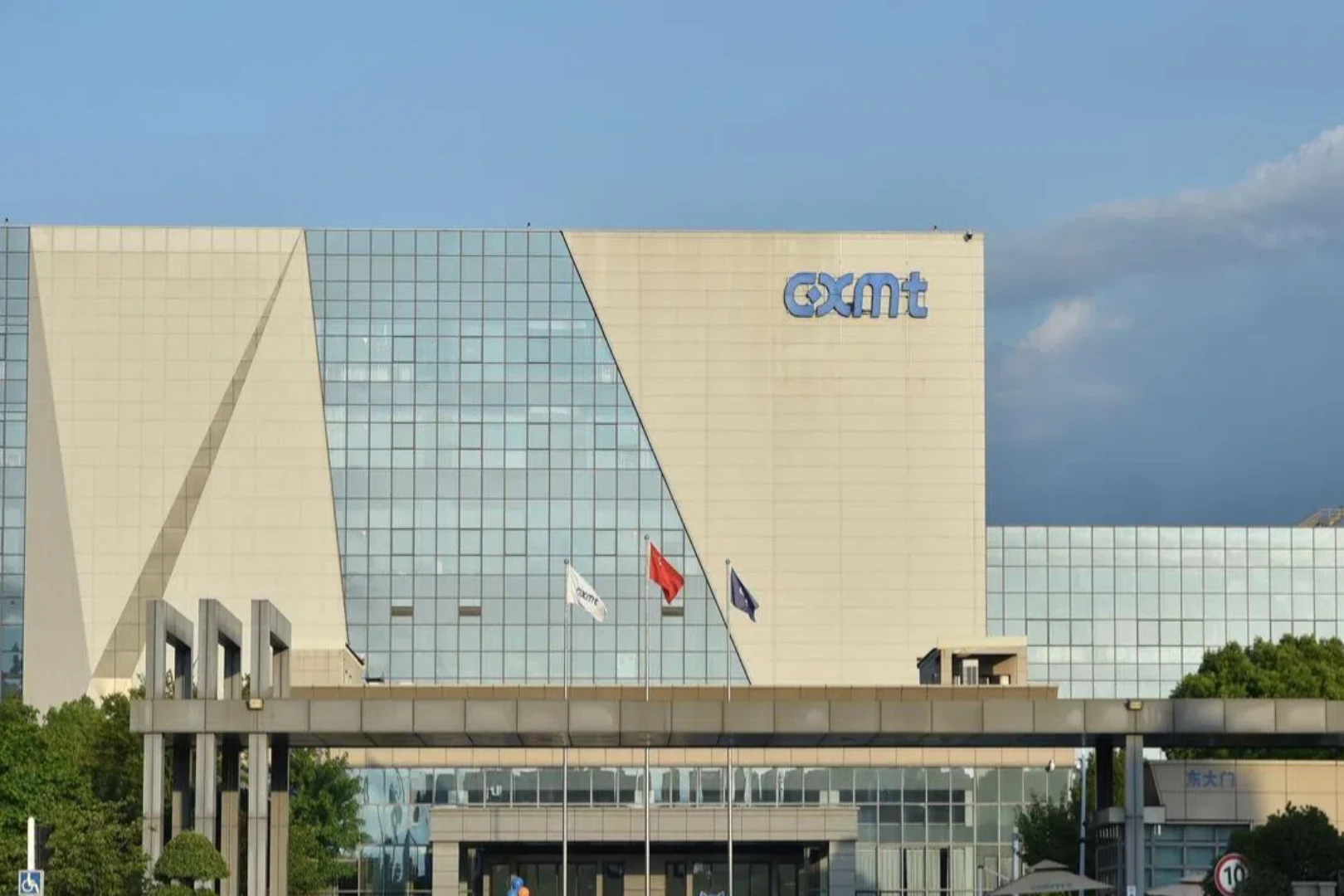
Changxin Technology debuted on Shanghai’s STAR Market on July 27, 2026, closing at 49 yuan, up 465.82% from its issue price. Its market value topped 3.2 trillion yuan, the source article said, putting the company ahead of Industrial and Commercial Bank of China and making it the largest A-share listed company by market capitalization.

The listing also crystallized a return for Hefei, which backed the company for a decade. Based on an approximately 36.79% stake held through the city’s state-owned capital system, Hefei’s paper holding is now worth more than 1.2 trillion yuan. The source text said the gain from Changxin alone helped push the total A-share market value of Hefei-listed companies past 4 trillion yuan, lifting the city to second place in the Yangtze River Delta by A-share market capitalization.
Zhu Yiming’s long pursuit of a Chinese memory champion
To explain why Hefei was willing to commit, the article first turns to Zhu Yiming.
Zhu, a native of Yancheng in Jiangsu province, entered Tsinghua University in 1989. After earning his master’s degree, he went to the United States for further study, shifted into semiconductors, and studied at Stony Brook University. He later worked in Silicon Valley as a project manager at a memory-chip company. There, he saw that memory chips were among the most widely used and standardized categories in semiconductors and were essential to nearly every electronic device, while Chinese players were largely absent from the field.
In 2004, Zhu left his job and returned to China to start a company. His initial funding totaled $920,000, raised with several Tsinghua alumni. After the 2005 Lunar New Year holiday, he founded what later became GigaDevice in an unfinished two-story space inside Tsinghua Science Park. Rather than taking on Samsung and SK Hynix head-on, he entered the NOR Flash segment and used it to build an initial base. GigaDevice went public in 2016.
Zhu’s ambitions, however, were broader. The article quotes him as saying, “If a computer is a crown, the CPU is the jewel on the crown, and memory is the base of the crown.” He also said, “Whoever leads memory technology can dominate the entire integrated circuit industry.” Building a Chinese version of Samsung Electronics was described as the goal he had held from the first day of his entrepreneurial career.
The 2016 decision to launch the “506” project
In 2016, Samsung, SK Hynix and Micron controlled 96% of the global DRAM market, while China had almost no domestic production capability, according to the source text. DRAM demanded heavy capital spending, engineering talent and advanced technology. It was also deeply cyclical, which meant new entrants were likely to face prolonged losses.
That was the setting in which Hefei chose to move forward with what later became known as the “506” strategic project: Changxin’s 12-inch memory wafer fabrication base, with total investment of roughly 150 billion yuan. The first phase alone carried a budget of 18 billion yuan, of which Hefei Industry Investment contributed 14.4 billion yuan, or 80%.
The article argues that Hefei did more than write an initial check. It stayed with the company as losses piled up. Even when Changxin was posting annual deficits and cumulative losses eventually exceeded 36.6 billion yuan, Hefei’s state-backed capital did not withdraw. At the end of 2024, after other investors exited, a city-owned state capital platform spent nearly 2 billion yuan to acquire existing shares.
The source cites a Hefei Industry Investment executive as saying that weak links in the industrial chain, including chips, rarely generate capital returns in the short term and often require large pools of patient capital over multiple industry cycles.
How Changxin made mainland China’s DRAM breakthrough
The company’s path was far from smooth. The article compares Changxin with Fujian Jinhua, another DRAM project launched in the same period that was halted before mass production after Micron accused it of stealing trade secrets.
Changxin took a different route. Through legal negotiations, and at a cost described only as “hundreds of millions of dollars,” it acquired from bankrupt German memory maker Qimonda more than 10 million DRAM technical documents, 2.8 TB of core data, and licenses to implement a large number of Infineon DRAM technology patents.
In 2018, Zhu made a move that drew strong attention from the capital market: he stepped down as general manager of GigaDevice and became full-time chairman and CEO of Changxin. The article says he also pledged not to take salary or bonuses before the project turned profitable.
In September 2019, Changxin launched its self-designed and self-manufactured 8Gb DDR4 chip, marking what the source describes as mainland China’s historic “zero-to-one” breakthrough in DRAM.
The 2023 downturn and Hefei’s continued support
The hardest test came in 2023. Global DRAM prices dropped by more than 40% that year, while smartphone and PC shipments weakened, pushing the sector into a deep downcycle. The three dominant suppliers maintained high shipment volumes with their cost advantages, increasing pressure on newer entrants.
Changxin was losing money on every chip sold, the article said, but still accelerated work on 1x-nanometer manufacturing and key barriers to DDR5 mass production. It reported a 2023 loss of 16.34 billion yuan, the largest since its founding, bringing cumulative losses over ten years to 36.65 billion yuan.
Hefei did not pull back. The source says the Standing Committee of the Hefei Municipal People’s Congress reviewed and approved a capital increase and expansion proposal that year. Then, at the end of 2024, after Country Garden Venture Capital exited, a city-owned state capital platform paid nearly 2 billion yuan for the old shares.
The article also describes an institutionalized fault-tolerance framework in Hefei. Projects must be reviewed by the finance and economics committee of the local people’s congress before entering the pipeline, and major decisions must be voted on by the standing committee. As long as due diligence and procedures are compliant, decision-makers do not bear personal responsibility even if a project ultimately loses money. According to the source, Hefei has never disciplined any institution or individual for a failed industrial investment.
A profit turn in 2025, then a sharp jump in 2026
The inflection point arrived in 2025, the article says, as AI computing demand triggered a new memory cycle. A single AI server uses three to five times as much DRAM as a traditional server. At the same time, Samsung, SK Hynix and Micron shifted capacity toward higher-margin HBM products, widening the supply gap in conventional DRAM.
Changxin had, by then, completed its product transition from DDR4 to DDR5. Utilization at its three 12-inch wafer fabs rose from 85% to 95%. With demand rising, supply tightening and more capacity coming online, the company posted its first full-year profit in 2025, with net profit attributable to shareholders of 1.875 billion yuan.
In the first quarter of 2026, revenue reached 50.8 billion yuan and net profit attributable to shareholders came in at 24.762 billion yuan, up 1,688% year on year. The article says that worked out to nearly 400 million yuan in profit per day. At that pace, Changxin had almost erased the losses of its first ten years in less than half a year.
Beyond paper gains, a reshaped city economy
The source argues that Hefei’s return extends beyond the market value of its stake.
Ten years ago, the area around Changxin’s plant in the northwestern outskirts of Hefei was still a mix of farmland and undeveloped land. It has since turned into a large industrial zone surrounded by R&D buildings, employee apartments, canteens, commercial facilities, fast-food outlets and supermarkets, informally nicknamed “Changgang CBD” in the article.
By the end of 2025, Changxin had 19,300 employees, including more than 6,000 R&D staff. Most were between 25 and 35 years old, and most held at least a master’s degree. The article says that group has begun changing consumption patterns and the social character of nearby districts.
The industrial effects were broader. With Changxin as a core anchor, Hefei had gathered more than 450 integrated-circuit companies across design, manufacturing, packaging and testing, becoming one of the few Chinese cities with a full semiconductor chain. Output from Hefei’s integrated-circuit industry chain was about 18 billion yuan in 2016 and had climbed to 151.4 billion yuan by 2025, a 7.4-fold increase.
The article also points to industrial coordination. Changxin’s memory chips, BOE’s display panels, and the electric-vehicle businesses of NIO and BYD together form what the source calls Hefei’s “chip-screen-auto integration” landmark. Nexchip produces display driver chips for BOE, while AutoChips supplies automotive-grade MCU chips to BYD and NIO.
Why the “Hefei model” is hard to copy
After Changxin’s listing, attention returned to the so-called Hefei model. The article says around 50 inspection and study groups visit the city every month, generating millions of words of research material, yet no fully reproducible template has emerged.
In Hefei’s own telling, four conditions are required. The first is fiscal capacity. The city’s 6 billion yuan investment in BOE in 2008 was equal to 20% of its fiscal revenue that year, and the Changxin project required carrying ten years of losses totaling 36.6 billion yuan. The second is a robust accountability and exemption system. The third is accurate industrial judgment, with bets placed at cyclical lows rather than on crowded themes. The fourth is a favorable policy window.
On that last point, the article cites the macro team led by Song Xuetao at Guojin Securities, which said Changxin benefited from the overlap of import substitution, memory security and expanding AI demand.
From land finance to equity finance
The article closes with a broader argument about urban development. It says cities need a new engine beyond land finance, and presents Hefei’s path as one answer: use state capital as early-stage funding, then use the capital market to magnify the result and build a system that can keep producing strong companies.
From 2015 to 2021, during the peak years of China’s real-estate cycle, Hefei’s total land-transfer revenue was about 551.6 billion yuan, according to the source text. The paper gain on the city’s holdings in Changxin alone has now approached 1 trillion yuan.
In that framing, Changxin’s listing is not only a story about one company or one city. It also reflects a shift in how Chinese cities compete: away from pure investment promotion and toward industrial cultivation, away from land finance and toward equity finance, and away from transplanting a single large company and toward building an entire industrial ecosystem.