
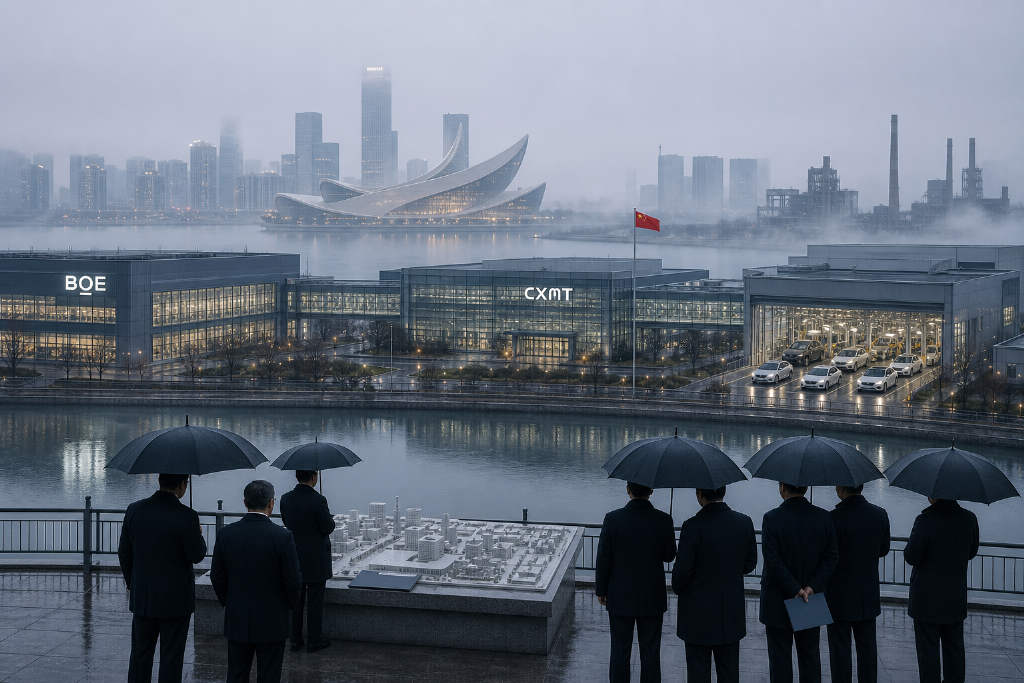
ChangXin Technology’s listing has revived an old question around Hefei: how did a city that was once seen as a quiet provincial capital build one of China’s most closely watched industrial investment records?
The MarsBit article frames the answer through scale. Under its neutral scenario, if ChangXin reaches a market value of RMB 2 trillion, Hefei’s state-owned capital system would hold about 33.1% of the company, worth more than RMB 660 billion. The piece compares that figure with Hefei’s projected 2025 GDP of RMB 1.4 trillion and says the city has effectively earned back “half of Hefei” through a decade-long bet.
Three major bets over two decades
The article looks back at three sectors that came to define Hefei’s investment profile: display panels, semiconductors, and new energy vehicles.
The first turning point came during the 2008 global financial crisis, when BOE Technology was short of cash. Hefei moved in counter-cyclically and decided to bring BOE into the city, backing construction of mainland China’s first TFT-LCD Gen 6 line. Total investment reached RMB 17.5 billion. The article says Hefei’s full-caliber fiscal revenue that year was about RMB 30.1 billion, which meant the project alone was close to half of the city’s annual fiscal intake. To raise the money, Hefei even suspended its subway project that year.
The investment later paid off. Starting in December 2017, Hefei’s state-owned investors gradually reduced their BOE holdings and completed the exit with an estimated net profit of about RMB 14 billion, according to the article.
The second bet was semiconductors. The article says the sector’s strategic value became even clearer in 2018 and 2019 as access to advanced overseas chips tightened for China. Still, it notes that Hefei’s push started earlier. From 2013, the city began allocating resources systematically to build an integrated circuit base, including Beijing Junzheng in IC design, Nexchip in wafer foundry operations, and ChangXin Memory Technologies.
After nearly a decade of cultivation, the article describes Hefei as one of the few domestic semiconductor hubs with design, manufacturing, and packaging and testing across the full chain. Within that group, ChangXin is described as the riskiest card. Memory chips are labeled a capital-intensive sinkhole, and the company is said to have stayed in the red for years, including a loss of about RMB 30 billion in 2022.
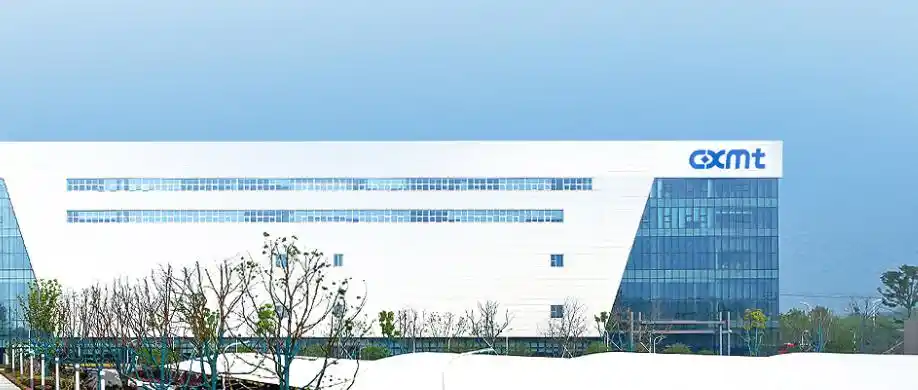
Hefei kept backing it. The article says the city stayed alongside the company through about a decade without profit until ChangXin Technology listed on Shanghai’s STAR Market on July 27, 2026. It presents that investment as the highest multiple return in Hefei’s history.
The third pillar was new energy vehicles. In 2019, NIO posted a loss of RMB 11.4 billion, and the article says its cash position was at one point severe enough to support operations for only three weeks. Hefei stepped in quickly. On April 29, 2020, NIO signed an agreement with Hefei state capital and several strategic investors.
NIO then set up its China headquarters in Hefei and built an integrated base covering research and development, sales, and manufacturing. The city continued to add capacity. In 2021, it brought in BYD to establish a production base. Around 2024, Volkswagen Anhui, described in the article as Volkswagen’s first joint venture in China focused on new energy vehicles, started rolling out new models.
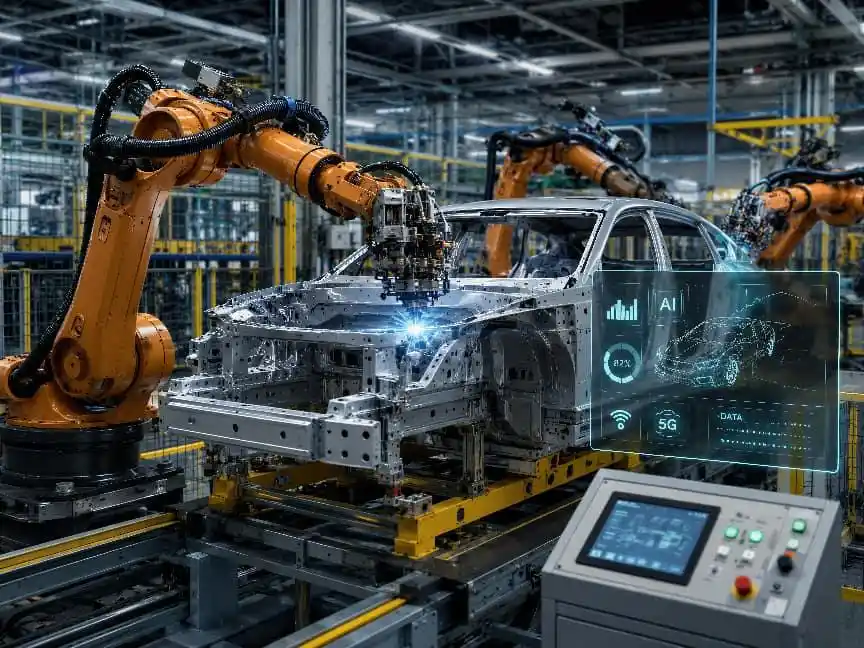
By 2025, the article says, Hefei had gathered six complete vehicle makers: JAC, NIO, BYD, Volkswagen, Changan, and Ankai. Around them, it had formed a full supply chain in batteries, motors, electronic controls, and smart cockpit systems. The piece characterizes this as investment-led industrial attraction and says it created a cluster worth hundreds of billions of yuan.
“Not venture capital, but industrial capital”
The article pushes back on the idea that Hefei simply got lucky. It cites Yu Aihua, then party secretary of Hefei, who said on CCTV’s Dialogue program: “It is not venture capital, but industrial capital; not gambling, but striving.”
Its point is that writing big checks was only the visible part. The harder part came before and after the investment. Around 2010, the article says, there were very few pools of capital in China willing to fund integrated circuits or high-tech startups. Government funds were cautious because of concerns over accusations of state asset losses. Private money was more interested in real estate and entertainment. Overseas angel investors, while more tolerant of risk, tended to favor internet projects that could map onto U.S. equity markets rather than early domestic hard-tech companies.
That left a gap in China’s industrial fund ecosystem. In the article’s telling, there was little mature capability across the full process of fundraising, investing, managing, and exiting. Buying the company was only the beginning. The real work was how to operate it well, lift its value, and grow it over time instead of flipping it for a quick gain.
Fundraising: from budget allocation to investment capital
One of the article’s central arguments is that Hefei changed the way local public money was organized. Projects such as BOE and ChangXin required tens or hundreds of billions of yuan, far beyond what a city budget could absorb in a simple spending model. Hefei’s answer, it says, was to turn fiscal appropriation into investment and funds into fund structures.
In 2015, Hefei consolidated RMB 18 billion in government funds and reorganized them into three major state-owned platforms: Jiantou, Chantou, and Xingtai. They were not given identical roles. Hefei Jiantou focused on bringing in leading companies and took the lead in landing BOE, NIO, and Nexchip, with a style defined by large commitments and long holding periods. Hefei Chantou focused on early-stage, smaller, and technology-oriented bets. Hefei Xingtai served as a financial backstop, providing equity, loans, bonds, guarantees, insurance-style support, and leasing services to key projects and upstream and downstream companies.
The article also says Hefei worked with market-oriented institutions including CITIC and CICC to build a “4+2+N” fund structure spanning seed, angel, technology innovation, and industrial growth stages. That framework is credited with attracting nearly RMB 400 billion in social capital into Hefei’s industrial chain.
Investment: looking for certainty inside uncertainty
On deployment, the article says Hefei tried to identify sectors with the highest degree of structural certainty even when short-term outcomes were unclear.
Its BOE case is built around that logic. In 2008, global panel makers were cutting investment, which briefly opened a window for technology transfer to China. Most cities still operated through a model dominated by land finance and industrial infrastructure, with little experience in advanced technology investing. High-generation LCD lines required huge capital and carried major risk. Hefei still committed RMB 17.5 billion to support BOE’s Gen 6 line.
In 2010, the line entered mass production and produced mainland China’s first 32-inch LCD panel. The article treats that as a play on domestic substitution, not a random bet.
It applies the same logic to ChangXin. Once displays were localized, the chips that powered them were still heavily dependent on imports. Hefei therefore shifted toward memory chips and, according to the article, invested a cumulative RMB 24.8 billion. Even after heavy losses in 2022, it continued to stay the course until 2025, when the company had grown into what the article calls the world’s fourth-largest DRAM maker. It also says Hefei then caught an AI-driven supercycle in which memory became a scarce industrial resource.
Post-investment management: building the chain after landing the project
The piece places unusual emphasis on what happened after the investment was made. In its view, industrial investment does not end at funding or listing.
After BOE arrived in Hefei, suppliers and supporting companies followed. The article names Corning’s glass substrates and Sumitomo Chemical’s polarizer business as examples of upstream and downstream support that set up locally. It says the display ecosystem brought in more than RMB 100 billion in investment and over 70 supporting companies, eventually forming an industrial cluster.
The same pattern appeared in semiconductors. Hefei filled out the chain across design, packaging, and manufacturing so that returns did not depend on a single company. The article presents this as a system-level approach rather than a pure financial one.
Exits: gradual reductions instead of abrupt selling
Exit, in the article’s framework, is the most sensitive stage in the cycle. If an investor exits too fast or at the wrong time, it can disrupt the company and weaken confidence in later redeployment of capital.
So far, it says, Hefei has generally moved with restraint. BOE was reduced in stages after its earnings stabilized. After NIO emerged from crisis, Hefei had reportedly cashed out about RMB 10.5 billion in total while still retaining roughly 8% of the company. For ChangXin, the article says the city will only be able to reduce holdings gradually after the lock-up period expires.
That full-cycle capacity across fundraising, deployment, management, and exits is presented as the line separating industrial investment from speculation. In the article’s words, simply buying and reselling is gambling; helping a company grow and building an industry around it is industrial capital.
The record also includes failures
The article does not treat Hefei as infallible. It says the city’s “stock god” image has another side: projects that failed, lost money, or forced strategic reversals.
In 2009, while display technology routes were still contested, Hefei invested not only in BOE but also in a plasma display panel project, Xinhao Plasma. LCD eventually became the mainstream technology and plasma was phased out. Over three years, the article says, Xinhao lost more than RMB 1 billion. The production line was shut down and equipment was dismantled and sold.
In 2010, Hefei brought in solar giant LDK Solar and invested in what the article calls the world’s largest single solar photovoltaic project at the time. Later, global overcapacity in photovoltaics and anti-dumping and countervailing measures from Europe and the United States pushed LDK into deep trouble. Hefei’s investment was described as being almost wiped out.
The article also mentions Rongsheng Heavy Industries. The original plan involved provincial and municipal funding to upgrade shipping channels, but when the shipping industry hit a downturn in 2013, the wider Rongsheng group unraveled. Another case was WM Motor. In 2020, Hefei’s industrial investment guidance fund led its Series D financing with RMB 1 billion. In 2023, WM Motor filed for bankruptcy reorganization with liabilities of more than RMB 20 billion.
The article adds that many small and mid-sized projects never made headlines at all, and there is no guarantee that every target in Hefei’s portfolio worked out. Even its successes were not always clean one-shot calls. BOE, for example, is described as a case of investing, exiting, and then investing again, with repeated adjustments through a larger cycle rather than a single dramatic all-in move.
Its strategic labels also changed. The article notes that in the early version of “芯屏汽合,” the fourth character was not “汽” for vehicles but “器,” referring to equipment manufacturing and industrial robotics. At the end of December 2020, Hefei formally switched from “器” to “汽,” aligning the slogan with its turn toward new energy vehicles. The article uses that shift to argue that Hefei was not clairvoyant. It changed course when needed.
Failure tolerance as part of the model
What Hefei built, the article argues, was not just a record of wins but a tolerance framework that made those bets possible in the first place.
Traditional government guidance funds often operate with extremely low tolerance for losses, sometimes effectively requiring zero losses because of concern over state asset preservation. The article says that kind of restraint makes it difficult to invest in technology sectors with high risk, heavy capital needs, and long timelines.
Hefei moved earlier than many places in formalizing a wider margin for failure. In 2014, it was among the earlier cities in China to write “due diligence exemption and tolerance for failure” into fund management rules. Under the article’s figures, angel funds were allowed an overall loss tolerance rate of 30%, while guidance funds were allowed 10%. By 2023, Anhui’s provincial seed fund loss tolerance had been raised to 50%, and the Young Eagle plan’s special fund reached 80%.
The article summarizes that as a willingness to miss on eight out of 10 projects. It describes that ratio as rare nationwide and makes it central to Hefei’s ability to act when others were hesitant.

The article links Hefei’s investing style to scientific research
In its final section, the piece shifts from project history to a broader way of thinking. It recalls a scientist who graduated from the University of Science and Technology of China’s physics department in 1986. At the time, the school offered research directions including crystals, semiconductors, and lasers, yet Hefei did not even have a proper laboratory for that work.
The scientist, described by the author in 2026 as someone whose students are now found everywhere, said: “It didn’t even have a single decent lab. The whole thing was just painting a big picture for me.” He then added: “When USTC came to Hefei in 1958 and said it wanted to build atomic bombs and missiles, that was also painting a big picture. On a broader level, studying for the rise of China was also painting a big picture.”
From there, the article argues that Hefei’s industrial investment style looks less like prophecy and more like research. It starts with a direction, accepts uncertainty, explores unknown territory, and follows national strategic needs in areas such as chip shortages, display shortages, energy security, and other bottlenecks.
Many cities now want to copy Hefei and identify the next “芯屏汽合,” whether in quantum technology, nuclear fusion, nanotechnology, or AGI. The article’s answer is that the sector labels may be copied, but the underlying investment mindset may not be easy to reproduce. It traces that mindset to a longer history, including “Two Bombs, One Satellite,” the move of USTC to Hefei, and the city’s long period of relative obscurity as a provincial capital.
The piece closes by rejecting the idea of a natural prophet or a simple city myth. What remains, it says, is a habit built through repeated successes and failures: the ability to place bets in uncertainty, accept losses, stay patient, and turn ambitious plans into real industries.
The original article was published by the WeChat public account Naojiti (ID: unity007) and written by Canghu, as cited by MarsBit.