

CXMT (688825.SH) surged more than fivefold at the open on July 27 and closed at RMB 49 a share, taking its market capitalization to RMB 3.28 trillion and making it the most valuable company on China’s A-share market. Yet a visit by Time Weekly to the company’s Hefei headquarters found that the stock-market frenzy has little immediate connection to most frontline workers.
At 11:45 a.m. that day, a Time Weekly reporter overheard employees talking over lunch near the headquarters: “How many shares does he have?” “50,000.” “That’s a fortune.” “But he can’t sell for another three years …” The workers were wearing blue badges with clearly visible “CXMT” lanyards.
Equity incentives remain out of reach for most junior staff
Employees told the publication that CXMT’s equity incentive program has a defined rank threshold. According to them, staff generally need to reach level 9, a section-chief level, before they can participate. Most ordinary employees, they said, are concentrated at levels 11 and 12.
Wang Ming, a pseudonym used in the report, said online stories about CXMT workers “getting rich,” buying homes in groups, or reaching million-yuan net worths do not match the reality for most rank-and-file staff. “We joined relatively recently, and there are normally grade restrictions. You need to reach the corresponding level before you qualify to buy shares,” the employee said. Asked whether subscriptions were handled through an employee stock ownership platform, he said he had no direct knowledge of that process.
Employees said the company’s ranking system is highly granular. New hires with bachelor’s degrees typically start at level 12, while those with master’s degrees typically enter at level 11. Each level is further divided into A and B bands, and level 9 corresponds to section-chief rank.
Tight controls on information and access
Time Weekly said CXMT maintains strict controls on outward-facing information. The reporter tried several channels to arrange interviews, but most employees replied that management had already instructed them not to accept outside interviews. If unauthorized interviews were discovered, some said, serious cases could lead to dismissal.
When the reporter tried to take photos at the entrance, security personnel in several areas stepped in and said photography was not allowed. The report said even passersby smoking near the gate were stopped by guards.
Employees also described strict phone rules inside the campus. “Most of us have to hand in our phones at work,” one employee said. Staff in R&D and wafer workshops are both subject to the requirement: workshop workers because of cleanroom production rules, and technical staff because of confidentiality demands. Once employees enter R&D areas, phones must be stored centrally.
Routine work continues despite listing-day excitement
The report said the rhythm inside the campus remained largely unchanged after the company’s first-day market surge. Like many companies in Hefei, CXMT starts work at 8:30 a.m. By 9 a.m., parking lots were already full, and bicycle sheds and roadside spaces outside the campus were packed with electric scooters.
One employee said the workday runs roughly until 11:30 a.m., followed by a lunch break until 1 p.m. Overtime, however, is common. “For R&D, working until 9 or 10 p.m. is normal. Weekend shifts are arranged too, so someone is on site every day. Some people also come in voluntarily on weekends because they haven’t finished their tasks,” an employee said.
Instead of direct overtime pay, staff said the company rolls that compensation into quarterly bonuses and performance assessments.
On pay, several employees gave similar numbers. “It doesn’t reach RMB 300,000, but RMB 200,000 is there. In Hefei, that’s considered relatively high,” they said.
Expansion continues, with phase-three construction under way
Beyond the lines already in production and the R&D buildings already in use, CXMT is still expanding. One employee told Time Weekly that he had worked elsewhere before moving to the current campus last year, and that a newly built plant is expected to be completed by the end of this year. The wafer production area sits next to the R&D building.
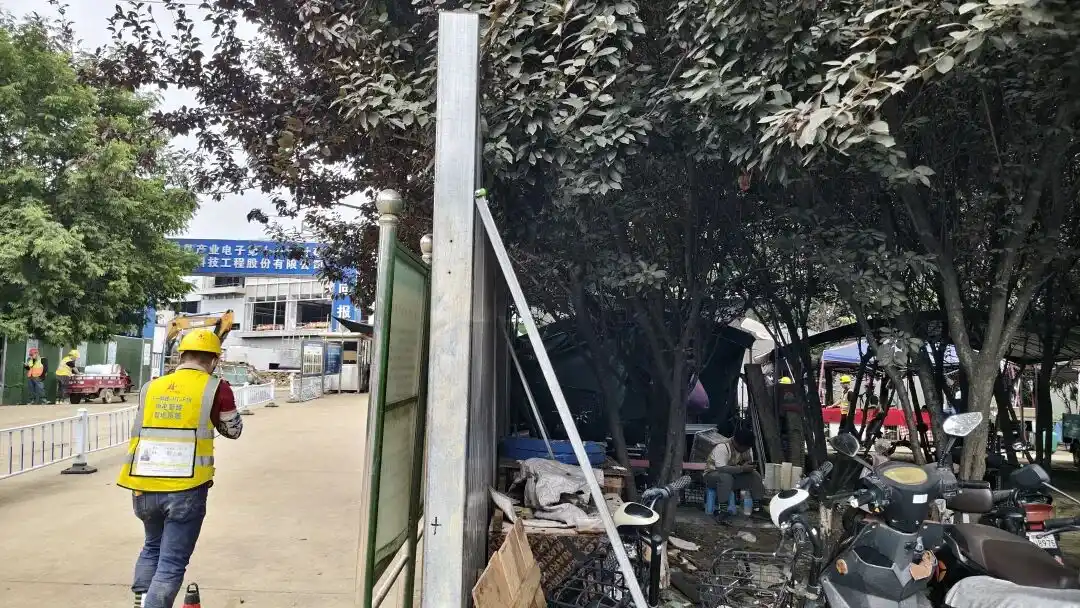
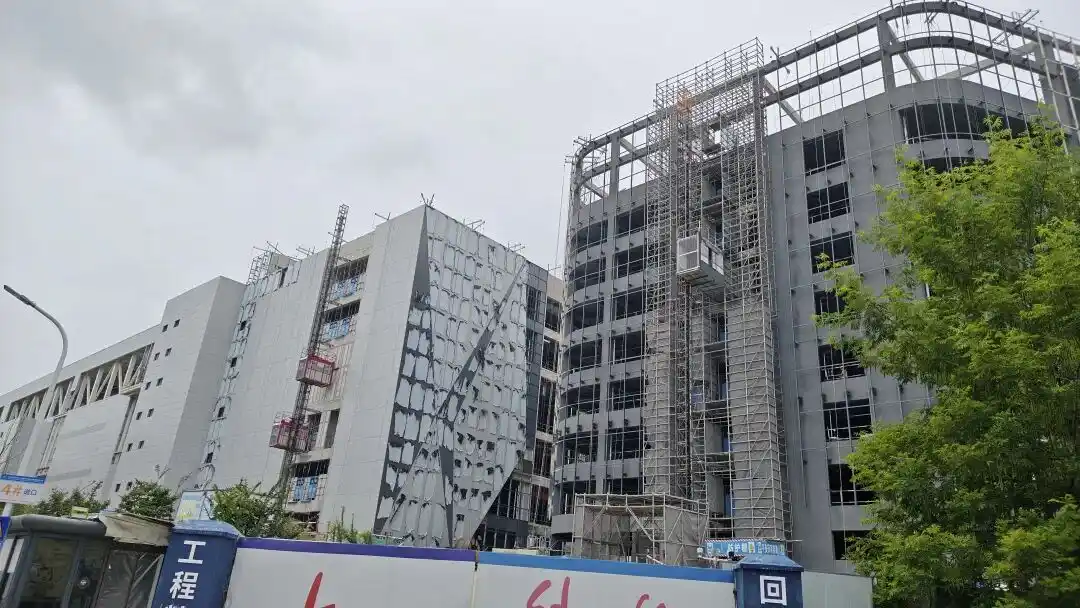
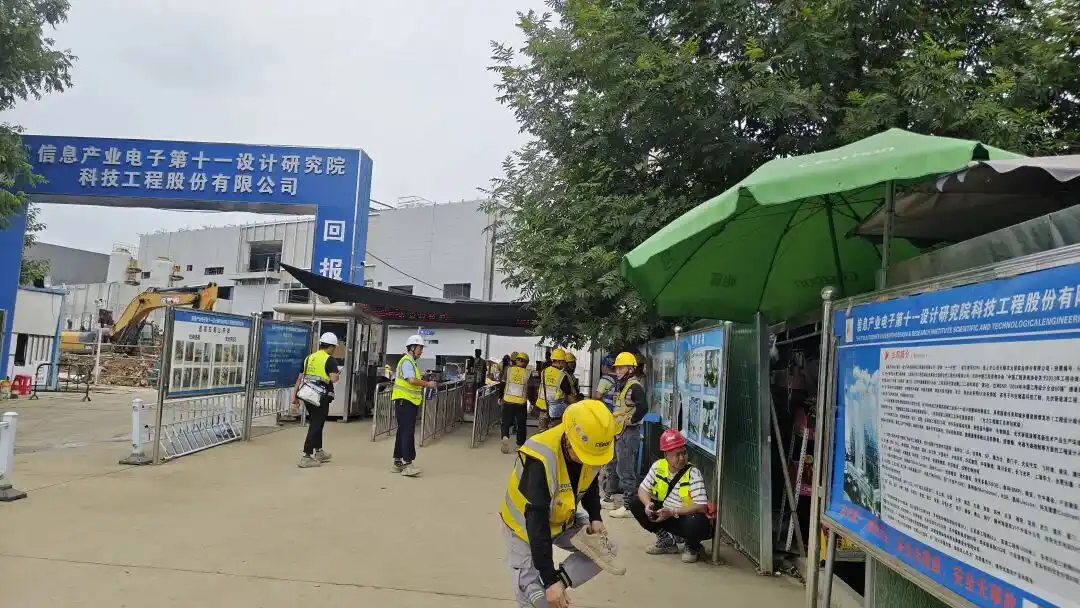
The publication said the site under construction near the campus’s southwest gate is CXMT’s phase-three project. The contractor is The Eleventh Design & Research Institute of Information Industry Electronics Engineering Co., Ltd., known as “11th Electronics,” a wholly owned subsidiary of TaiJi Industry (600667.SH).
Large numbers of construction workers were gathered around the site, along with roadside vendors selling meals, snacks, drinks, and cigarettes. The report described a stark contrast across a single wall: on one side, a modern wafer-fab construction site; on the other, the everyday consumption scene built around migrant labor.
Many workers could not clearly name their subcontractors, but all of them knew the project was for CXMT. One construction-site source told the publication that CXMT currently has 11 phases under construction, and that other bases are being built in other parts of Hefei, as well as in Beijing and Shanghai’s Pudong New Area.
Industrial spillover is changing the Changgang area
Time Weekly said a group of supporting companies has already formed around the phase-three project. Across the street from CXMT are Xinqiao Integrated Circuit Industrial Park and Hefei Perton Storage Technology Co., Ltd. Guanggang Gases (688548.SH) also has a supporting station inside the park.
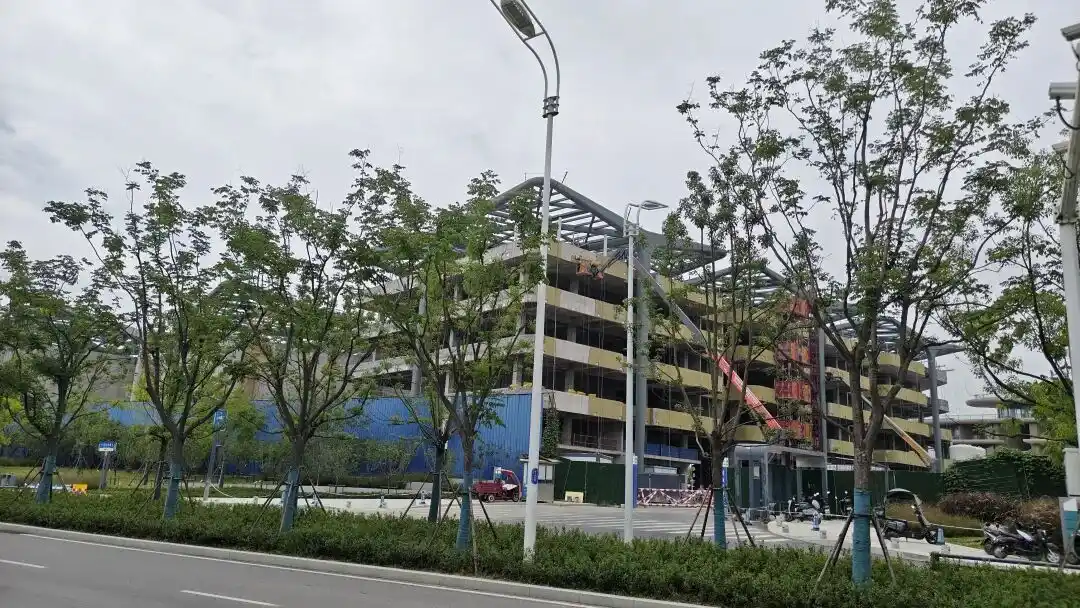
The north side of the campus is lined with lawns and running paths. Across the road is OCT, where a worker near the gate told the reporter that a commercial district is under construction.
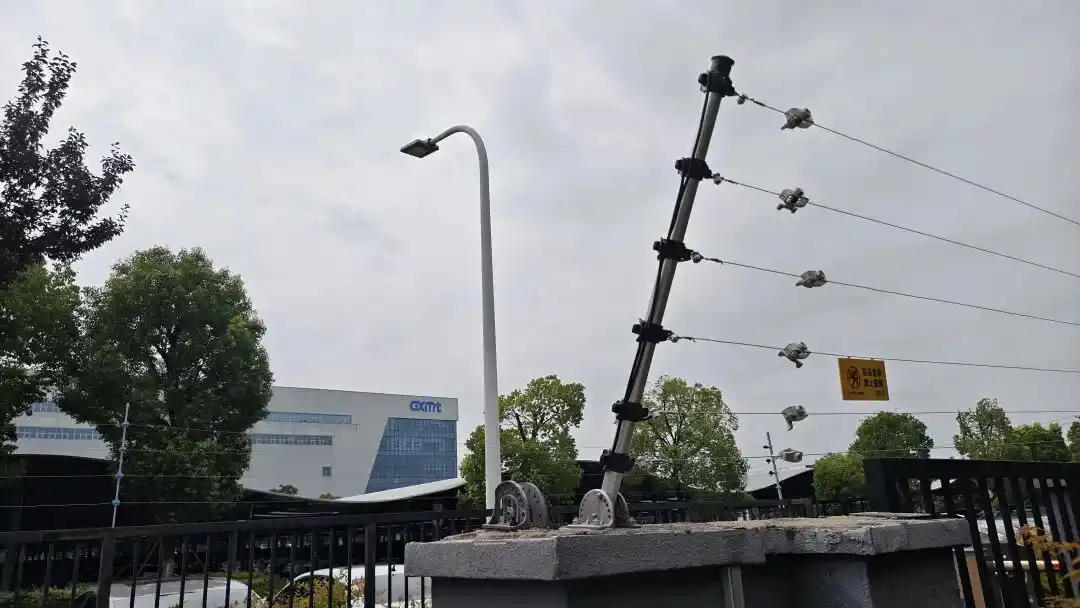
The outer edge of the broader CXMT industrial park is also enclosed with high-voltage protective fencing, a level of security the report said is far above that of a typical industrial park.
The reporter spent more than two hours walking around the campus. What matched the scale of the site was the pace of change in the surrounding economy. A ride-hailing driver living in a nearby resettlement housing complex said the area used to be farmland. Since 2021, he said, Changgang home prices rose on the back of CXMT’s presence and at one point climbed above RMB 10,000 per square meter. “They’ve fallen quite a bit over the past two years, but they’re still at RMB 7,000 to RMB 8,000 per square meter now,” he said.
CXMT is more than 40 kilometers from Hefei’s main urban area, in what the report called the city’s “outer ring beyond the outer ring.” Walk a little farther away, and high-rises quickly give way to village roads and low-density surroundings.
Commercial activity there shows a pronounced tidal pattern. Around breakfast, lunch, and dinner, when CXMT employees get off work, nearby restaurants fill up. During working hours, foot traffic drops sharply.
The intersection of Shuofang Road and Jinlianhua Road is known by local residents as the core of the “Changgang CBD.” The area has a strong street-market feel. After 5 p.m. each day, food carts line up nearby to serve CXMT employees.
One restaurant owner told Time Weekly that in the early stage of CXMT’s factory construction, the area’s main customers were construction workers. Now that multiple plants are in place, the spending base has shifted to CXMT employees and staff from supporting companies. In his telling, Changgang has moved from a barren construction zone to a busy industrial district.
The report was originally published on the Time Weekly WeChat account (ID: timeweekly) and written by Guan Yue.