


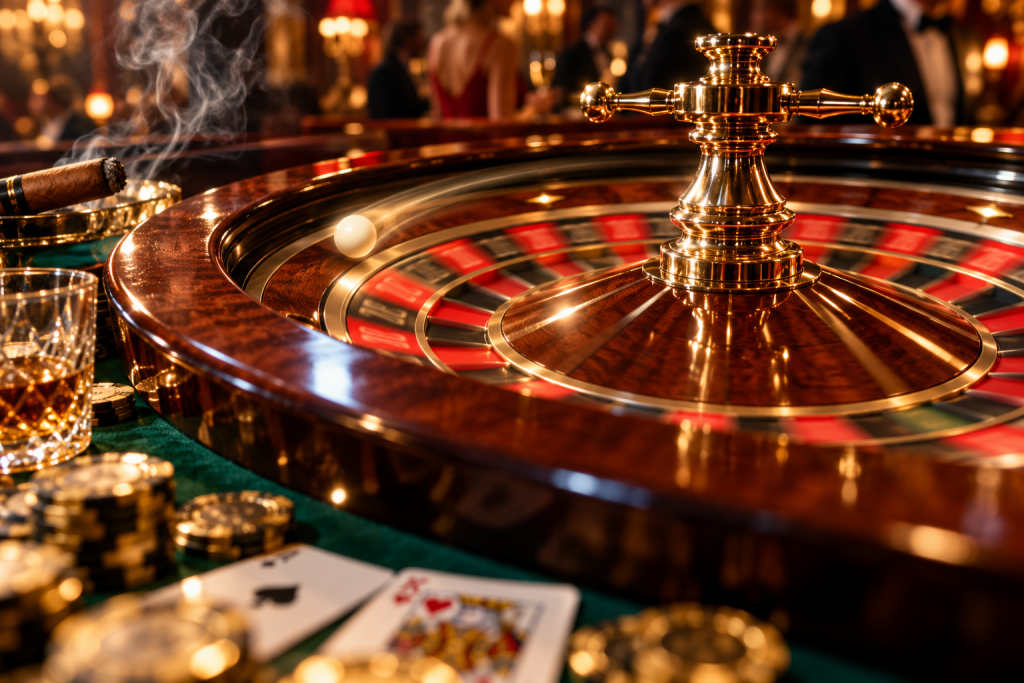
The Number Changes Every Shift, and That Is the Honest Answer
A reader asking how many runs a roulette wheel makes in a day is usually trying to picture the rhythm of the game: how often the ball is released, how many outcomes pass in an hour, how long a session at the table lasts. The direct answer is that there is no fixed daily run count. A wheel does not have a quota, a target, or a published spins-per-day figure. The number is an output of three moving inputs: how long the table is open, how quickly players place bets, and how fast the croupier works.
Because this article is built only on publicly published reference sources, and no source records a daily spin count for any venue, no specific number can be stated here. What can be stated is the mechanism that produces the number, and the reader can apply that mechanism to any table they visit.
What Counts as One Run
A run, in the way the question uses it, is one complete cycle of play: the croupier opens betting, players place wagers, the croupier closes betting, the ball is launched, the ball settles into a numbered pocket, the croupier announces the result, and losing wagers are cleared while winning wagers are paid. The wheel itself is only one part of that cycle. Most of the elapsed time between spins is taken up by betting, payout, and the clearing of losing chips, not by the ball travelling.
Because a run includes human actions before and after the spin, the daily total is governed by table procedure rather than by anything mechanical in the wheel. The same wheel could produce very different daily totals on a quiet Tuesday afternoon and a busy Saturday night, even if the wheel itself never changes.
The Three Inputs That Set the Daily Total
Any daily spin count is the product of three factors, and each factor varies independently. Understanding them explains why no single answer exists.
| Input | What It Depends On | Why It Varies |
|---|---|---|
| Table hours | Venue operating schedule, shift structure, maintenance breaks | Some tables open for a limited window; others rotate through shifts with no published end time |
| Player pace | Number of players, bet complexity, disputes, colour changes, buy-ins | A full table with many split and corner bets takes longer to settle than a nearly empty one |
| Croupier speed | House procedure, individual dealer pace, payout complexity | Two croupiers on the same wheel can produce different spins per hour within the same rules |
None of these inputs is a fixed constant. A table that runs twelve hours at a brisk pace produces a different total than the same table running eight hours with slow, complicated payouts. That is why any single daily figure would be misleading the moment it was printed.
Why Published Spins-Per-Hour Figures Are Not Daily Totals
Some game guides and training materials discuss spins per hour as a planning figure, but that is a different measurement from runs per day. Spins per hour describes a typical rate under stated assumptions: a given number of players, a given bet mix, a given croupier. It is an estimate used to model session length or expected loss over time, not a recorded daily count.
A spins-per-hour figure cannot simply be multiplied by opening hours to get a daily total, because the rate itself is not constant across a full day. Early-morning tables run slower than peak-evening tables. Shift changes, wheel inspections, chip fills, and table closures interrupt the count. Any daily figure derived this way would be a projection, not a measurement, and this article does not publish projections as if they were facts.
What the Reader Can Observe at a Real Table
The most reliable way to understand a specific wheel's daily run count is to observe it directly, and the observation is simple. A reader can count the spins in a ten-minute window at the table they are interested in, multiply by six to get an hourly rate for that specific session, and then apply that rate only to the hours the table is open. That produces a session-specific estimate, not a universal answer, and it is the only honest way to generate a number for a particular wheel.
What the reader should not do is treat any number seen online as the daily total for a venue. No regulator, operator, or independent source publishes a daily spin count per wheel, because the figure has no operational use. Casinos track table drop, handle, and win, not the number of ball launches.
What Changes the Count More Than Anything Else
The single largest driver of daily run count is table occupancy. A roulette table with one player can complete a betting round quickly, because there are few wagers to place and few payouts to make. A full table of seven or eight players, each placing multiple inside bets, slows the cycle considerably. The croupier must confirm each wager, settle each winning bet correctly, and manage the physical movement of chips across the layout.
Time of day matters for the same reason. A wheel that sits idle for hours because no players are present produces zero runs in that period, regardless of how long the table is technically open. A wheel that is continuously occupied from late afternoon through closing produces a far higher total. The daily count is therefore a function of demand, not of the wheel.
How the Wheel's Own Mechanics Fit In
The wheel itself imposes no daily limit. A properly maintained roulette wheel can be spun continuously for an entire operating day without mechanical failure, because the spin is a low-stress action: the rotor turns on a bearing, and the ball travels along a track. The limiting factors are human and procedural, not physical. Maintenance intervals, wheel checks, and rotor replacements are scheduled events, but they do not create a daily spin ceiling.
This matters because it removes a common misreading. The question sometimes carries an assumption that the wheel has a designed number of runs, like a machine with a duty cycle. That assumption is false for roulette. The wheel is passive equipment; the run count is set by the people around it.
Why No Source Publishes the Number
No gaming authority requires a venue to report spins per wheel per day, and no venue publishes the figure voluntarily. The reason is straightforward: the number carries no regulatory, financial, or marketing value. Regulators care about game integrity and revenue reporting; operators care about hold and table utilisation; players care about session pace and outcomes. A daily spin count serves none of those purposes directly.
Any figure a reader encounters for a specific venue's daily roulette runs is therefore either an estimate, a misunderstanding, or a projection from a spins-per-hour planning figure. This article does not repeat such figures, because no publicly published reference source records them.
What to Confirm Before You Rely on Any Number
If the reader needs a daily run count for a specific table, the only reliable path is direct observation at that table, on that day, during the hours that matter. Before travelling, the reader should confirm the table's actual operating hours, because a table that is listed as part of a venue's game mix may not be open at all hours. The authoritative channel for that information is the venue's own published hours page or its guest services desk, not a third-party summary.
The reader should also confirm whether the table is a standard single-zero or double-zero layout, because payout procedures differ and affect cycle time, though the spin itself is the same action. Table minimums and maximums, where posted, do not change the run count directly, but they influence how long players remain at the table and therefore how many runs occur in a session.
FAQ
Is there an average number of roulette spins per hour?
No universal average exists. The rate depends on the number of players, the complexity of their bets, and the croupier's pace. A quiet table may produce a different rate than a full one, and the same table varies across a day. Any published spins-per-hour figure is a planning estimate under stated assumptions, not a recorded measurement.
Can I calculate a daily run count from spins per hour?
Only as a rough projection, and only if you know the actual hours the table runs and accept that the hourly rate is not constant. Multiplying a planning figure by opening hours ignores idle periods, shift changes, and pace differences. The result is an estimate, not a fact, and should not be treated as a venue's actual daily total.
Does the roulette wheel itself limit how many runs it can do in a day?
No. The wheel is passive mechanical equipment and can be spun continuously through an operating day without a designed daily limit. The constraints are human and procedural: table hours, player demand, croupier speed, and scheduled maintenance. The wheel does not impose a duty cycle or a maximum spin count.
Play responsibly
Gambling should be treated as paid entertainment, never as a way to earn income or recover losses. 1-800-MY-RESET (1-800-697-3738)
18+ or 21+ depending on where you are; follow the minimum age that applies to you.
This article is general information about how these mechanics work. It is not legal advice and not a recommendation to gamble or to use any particular operator. Availability and legality differ by jurisdiction — check the rules that apply where you are.