


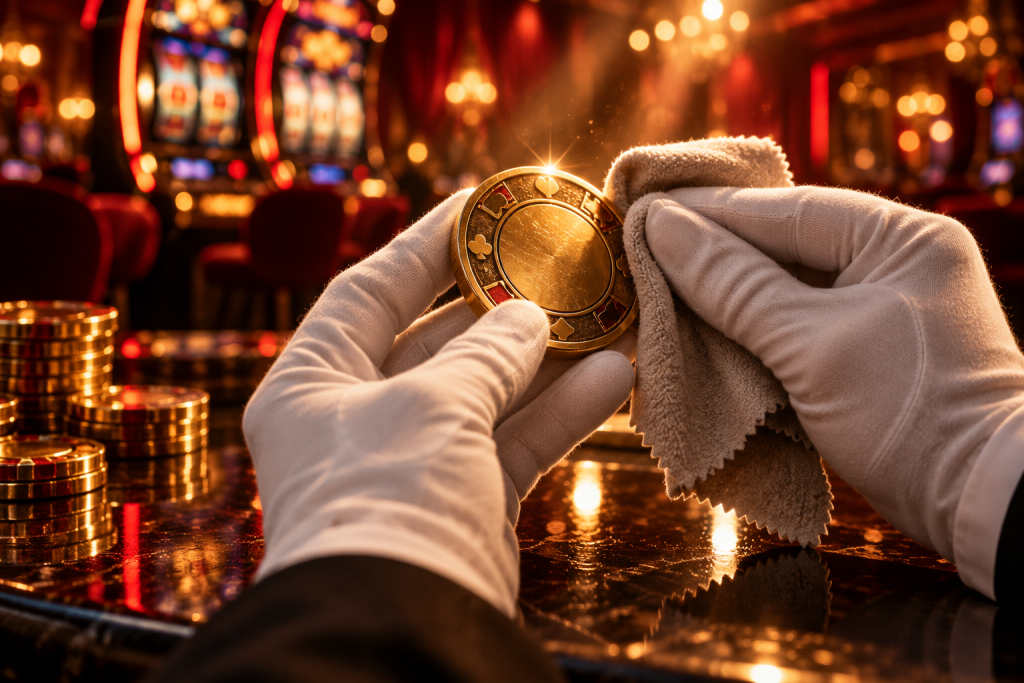
The first decision is whether this token is a collectible or just a piece of metal
Slot machine tokens are physical objects that accumulate skin oils, dust, tarnish and sometimes sticky residue from drinks or storage. The moment you decide to clean one, you are making a choice between two goals: restoring a bright, usable surface, or preserving whatever original patina and detail the piece still carries. Those two goals lead to different methods, and using the wrong one can permanently change the surface of the token.
No cleaning method is universally safe for every token, because tokens have been struck in different metals and finished in different ways. A solid brass token responds differently to a cleaning agent than a nickel-plated steel token or an aluminum piece. Before touching any liquid or abrasive to the token, identify what it is made of and whether it has a coating, a painted insert, or a proof-like mirror finish.
What makes a token dirty
Most grime on a token is a thin film of human skin oil mixed with dust, and that film is usually water-soluble enough to lift with a mild surfactant. The darker discoloration people call tarnish is a chemical reaction between the metal and sulfur compounds in the air, and it is not dirt in the same sense. Tarnish is part of the metal surface now, and removing it means removing a layer of metal, however thin.
That distinction drives the whole cleaning decision. Dirt sits on top of the surface. Tarnish is the surface changing. A mild wash can remove dirt. Removing tarnish requires a chemical or abrasive reaction, and that reaction does not know when to stop at the original surface.
Methods ordered from least to most aggressive
| Method | What it removes | What it risks |
|---|---|---|
| Dry wipe with a soft, clean microfiber cloth | Loose dust and light skin oil | Very low, but a dirty cloth can micro-scratch |
| Warm water with a drop of mild dish soap, rinsed and dried immediately | Oils, dust, water-soluble residue | Low if dried fully; trapped water can spot or corrode |
| Commercial metal cleaner formulated for the specific metal | Tarnish and oxidation | Removes a thin layer of metal; can dull proof-like surfaces |
| Abrasive pads, baking soda paste, toothpaste, or metal polish | Heavy tarnish and corrosion | High; leaves visible scratches and destroys fine detail |
The table above is a decision ladder, not a recommendation. Start at the top and stop as soon as the token looks the way you want it to. The most common mistake in cleaning any metal collectible is jumping straight to an abrasive because it feels like it is working faster. It is working faster because it is removing more material.
Why the metal matters more than the method
Brass and copper tokens tarnish readily and respond to chemical cleaners, but they also lose their original surface color quickly once cleaned. Nickel and steel tokens are harder and more resistant to tarnish, but they can develop rust spots if moisture is left on them, especially around the edge where the plating is thinnest. Aluminum tokens are light and do not tarnish the way brass does, but they are soft and scratch easily.
If the token has a plastic center, a painted emblem, or an applied label, treat it as a mixed-material object. Any liquid that soaks into the edge between the metal and the insert can lift the insert or cause the paint to swell. For those pieces, a dry or barely damp cloth is the only safe starting point.
The collector-value question you should answer first
In most collectible fields, original surfaces carry value. A token with even, natural toning is often worth more to a specialist than the same token cleaned to bright metal, because the toning proves the piece has not been stripped and repatinated. Cleaning a token can remove not just dirt but the evidence of its age, and that evidence is part of what a collector is paying for.
If the token is common, heavily worn, or intended for use in a home game, cleaning it to a bright finish may cost you nothing. If it is an older casino token, a rare denomination, or a piece with sharp detail, the safest cleaning is no cleaning at all until you have checked what the piece is worth in its current state. The value question is not about the token's age alone; it is about whether the surface tells a story that cleaning would erase.
How to dry and store a token after cleaning
Water left on a token is a bigger long-term problem than the dirt you just removed. After any wet cleaning, rinse the token in clean water if the method calls for it, then dry it immediately with a soft cloth. Do not let it air dry, because water beads can leave mineral spots, and trapped moisture at the edge of an insert can start corrosion you will not see until later.
Store tokens dry, in a stable environment, and separated from each other so they do not rub. Soft plastic flips, paper envelopes, or divided trays all work. Avoid PVC-based plastic sleeves, which can break down over time and leave a sticky green residue on metal.
What to confirm before you clean
Before you put anything on a token, confirm three things: what the token is made of, whether it has any insert or coating, and whether it has enough collector value that an expert should see it before it is altered. The authoritative source for the last question is a specialist dealer or an auction house that handles casino memorabilia, not a general cleaning guide. The authoritative source for the first two is the token itself, usually visible on the edge or the surface under good light.
If you cannot identify the metal or the finish, the correct move is to clean only with a dry cloth and to leave the rest alone. A token you cannot identify is a token you can damage without knowing it.
FAQ
Can I use baking soda to clean a slot machine token?
Baking soda is a mild abrasive, not a cleaner. It removes tarnish by scraping away a thin layer of the surface, and it leaves fine scratches that are visible under magnification. On a common, heavily worn token that may be acceptable. On a token with sharp detail or collector value, it permanently changes the surface and should be avoided.
What is the safest way to clean a token with a painted or plastic insert?
Use a dry or barely damp soft cloth and avoid any liquid that can wick into the seam between the insert and the metal. Soaking, ultrasonic cleaning, or chemical dips can lift the insert or swell the paint. If the insert is already loose, do not clean the token until the insert has been stabilized or removed by someone who works with mixed-material collectibles.
Does cleaning a token reduce its value?
It can. Collectors often pay more for a token with its original surface and natural toning than for the same token cleaned to bright metal, because cleaning removes evidence of age and can leave scratches. The effect depends on the token's rarity and condition. If the token may have value, have it assessed before cleaning rather than after.
Play responsibly
Gambling should be treated as paid entertainment, never as a way to earn income or recover losses. 1-800-MY-RESET (1-800-697-3738)
18+ or 21+ depending on where you are; follow the minimum age that applies to you.
This article is general information about how these mechanics work. It is not legal advice and not a recommendation to gamble or to use any particular operator. Availability and legality differ by jurisdiction — check the rules that apply where you are.