


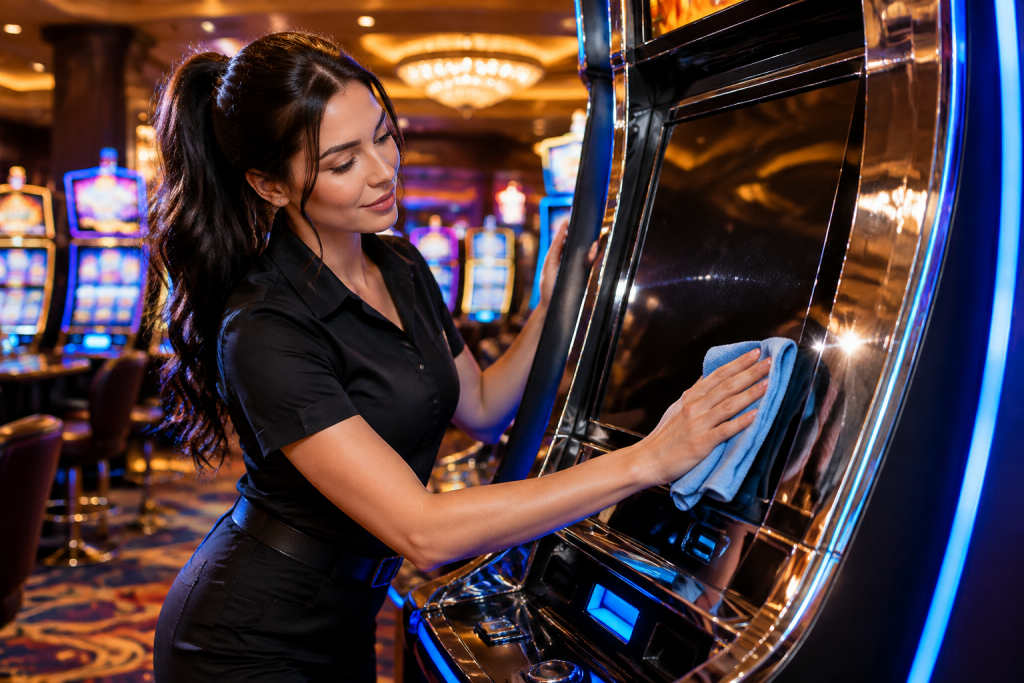
The machine is not yours, so the first step is permission
A slot machine on a casino floor is property of the operator, not of the player sitting in front of it. The practical question is not whether a particular cleaning product works on acrylic or laminate. The practical question is whether the venue allows a guest to touch the cabinet with anything other than their hands. Most properties direct guests to ask a floor attendant or slot technician rather than apply any substance to the machine themselves, because a spill, a residue, or a scratched finish creates a maintenance ticket that the house then has to resolve.
The rest of this article explains the general cleaning method that a technician or a venue employee uses, and what a reader should confirm before they ever reach for a cloth. It does not give a product list, a chemical formula, or a step-by-step guarantee, because the correct method depends on the cabinet finish, which varies by manufacturer, model, and year of build.
Why this is a finish question before it is a cleaning question
Slot machine cabinets are built from several different surface materials. Older machines often have painted metal or wood-laminate sides. Newer machines commonly use molded acrylic, polycarbonate, or vinyl-wrapped panels around a metal frame. The button deck, the screen bezel, and the belly glass area are usually different materials from the side panels, and they respond differently to cleaners.
A cleaner that is safe on one panel can cloud another. Alcohol-based sprays can dull acrylic. Ammonia-based products can break down vinyl wraps. Abrasive pads leave micro-scratches that become visible under the machine's own lighting. This is why the first real step is not to spray anything, but to identify the surface type and to check what the manufacturer's care sheet for that specific cabinet says.
What the general cleaning sequence looks like
When a technician cleans a cabinet, the sequence is usually the same across most properties, even though the products differ. The machine is powered down or placed into a service mode so that the screen, buttons, and bill validator are not live. The technician removes loose dust with a dry microfiber cloth before any liquid is introduced. Liquid cleaner is applied to the cloth, never sprayed directly onto the cabinet, so that it cannot run into the button seams, the card reader, the ticket printer, or the ventilation slots.
After the surface is wiped, a second dry cloth removes any remaining moisture. The technician then checks the areas where a guest's hands most often rest: the button deck, the armrest, and the area around the bill acceptor. Those zones are cleaned more frequently than the side panels, and they are the places where a residue problem is most likely to show up.
| Cabinet zone | Typical material | Main risk from wrong cleaner |
|---|---|---|
| Side panels | Painted metal, laminate, or vinyl wrap | Peeling, dulling, or clouding of the wrap |
| Button deck | Acrylic or polycarbonate overlay | Micro-scratches or haze from alcohol or ammonia |
| Screen bezel | Molded plastic or acrylic | Clouding, cracking at the edges |
| Belly glass area | Glass or acrylic over printed art | Cleaner wicking behind the glass and staining the art |
| Armrest and chair-side panel | Vinyl, leather, or molded plastic | Drying, cracking, or discoloration from solvent-based products |
Why the venue's own rules override any general method
A casino floor is a controlled environment. The operator has its own internal procedures for cleaning, sanitizing, and maintaining machines, and those procedures are written around the specific machines the property owns, the cleaning products it has approved, and the liability it carries if a guest is injured or a machine is damaged. A guest who brings their own wipes or spray to a machine is operating outside that procedure.
The correct channel for a guest is to ask a floor attendant, a slot supervisor, or a technician. The employee can either clean the machine on the spot, or explain what the property permits. Some properties keep sanitizing wipes at the entrance or at the players club desk specifically for guest use on buttons and armrests. Others do not, and the only safe answer is to ask.
What the cleaner does to the surface
Cleaning a slot cabinet is not a single chemical event. It is a sequence of physical and chemical actions. The dry cloth lifts loose dust and skin oils. The damp cloth suspends the remaining oils and the dried residue from drinks or hand sanitizer. The second dry cloth removes the suspended residue before it can re-settle. If the wrong solvent is used, the solvent itself becomes the residue, and the next cleaning has to remove both the original soil and the damage from the previous attempt.
This is why the manufacturer's care sheet matters more than any general advice. A care sheet for a specific cabinet model states which solvent classes are acceptable, which are not, and whether the surface should be polished or left matte. The care sheet is not something a guest can usually access. It is something the venue's maintenance department holds, and it is one more reason the guest's correct move is to hand the task to an employee.
What a reader can and cannot do at the machine
A reader who wants to clean the cabinet of a slot machine they are about to play is asking a question that has two different answers depending on who they are. If they are a guest, the answer is that they should not apply any product to the machine, and they should ask the floor staff. If they are a technician or a venue employee, the answer is that they should follow the property's own written procedure and the manufacturer's care sheet for that cabinet model.
There is no universal product, no universal dilution ratio, and no universal wipe pattern that applies to every cabinet on every floor. The only universal step is to power the machine down or place it in service mode before any liquid is used, and to keep liquid away from every seam, slot, and opening on the cabinet face.
What to confirm before you go
Before a reader travels to a property expecting to clean or sanitize a machine themselves, they should confirm three things with the venue directly. First, whether the property provides sanitizing wipes or stations for guest use, and where those are located. Second, whether the property permits guests to use their own wipes or sprays on the machines at all. Third, what the property's current cleaning schedule is for high-touch areas like button decks and armrests, since that schedule changed at many properties in recent years and continues to vary.
The authoritative source for all three is the venue's own guest services desk or its published guest policies page. A reader should not rely on a general article like this one for the current answer, because the answer is a property-level decision, not a technical constant.
FAQ
Can I bring my own wipes to clean a slot machine before I play?
That depends on the property. Some venues provide their own sanitizing wipes at the entrance or players club desk and ask guests to use only those. Others do not permit any guest-applied product on the cabinet. The only way to know is to ask a floor attendant or check the property's guest policies before you sit down.
What is the safest general way to clean a slot machine cabinet?
The safest general method is to power the machine down or place it in service mode, remove loose dust with a dry microfiber cloth, apply a manufacturer-approved cleaner to the cloth rather than the cabinet, and then dry the surface with a second cloth. The specific cleaner depends on the cabinet finish and the manufacturer's care sheet for that model.
Why does the venue care if I clean the machine myself?
Because the cabinet is the operator's property, and a wrong cleaner can cloud acrylic, peel a vinyl wrap, or leave residue that damages the finish. The venue also carries liability for guest injuries and machine damage. Its own maintenance procedure exists to prevent those outcomes, and a guest applying an unapproved product works outside that procedure.
Play responsibly
Gambling should be treated as paid entertainment, never as a way to earn income or recover losses. 1-800-MY-RESET (1-800-697-3738)
18+ or 21+ depending on where you are; follow the minimum age that applies to you.
This article is general information about how these mechanics work. It is not legal advice and not a recommendation to gamble or to use any particular operator. Availability and legality differ by jurisdiction — check the rules that apply where you are.