


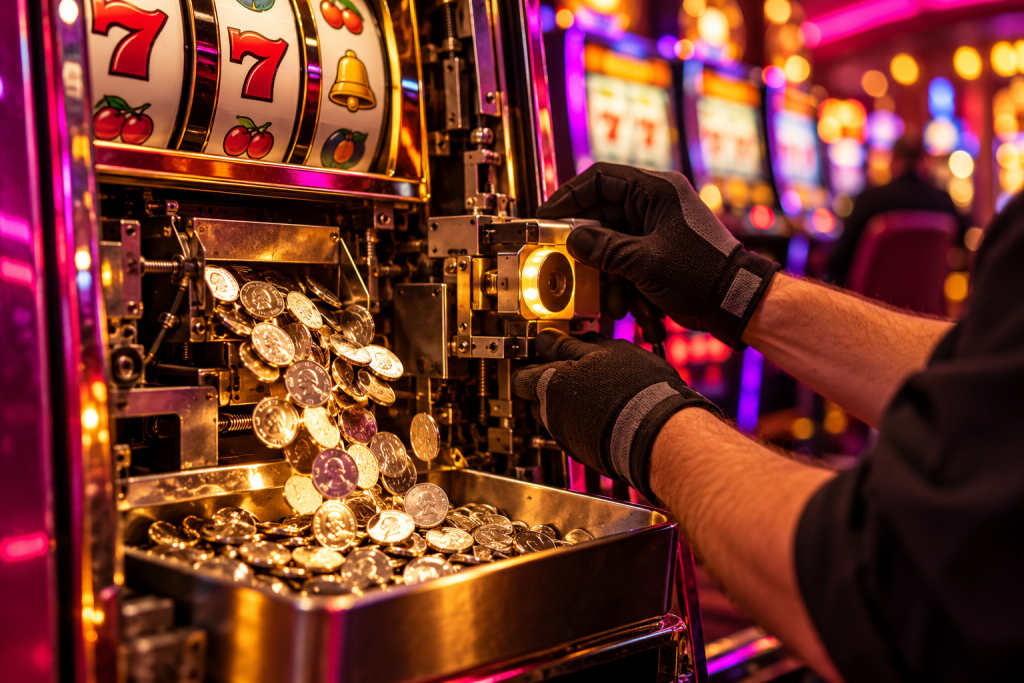
The machine decides, not the player
A player standing at a token slot machine cannot convert it to quarters by pressing a button, inserting a different coin, or adjusting a setting on the cabinet. The denomination a machine accepts is fixed by the coin-handling hardware inside it and by how that hardware is calibrated. Changing from tokens to quarters is a physical, mechanical job performed by a slot technician with the cabinet open, not a play option available on the game screen.
What a player can do is understand why the machine rejects a quarter when it is set for tokens, and what has to change inside the cabinet before that quarter would be accepted. The question is really about coin comparators, hopper calibration, and the difference between a token and a monetary coin in the eyes of the machine.
What a token is to the machine
A slot token is a metal disc minted for a specific property or route operation. It has no value outside the venue that issued it, and the machine treats it as a stand-in for a cash denomination only because the coin-handling equipment has been told to accept that exact disc. The machine does not know the token is worth a dollar, a quarter, or anything else. It knows the token matches the physical profile it has been calibrated to recognise.
A quarter is different. It is a government-minted coin with a fixed diameter, thickness, weight, and metallic composition. The machine can be set to accept quarters, tokens, or both, but only if the comparator and hopper are configured for each coin type. A token machine set for tokens will reject a quarter because the quarter fails the comparison test the machine runs on every inserted coin.
How coin acceptance works
The critical component is the coin comparator. When a coin or token drops through the entry slot, the comparator measures its physical properties against a reference sample mounted inside the unit. The sample is typically a genuine coin or token of the denomination the machine is meant to accept. If the inserted item matches the sample closely enough across the measured properties, the comparator sends it to the hopper and credits the game. If it does not match, the item is routed to the reject tray.
The hopper is the second component. It stores the coins or tokens that will be paid out on a win, and it must be filled with the same denomination the comparator accepts. A machine set to accept quarters but with a hopper full of tokens cannot pay a quarter win correctly. The two components have to agree.
| Component | What it does | What changes in a conversion |
|---|---|---|
| Coin comparator | Measures each inserted coin against a reference sample and accepts or rejects it | Reference sample is swapped from a token to a quarter; sensitivity may be adjusted |
| Coin hopper | Stores payout coins and dispenses them on a win | Tokens are emptied and replaced with quarters; payout calibration is checked |
| Coin entry slot | Physical opening through which coins are inserted | Usually unchanged, since quarters and many tokens are close in diameter |
| Credit display and meter | Shows credits and records coin-in events | Denomination setting is updated so one accepted coin equals the correct credit value |
Why a conversion is a technician's job
The reason a player cannot do this is that the comparator's reference sample sits inside a locked cabinet. Reaching it requires opening the machine, which is not accessible from the player position. The sample itself is often a small metal disc or a genuine coin held in a clip, and swapping it is a deliberate act of maintenance, not a menu option.
Beyond the comparator, the machine's internal denomination setting has to match the new coin. If the setting says one credit per token but the comparator now accepts quarters, the machine will credit a quarter as though it were a token, which may be wrong for the game's pay table. The hopper payout also has to be recalibrated so a quarter win pays the correct number of quarters. This is routine work for a slot technician but it is not something a guest can perform.
Who is allowed to make the change
On a commercial or tribal gaming floor, only authorised slot technicians and machine vendors may open a cabinet and alter coin-handling settings. The machine is typically sealed or logged, and any opening is recorded. A player asking a floor attendant to convert a machine from tokens to quarters will generally be told that the machine is set as the property intends it to be set, and that the denomination is not changed on request.
For a privately owned machine in a home collection, the situation is different in a practical sense but identical in a mechanical one. The owner can open the cabinet, swap the comparator sample, empty and refill the hopper, and adjust the denomination setting. The machine still requires the same physical changes. Ownership changes who may legally or practically perform the work; it does not change what the work is.
What to confirm before you touch anything
If you own a token machine and want it to run on quarters, confirm three things before starting. First, identify the exact comparator model in the machine, because the method for changing the reference sample differs between manufacturers. Second, check whether the hopper is sized for quarters or only for the larger or thicker tokens the machine was built to use. Third, verify the machine's credit and payout settings so the new coin value is recorded correctly.
The authoritative source for a specific machine is its service manual, which describes the comparator, hopper, and denomination settings for that model. Manuals are published by the machine manufacturer and are the correct reference for torque, calibration, and part numbers. No general article can state those values because they differ by machine model and by the exact coin and token dimensions involved.
Why the machine rejects the wrong coin
A token machine rejecting a quarter is not a malfunction. It is the comparator doing its job. The quarter's diameter, thickness, weight, and metallic signature do not match the token sample mounted in the comparator, so the machine routes the quarter to the reject tray. The same thing happens in reverse when a quarter machine receives a token.
Some comparators can be adjusted to accept both a token and a quarter, but that requires a second reference or a widened acceptance window, and it creates a payout problem: the hopper must then hold both coin types, and the machine must pay the correct mix. Most venues avoid this by dedicating a machine to one denomination only.
What the player can do
A player who wants to play quarters rather than tokens has a simple path: find a machine already set for quarters. The denomination is usually printed on the machine's glass or shown on its credit display. If the machine takes tokens, it will say so, and no amount of quarter insertion will change that.
If the venue offers both token and quarter machines, the floor staff can point to the quarter machines. If the venue is token-only, the player's choice is to play tokens or not play. The conversion question is answered by the property's machine configuration, which is set by management and maintained by technicians, not by any player action.
FAQ
Can I convert a token slot machine to quarters from the player screen?
No. The coin denomination is set by physical hardware inside the locked cabinet, principally the coin comparator's reference sample and the hopper's contents. The player screen has no setting for coin type. A quarter inserted into a token machine will be rejected by the comparator, and no button press changes that.
What has to be changed inside the machine?
The comparator's reference sample must be swapped from a token to a quarter, the hopper emptied of tokens and refilled with quarters, and the machine's denomination and payout settings updated so one accepted quarter credits and pays correctly. The exact procedure varies by machine model and is described in the manufacturer's service manual.
Is it legal to convert a machine I own at home?
This article cannot give legal advice, and ownership rules differ by jurisdiction and by whether the machine is classified as a gaming device. Mechanically, the conversion is the same work wherever the machine sits. The legal question of who may own, operate, or alter a slot machine is separate and should be confirmed with the relevant local authority.
Play responsibly
Gambling should be treated as paid entertainment, never as a way to earn income or recover losses. 1-800-MY-RESET (1-800-697-3738)
18+ or 21+ depending on where you are; follow the minimum age that applies to you.
This article is general information about how these mechanics work. It is not legal advice and not a recommendation to gamble or to use any particular operator. Availability and legality differ by jurisdiction — check the rules that apply where you are.