


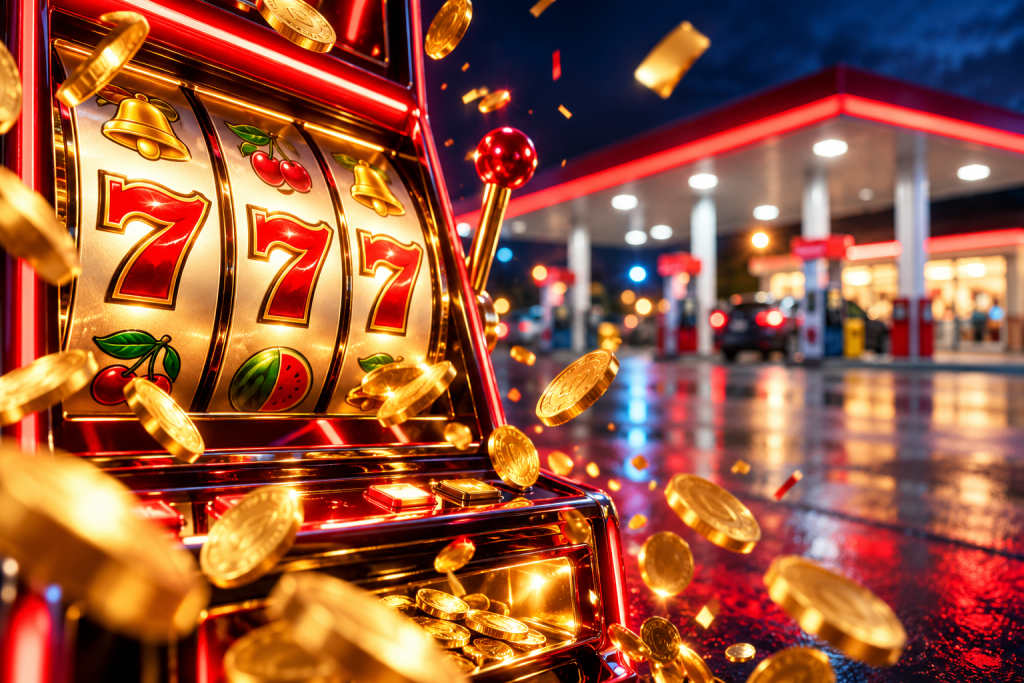
The Question Depends on Where the Gas Station Sits
A reader asking whether slot machines in gas stations are illegal is really asking three separate questions at once: what the machine is, what the building is, and whose land the building sits on. Each of those questions has a different answer depending on the state, the machine's design, and the property's legal status. No single national rule covers gas station slot machines, so the honest answer is that the legality turns on the specific jurisdiction and the specific machine.
The most useful starting point is to separate the legal test from the physical location. A machine that is lawful inside a licensed casino in one state may be unlawful inside a gas station in the same state, because the law often regulates the venue type separately from the device type. The gas station is not the deciding factor by itself; the deciding factors are the state statute, the machine's classification, and whether the location holds a permit that authorizes that class of machine.
What the Law Classifies
State gambling laws rarely use the word "slot machine" as a single category. Instead, they divide devices by how they operate, what they pay, and whether skill or chance determines the outcome. A machine that looks like a slot machine may be classified as a gambling device, an amusement device, a video lottery terminal, or a sweepstakes machine, and each classification carries different rules about where it may be placed.
A gas station owner cannot simply install a device and call it legal. The machine must fall into a category that state law permits in that venue type, and the venue must hold any required permit or license for that category. Where the machine sits inside the gas station also matters: some states distinguish between a gaming area separated from retail space and a machine placed next to the cash register.
| Classification | What It Typically Means | Where the Rules Differ |
|---|---|---|
| Gambling device | Outcome determined by chance; pays cash or redeemable value | Usually restricted to licensed casinos or racetracks; gas station placement generally outside the permit structure |
| Amusement device | Outcome determined substantially by skill; pays no cash, only free replays or novelty prizes | May be permitted in retail locations, but the skill test and prize limits vary by state |
| Video lottery terminal | Connected to a state lottery system; payout processed centrally | Only lawful where a state lottery statute authorizes placement in specific venue types |
| Sweepstakes or promotional device | Entry tied to a product purchase; outcome revealed through a game-like display | Several states have enacted bans or restrictions specifically targeting this format in gas stations and convenience stores |
The table above describes categories, not legal conclusions. A machine's actual classification depends on the exact statutory language in the state where the gas station operates, and courts in some states have issued rulings that reclassify devices that were marketed under a different label.
Tribal Land Changes the Analysis Completely
If the gas station sits on tribal land, the legal test is not the same as the test for a gas station on non-tribal land. Tribal gaming operates under a separate legal framework that involves federal law, tribal ordinances, and state-tribal agreements. A gas station on tribal land may be subject to tribal gaming regulations rather than the state's commercial gambling statute, or it may be subject to both depending on the specific agreement in place.
The reader should not assume that a gas station near a casino shares the casino's legal status. A casino and a gas station on the same tribal land may be governed by different tribal ordinances, and a tribal gaming commission may authorize gaming only in designated facilities, not in every commercial building on the reservation. The authoritative source for that determination is the tribal gaming commission or regulatory body for the specific tribe, not a general statement about tribal gaming.
Why the Same Machine Can Be Lawful in One State and Not Another
State gambling statutes differ in three structural ways that produce different outcomes for the same physical machine. First, the definition of a gambling device differs: some states define it by the element of chance, others by the element of prize, and others by the element of consideration. Second, the venue restrictions differ: some states list the venue types where gaming devices may operate, while others list the venue types where they may not. Third, the enforcement posture differs: some states actively investigate gas station gaming devices, while others leave enforcement to local prosecutors or do not prioritize the issue.
A machine that pays out in cash may be unlawful in a gas station in one state and lawful in a gas station in another state if the second state has authorized video lottery terminals in retail locations. The machine itself does not determine legality; the state statute and the venue permit do. The reader must check the specific state's gaming statute and the gas station's permit status to know the answer for that location.
Where the Authoritative Answer Lives
The state gaming authority or lottery commission is the agency that publishes the rules for gaming devices in that state. The reader can find the current classification of a specific machine type, the list of venue types where that machine class may operate, and the permit requirements for a gas station owner by consulting that agency's published materials. The agency's name differs by state, but the function is the same: it is the official source for what the state permits and what it prohibits.
For a gas station on tribal land, the authoritative source is the tribal gaming commission or regulatory body for that tribe. For a specific gas station, the reader can also check the permit or license posted at the location, which should state the class of device and the issuing authority. If the gas station cannot produce a permit that matches the machine class, that is a signal to verify with the state agency before drawing any conclusion.
What to Confirm Before You Go
If the reader wants to know whether a specific gas station's machines are lawful, the steps are concrete. First, identify the state and whether the gas station is on tribal land. Second, find the state gaming authority or lottery commission's published rules for gaming device classification and venue restrictions. Third, check whether the gas station holds a permit that matches the machine class, and verify that permit with the issuing agency. Fourth, if the location is on tribal land, check the tribal gaming commission's published rules.
Do not rely on the machine's appearance, the gas station's signage, or a clerk's statement. A machine that looks like a slot machine may be classified as something else, and a clerk may not know the legal basis for the machine's presence. The only reliable sources are the state agency's published rules and the permit itself.
FAQ
Are slot machines in gas stations always illegal?
No single rule applies across all states. The answer depends on the state statute, the machine's classification, and whether the gas station holds a permit for that class of device. Some states authorize certain gaming devices in retail locations; others prohibit them entirely. The reader must check the specific state's gaming authority for the current rule.
What if the gas station is on tribal land?
Tribal land is governed by a separate legal framework involving federal law, tribal ordinances, and state-tribal agreements. A gas station on tribal land may be subject to tribal gaming regulations rather than the state's commercial gambling statute. The authoritative source is the tribal gaming commission for that specific tribe, not a general statement about tribal gaming.
How can I check if a specific gas station's machines are legal?
Identify the state and whether the location is on tribal land. Then consult the state gaming authority or lottery commission's published rules for gaming device classification and venue restrictions. Check the permit posted at the gas station and verify it with the issuing agency. Do not rely on the machine's appearance or a clerk's statement.
Play responsibly
Gambling should be treated as paid entertainment, never as a way to earn income or recover losses. 1-800-MY-RESET (1-800-697-3738)
18+ or 21+ depending on where you are; follow the minimum age that applies to you.
This article is general information about how these mechanics work. It is not legal advice and not a recommendation to gamble or to use any particular operator. Availability and legality differ by jurisdiction — check the rules that apply where you are.