


The Green Pocket That Changes the Maths
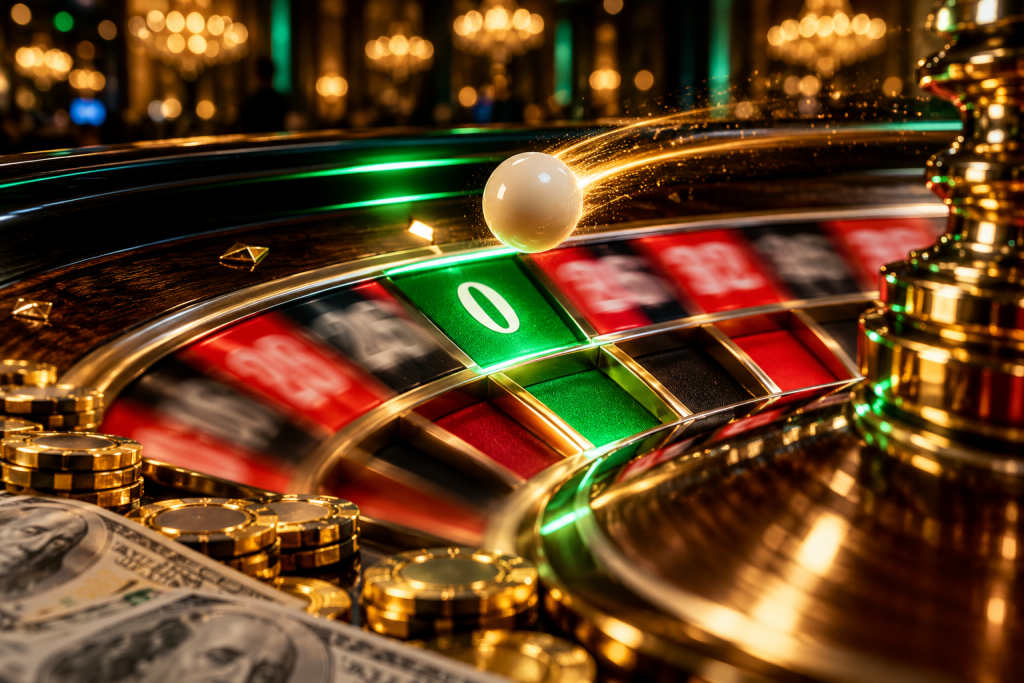
You have probably seen a roulette wheel in a film, a casino, or an online game and noticed that almost every pocket alternates between red and black. Then there is the zero. It sits apart, coloured green, and it is the single most important pocket on the wheel for understanding how the game is priced. The short answer to the question is that zero is green on every standard roulette wheel, whether it is the single zero on a European layout or the zero and double zero on an American one.
The colour is not decorative. Zero is green because it belongs to neither red nor black, and that matters the moment you place a bet on a colour. A wager on red or black loses when the ball lands in zero, because zero is not red and it is not black. The green pocket is the house's quiet edge on what looks like an almost even-money proposition.
One Zero or Two: Reading the Wheel
Before you sit down, check which wheel you are at. The two main layouts look similar but carry different numbers of pockets, and that difference changes the rate at which your money is expected to erode over time.
| Feature | European wheel | American wheel |
|---|---|---|
| Number of pockets | 37 | 38 |
| Zero pockets | One (0) | Two (0 and 00) |
| Zero colour | Green | Green |
| Effect on even-money bets | Lose on 0 | Lose on 0 and 00 |
| House edge on the same bet type | Lower | Higher |
The extra green pocket on the American wheel is not a harmless variant. It increases the house edge on the American layout compared with the European one, because the ball has one more pocket that pays no colour bet. When you have a choice of wheels, the European layout is the gentler game, but neither wheel turns a profit for the player over a long series of spins.
What Happens When the Ball Lands on Zero
The zero pocket settles bets according to the type of wager you placed. If you bet on red or black, odd or even, or the low or high half of the numbers, the zero is a losing result. Those are the even-money bets, and the green pocket is precisely what stops them from being a true 50-50 proposition.
If you bet directly on the zero itself, it pays as a winning number. A straight-up bet on a single number, including zero, pays at fixed odds printed on the table layout. The payout may look generous, but it is smaller than the true odds of the ball landing there, and that gap is the house edge on that bet.
Some tables offer a rule that softens the loss on even-money bets when zero appears, returning half the stake or holding it for the next spin. That rule is not universal. It appears on certain European-style tables and is always stated in the table rules. If you play a wheel with such a rule, it changes the effective edge on the affected bets, so read the posted rules before you commit chips.
How a Round Runs
Knowing the colour of zero is only useful if you know how a spin works. The sequence is the same on most tables, physical or online.
You buy in at the table or load your balance in the online game, then place chips on the layout before the dealer or the software closes betting. The ball is released in the opposite direction to the spinning wheel. When it drops into a pocket, the dealer marks the winning number, losing bets are cleared, and winning bets are paid. Then the next round opens.
Each bet on the layout is a separate decision with its own payout and its own house edge. The inside bets, placed on individual numbers or small groups, pay more but hit less often. The outside bets, placed on red, black, odd, even, high, low, dozens or columns, pay less but cover more pockets. The zero belongs to none of the outside categories, which is why it sits in its own green pocket at the end of the layout.
The Decision Points That Matter
Your only real decisions in roulette are which bets to place and how much to stake on each. The wheel has no memory, and no pattern of past spins changes the odds of the next one. A machine or wheel that has shown red five times in a row is not due to show black, and the zero is not more or less likely because it has not appeared for a while. Each spin is an independent event on a fixed set of pockets.
Because different bets carry different edges, the choice of bet is the one place where you genuinely change the expected rate of loss. The even-money outside bets lose only to the zero pockets, which makes them the lowest-edge bets on most standard wheels. The straight-up bet on a single number carries a much larger house edge because the payout is well short of the true odds. None of these bets has a positive expectation for the player. The choice is about how quickly and how erratically your bankroll moves, not about turning a negative game positive.
Mistakes That Cost New Players More Than the Zero
The first mistake is assuming red and black are a fair coin flip. They are not, because the green zero sits outside both. A new player who treats an even-money bet as 50-50 is already misreading the game before the ball moves.
The second mistake is chasing a colour or a number after a losing run. Because each spin is independent, increasing your stake after losses does not change the probability of the next result. It only changes the size of the swings. A progression that doubles your bet after a loss will recover the lost units when a win eventually lands, but it also risks a long losing streak that exhausts the table limit or your bankroll first. The edge stays with the house on every spin, regardless of the pattern you use.
The third mistake is not checking which wheel you are on. The American layout with its two green pockets is a materially more expensive game on the even-money bets than the European layout with one. If you have a choice between tables, the wheel with fewer pockets is the better place to sit for the same bet.
What the Zero Teaches About the Whole Game
The green zero is the clearest single example of how a casino game is priced. The wheel offers bets that look close to fair, and the zero is the small wedge that keeps the game in the house's favour over thousands of spins. It does not guarantee you will lose in a short session, and it does not make winning impossible. It means that the expected value of every bet is negative, and the size of that negative expectation depends on the bet you choose and the wheel you sit at.
When you play, read the table rules first. The payout for a winning zero bet, the presence of any rule that softens even-money losses on zero, and the number of green pockets on the wheel are all printed or displayed where you play. Those details matter more than any system for predicting where the ball will land.
FAQ
Is the double zero also green?
Yes. On an American wheel, the double zero pocket is green, just like the single zero. Both green pockets sit outside the red and black categories, which means both defeat even-money colour bets.
Does betting on zero have better odds than betting on other numbers?
No. A straight-up bet on zero pays the same as a straight-up bet on any other single number, and it has the same probability of winning. The payout is below the true odds of the ball landing in that pocket, so the house edge on the bet is the same as on other single-number bets.
Why does the zero make the American wheel worse for players?
The American wheel has two green pockets instead of one, giving the ball an extra pocket that pays no even-money bet. That extra pocket increases the house edge on the American layout compared with the European layout for the same bet type. The difference is built into the wheel, not into the player's choices.
Play responsibly
Gambling should be treated as paid entertainment, never as a way to earn income or recover losses. 1-800-MY-RESET (1-800-697-3738)
18+ or 21+ depending on where you are; follow the minimum age that applies to you.
This article is general information about how these mechanics work. It is not legal advice and not a recommendation to gamble or to use any particular operator. Availability and legality differ by jurisdiction — check the rules that apply where you are.