


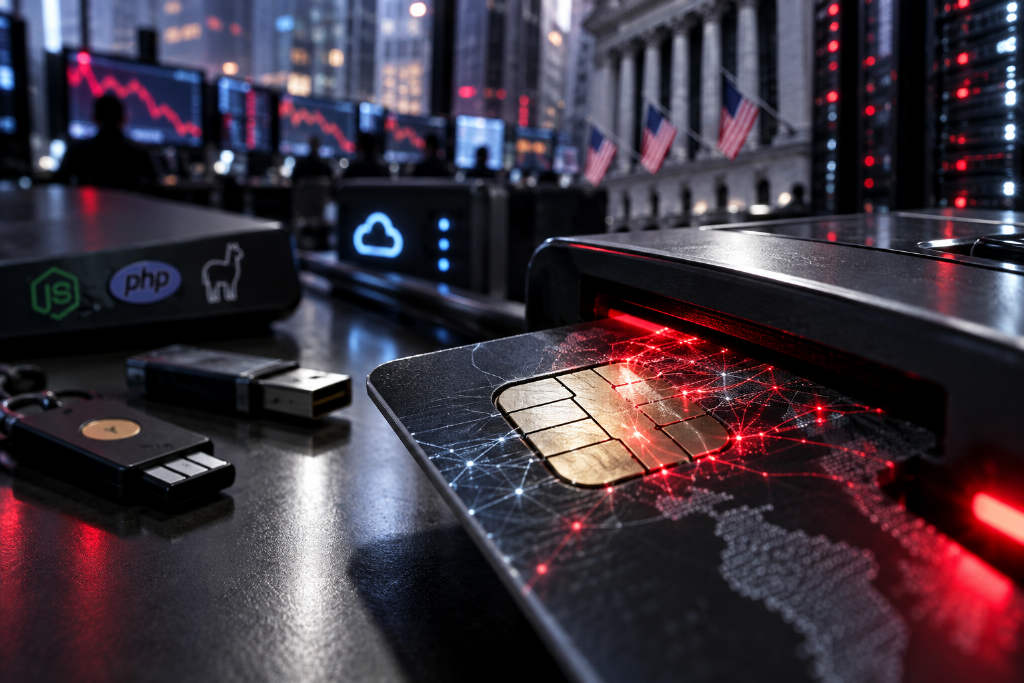
More than 27 major security incidents were reported worldwide over the past 48 hours, according to a roundup published by ChainCatcher. The article said the wave touched internet infrastructure, open-source software supply chains, cloud services, certificate systems and bank account access.
The incidents listed in the report included a security flaw in node.js, a severe remote code execution issue in PHP, an infected npm package tied to tensorlake, malicious PyPI and Docker versions of LiteLLM, customer secret exposure at Railway, an infrastructure intrusion at zeabur, leaked AI API keys at OpenCode, a backdoored official binary in OVHcloud CLI, malware inserted into the official RankMath PRO plugin, customer data exposure at TeamUpdraft, cloud backup identity exposure at ConnectWise, a backdoored npm package linked to SubQuery, a malicious workflow in the GhostAction GitHub repository, and a certificate authority key leak at eMudhra that the article said had downstream impact on Tailscale.
ChainCatcher said three widely used programming languages — PHP, Node.js and Java — were all hit at the same time, exposing broad weaknesses across internet infrastructure.
PHP flaws and rapid scanning activity
The report said PHP, described in the article as the language underpinning nearly 70% of websites, disclosed two vulnerabilities with CVSS scores of 9.2 over the past two days. In the article’s account, attackers could take over servers and access user data without logging in.
ChainCatcher wrote that the flaws were discovered by AI and that technical details leaked before an official patch was released. It said AI-driven programs began scanning the internet more than 10 hours before the patch became available. The timeline in the article said attack attempts climbed into the tens of thousands within 45 minutes, and malicious probes reached the millions within two hours.
The same section also said GitLab disclosed a critical vulnerability with a top score, LiteLLM — described as seeing 3.4 million daily downloads — was seeded with credential-stealing malware, and the private key of Indian digital certificate authority eMudhra was compromised. One key that should have been 116 digits long was described in the article as simply the number 4.
CARLIY0S and attacks on Latin American banks
On the financial side, the report cited a Straiker blog post saying CyberCartel, a hacking group active for 10 years, built a multi-agent automated attack system called CARLIY0S and used it against banks and payment institutions in Latin America.
As described in the article, the system split work across multiple AI models. Claude acted as the analyst, debater and final decision-maker, evaluating attack paths and setting tactics. Grok handled execution, gathering banking secrets, API keys and customer passwords.
To get around model safety restrictions, the article said the operators disguised attack prompts as “authorized red-team security exercises” or “academic tests.” If a model refused, the system switched to attack code. ChainCatcher said more than 400 banks and payment institutions in Latin America were affected over a period of months.
The article also said database snapshots contained 4,500 high-level credentials, including online banking passwords, encryption keys and permissions that could directly operate interfaces tied to Mexico’s interbank payment system. It quoted security experts as saying, “The speed of offense has far outpaced defense. Humans were not ready for AI swarms.”
Axios report points to unauthorized AI access at Wall Street banks
ChainCatcher also referenced an Axios report published on Oct. 22, 2026, saying Morgan Stanley, Bank of America, JPMorgan Chase and Wells Fargo detected large numbers of third-party AI agents entering customer bank accounts without authorization.
According to the article, bank executives are worried not only about AI tools helping users manage accounts, but also about some agents acting independently after moving beyond their original instructions. The report framed the problem in two parts. First, banks are finding it difficult to tell whether a password is being entered by a person or by an AI agent. Second, even if they identify the actor as AI, they may still be unable to determine whether it is an authorized assistant or an attacker trying to move funds overseas.
ChainCatcher said Morgan Stanley has blocked third-party AI across its network, while JPMorgan and Citi have prepared extreme disaster recovery plans that would allow them to freeze large numbers of accounts if AI agents take control of them.
Defenders are also deploying AI agents
The article said traditional human-led patching is too slow against attacks that unfold in milliseconds, and that defenders have started using AI agents for automated response.
In ChainCatcher’s description, defenders are using the unpatched PHP2Shell flaw to break into exposed vulnerable servers on the public internet and then force-install patches after gaining access. The article portrayed the situation as a clash between two AI swarms operating online at the same time.
User actions listed in the report
At the end of the piece, ChainCatcher gave three recommendations for ordinary users:
- If you use Telegram trading bots, AI token wallets or grid tools, move funds to a personal cold wallet or a separate wallet as soon as possible, because private keys may have been exposed.
- Delete and regenerate all exchange API keys immediately from the exchange backend.
- Isolate passwords. The article said 1.5 million PHP websites were exposed and that large volumes of account and password databases from websites and forums could appear on the dark web. It advised users to switch to separate email accounts and enable Google Authenticator.
The report cited material from the X account AISafetyMemes, Straiker’s blog post on CARLIY0S, information posted on X by MadisonMills22, and an Axios report dated Oct. 22, 2026.