


The Situation When the Gold Ball Drops
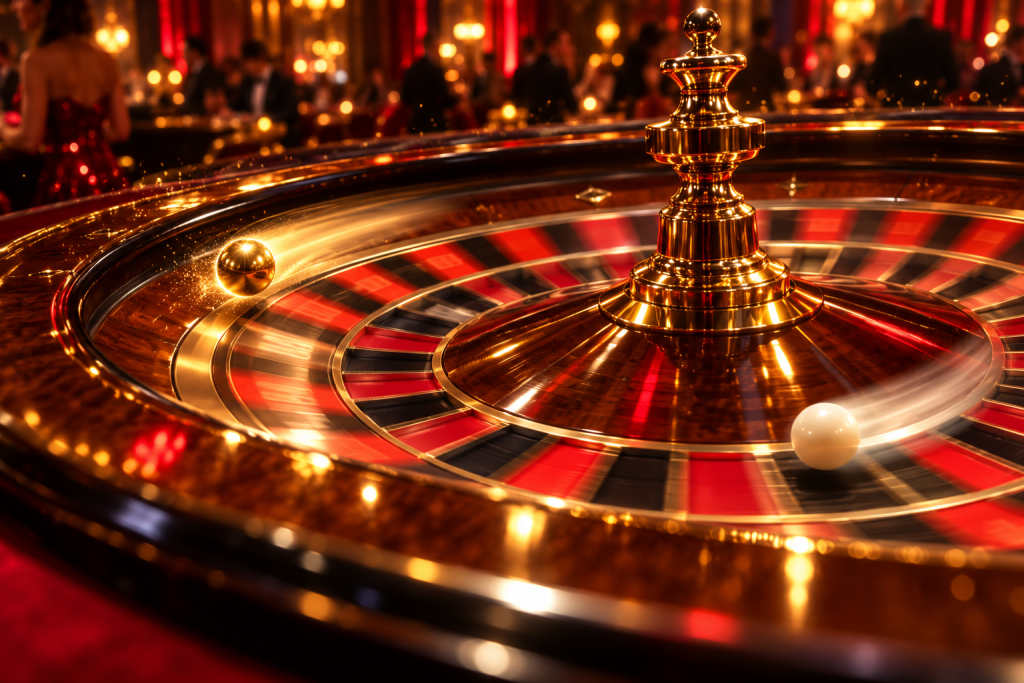
A roulette table looks familiar until the dealer places a second ball, colored gold, into the track. The main wheel still spins, the main ball still lands in a numbered pocket, and all standard bets still settle as they always do. The gold ball adds a parallel outcome to the same spin. If it lands in a pocket you have covered with a specific side bet, you are paid separately from the main game. If it does not, the side bet is lost and the round continues as ordinary roulette.
The game is not a separate wheel or a different set of numbers. It is standard roulette with an additional wager attached to an additional ball. That distinction matters because every number on the layout keeps its usual meaning, while the side bet carries its own odds and its own cost per spin.
The Objective and the Equipment
The objective in the main game is unchanged: predict where the main ball will come to rest. You do this by placing chips on the layout, either on individual numbers, groups of numbers, colors, or other marked sections. The gold ball does not change which pockets exist on the wheel. A European wheel still has 37 pockets with a single zero; an American wheel still has 38 with a single and double zero.
What the gold ball changes is the number of outcomes you can be paid on in one spin. You are now watching two independent landing events. The main ball settles your standard bets. The gold ball settles only the golden ball side bet. The two balls can land in the same pocket, in adjacent pockets, or on opposite sides of the wheel, and none of that affects the other ball's settlement.
The Sequence of a Round
A round runs from the moment betting opens to the moment losing chips are cleared and winning bets are paid. The golden ball version inserts one extra step into that familiar rhythm.
Betting opens. You place standard roulette wagers on the layout. If you want the golden ball side bet, you place a separate chip on the marked golden ball area. The dealer spins the wheel in one direction and launches both balls in the other. The main ball drops first in most procedures, then the gold ball drops. The dealer marks the main number, settles all standard bets, then checks the gold ball's pocket against the side bet area. Winning side bets are paid at the table's posted odds, and the next round begins.
The two settlements are separate. A win on the main game does not require a win on the side bet, and a side-bet win pays even if every standard bet on that spin lost.
The Side Bet Mechanics
The golden ball wager is a flat side bet. You are not betting on a specific number with it; you are betting that the gold ball will land in a pocket that the side bet defines as a winner. The exact definition varies by table, and the printed rules on the layout are the only reliable source for the table in front of you.
Some layouts pay the side bet when the gold ball lands on any number you have also covered with a straight-up bet. Others pay only when the gold ball lands on a specific highlighted number or range. A few versions pay a higher amount when both balls land in the same pocket. Because the trigger condition changes the probability of a win, it also changes the payout. A side bet that pays on any covered number wins more often than one that pays only on a single highlighted number, so it pays less per win.
Read the side bet's printed odds before placing it. The number that matters is not the headline payout but the probability behind it. A large payout attached to a rare trigger condition carries a wider gap between what you risk and what the bet returns over many spins.
How the House Edge Differs by Bet
Every wager on a roulette layout carries its own mathematical advantage for the house. The side bet is no different. It is a separate bet with its own probability structure, and it is not subsidized by, or linked to, your main-game wagers.
The table below compares the structural differences between the main bets and the golden ball side bet. Specific percentages are printed on the table or available in the game's information panel, because they depend on the wheel type and the side bet's trigger condition.
| Bet type | What you are predicting | What changes the edge | Where the figure is stated |
|---|---|---|---|
| Straight-up number | The main ball lands on one chosen pocket | Wheel type: single-zero or double-zero | Game information panel or published rules |
| Even-money bet (red/black, odd/even, high/low) | The main ball lands in a broad category | Wheel type and the zero rule in force | Table layout and published rules |
| Golden ball side bet | The gold ball lands in a pocket that triggers the side bet | Trigger condition, payout multiple, and wheel type | Side bet area on the layout and the table's printed rules |
The golden ball side bet is typically a long-shot wager. Its trigger condition is usually narrower than an even-money bet, so it wins less often and pays more when it does. That distribution is a volatility choice, not an edge change. A bet that pays more because it wins less often does not become a better bet; it becomes a rarer one.
What Strategy Charts Do and Do Not Do
Roulette does not have a decision chart in the way blackjack does. There is no action you take after the spin that changes the outcome. Your only decisions are which bets to place and how much to stake on each. That means the relevant comparison is between bet types, not between playing choices.
For the main game, the structural choice with the largest effect is the wheel itself. A single-zero wheel has one fewer pocket than a double-zero wheel, which changes the probability of every bet on the layout. Where both wheel types are offered, the single-zero table is the lower-edge option for the same wagers. The side bet's edge is stated separately and must be read separately.
If a table publishes a strategy chart, it derives from the exact rule set in force: the wheel type, the side bet's trigger condition, and the payout multiples. A chart written for one side bet definition does not transfer to a table with a different definition. Check the chart's header against the layout before relying on it.
Procedural Mistakes That Cost Players
The first mistake is treating the side bet as a hedge. It is not. A hedge would reduce the risk of the main bet, but the golden ball wager adds an independent risk on top of it. You now have two bets that can both lose on the same spin, and they usually do. Placing the side bet does not protect a straight-up number; it adds a second wager with its own losing probability.
The second mistake is misreading the trigger condition. A player who assumes the side bet pays whenever the gold ball lands on any number they have covered may be at a table where it pays only on a highlighted number. The payout is printed, but the condition is the part that determines whether the bet is even active on a given spin. Read the condition first, then the payout.
The third mistake is sizing the side bet as if it were part of the main stake. Because the side bet wins rarely, a player who makes it the same size as an even-money bet is committing a large share of the session's bankroll to a long-shot wager. The side bet is a separate decision with a separate expected loss per spin. Treat it as its own line item, not as a rounding error on the main bet.
FAQ
Does the gold ball change the main roulette odds?
No. The main ball settles standard bets exactly as it would without the gold ball present. The wheel's pockets, the payouts for standard bets, and the probabilities behind them are unchanged. The gold ball only creates an additional side bet with its own separate odds.
Can both balls land in the same pocket?
Yes. The two balls are launched independently, and nothing prevents them from settling in the same numbered pocket. Some golden ball side bets pay a higher multiple for that outcome, but only if the table's printed rules include that condition. On tables without it, the side bet settles according to its ordinary trigger condition regardless of where the main ball landed.
Is the golden ball side bet better than a straight-up number?
Neither is inherently better. They carry different probabilities and different payout multiples. A straight-up number on a single-zero wheel has a known probability of winning. The side bet's probability depends entirely on the trigger condition printed on the table. The relevant comparison is the house edge stated for each bet under the rule set in force, not the size of the headline payout.
Play responsibly
Gambling should be treated as paid entertainment, never as a way to earn income or recover losses. 1-800-MY-RESET (1-800-697-3738)
18+ or 21+ depending on where you are; follow the minimum age that applies to you.
This article is general information about how these mechanics work. It is not legal advice and not a recommendation to gamble or to use any particular operator. Availability and legality differ by jurisdiction — check the rules that apply where you are.